
Blooming
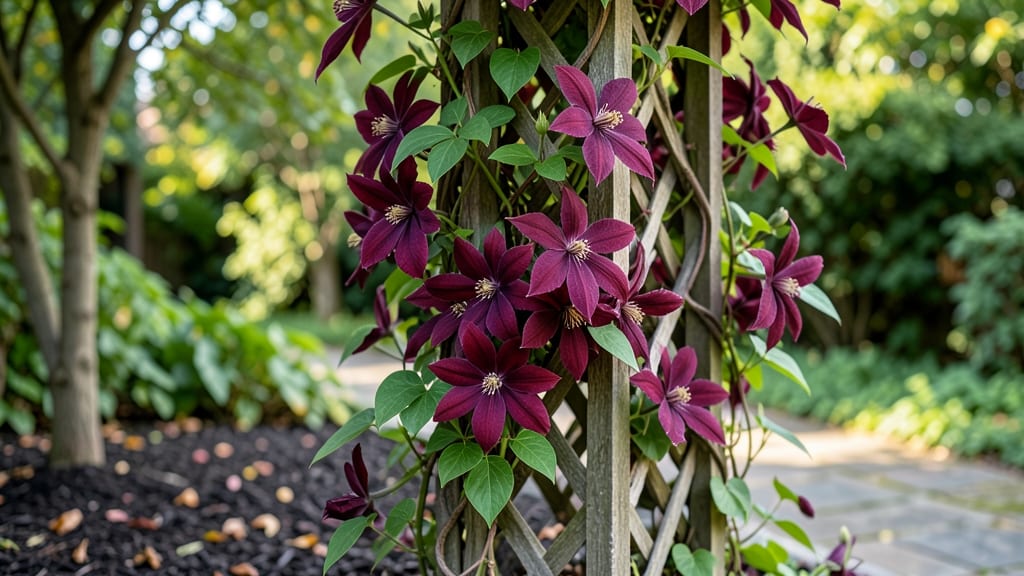
Growing large bloom clematis means purple spikes that steal the show from spring to frost—if you nail the heat-triggered rebloom trick. 🌸 I’ve watched my ‘Jackmanii’ explode from a few blooms to a 10-foot wall of color by tweaking just three things: pruning timing, watering rhythm, and summer shade.
The secret isn’t fancy—it’s consistent moisture and strategic pruning after the first flush. Most gardeners over-prune, leaving plants bare for years. Instead, cut back only dead stems in winter and trim lightly after blooms fade to coax those second flushes.
Varieties like ‘Nelly Moser’ reward patience with foot-long blooms that last weeks. By late summer, you’ll spot new buds forming on last year’s growth—proof the plant’s gearing up for fall. The key is morning sun, afternoon shade, and a sturdy trellis to keep vines from flopping.
Even in hot zones, these plants thrive with the right support. Works for climbers on fences, arbors, or even containers. Here’s how to keep them blooming like crazy all season.
📚 In This Guide
- What you need
- Instructions
- Tips and common mistakes
- Wrapping up and next steps
What you need
- ● Clematis Plant: Choose a large-flowered variety (e.g., 'Jackmanii,' 'Nelly Moser,' or 'Vyvyan Pennell')—purchase a 3-5 gallon container-grown plant or a bare-root specimen (spring/fall planting).
- ● Well-Draining Soil: Mix 1 part garden soil, 1 part compost, and 1 part perlite or coarse sand (aim for pH 6.0–7.0).
- ● Support Structure: Trellis, arbor, or obelisk (minimum 6–8 feet tall for vining varieties).
- ● Strong twine or garden ties (3–5 yards, biodegradable preferred).
- ● Mulch: 3–4 inches of organic mulch (e.g., shredded bark or straw) to retain moisture and regulate soil temp.
- ● Garden Tools: Trowel, pruners (sterilized), and gloves.
- ● Garden fork or spade for digging (12–18 inches deep).
- ● Fertilizer: Balanced fertilizer (e.g., 10-10-10) for planting (1 tbsp per plant).
- ● High-phosphorus bloom booster (e.g., 5-10-5) in early spring (1 tbsp per plant).
- ● Watering Supplies: Hose with adjustable nozzle or drip irrigation system (aim for 1–2 inches of water weekly).
- ● Sunlight Check: Ensure a minimum of 6 hours of full sun daily (partial shade in hot climates).
- ● Heat-Tolerant Varieties: Consider 'Purple Plume' or 'Multi Blue' for better heat rebloom performance.
- ● Soil Amendments: Add bone meal (1/2 cup per plant) at planting for extra phosphorus.
- ● Shade Cloth: 30–50% shade cloth for afternoon sun protection in extreme heat.
- ● Automatic Timer: For drip irrigation (early morning watering preferred).
Step-by-step instructions for planting and pruning large bloom clematis
Here's how to establish your clematis for those dramatic, heat-triggered reblooms—no guesswork, just proven techniques.
🌱 Step 1: Plant in Well-Draining Soil with Proper Support
Dig a hole twice as wide as the root ball but no deeper—clematis roots need room to spread horizontally. Mix the excavated soil with 2 inches of compost to enrich it without compacting. Position the plant so the top of the root ball sits 4-6 inches below soil level—this encourages strong growth from lower buds.
I always add a handful of slow-release fertilizer (like 10-10-10) to the bottom of the hole before backfilling. Water the hole deeply before planting to settle the soil. Install your trellis or support structure at the same time—clematis vines are heavy when blooming, so secure it firmly. The first year, focus on root establishment over flowers; prune back any blooms to redirect energy.
☀️ Step 2: Provide Morning Sun and Afternoon Shade
Large bloom clematis thrives with 6-8 hours of morning sun followed by afternoon shade, especially in hot climates. If your site gets harsh afternoon sun, use a lightweight shade cloth (30-50%) during peak heat. I’ve seen vines scorch when left in full sun all day—watch for crispy leaves or browned stems as a warning.
Water deeply twice weekly during the first growing season to encourage deep root growth. Let the top 2 inches of soil dry out between waterings—soggy soil leads to root rot, while drought stress weakens blooms. Mulch with 2-3 inches of organic mulch (like shredded bark) to retain moisture and regulate soil temperature.
✂️ Step 3: Prune for Reblooming in Early Spring
This is the secret to those year-round purple spikes: prune in late winter or early spring (just as new growth begins). For large bloom types, cut back last year’s stems to a pair of strong buds, about 12-18 inches from the base. Remove any dead or weak stems completely—this opens the plant for fresh, vigorous growth.
I always sterilize my pruners with rubbing alcohol between cuts to prevent disease spread. Avoid heavy pruning in fall—you’ll sacrifice next year’s blooms. After pruning, apply a balanced fertilizer (like 10-10-10) around the base to fuel new growth. Watch for new shoots emerging in 3-4 weeks—that’s your cue the plant is recovering.
💧 Step 4: Feed and Water for Continuous Blooms
During the growing season, feed your clematis with monthly applications of phosphorus-rich fertilizer (like 5-10-5) to encourage flowering. I mix it into the soil around the base after watering to avoid root burn. Water at the base of the plant, not overhead—this prevents fungal diseases like powdery mildew, which can ruin blooms.
As flowers fade, deadhead spent blooms to redirect energy into new growth. In late summer, reduce watering slightly to signal the plant to prepare for dormancy. By fall, cut back any remaining foliage to 6 inches—this cleans up the plant and prevents pests from overwintering. Your clematis will reward you with heat-triggered reblooms in late summer if you’ve followed these steps.
Tips & tricks for perfect large bloom clematis
These simple adjustments will help you coax those stunning purple blooms all season long—no gardening degree required.
Soil Depth Secret: That 4-6 inches below soil level positioning isn't arbitrary—it's about triggering growth from lower buds. If you plant too shallow, you'll get leggy stems with fewer blooms. I've seen gardeners bury the root ball too deep by accident, which suffocates the plant. Use a marker or reference point to ensure you're hitting that sweet spot every time.
Sunlight Strategy: The 6-8 hours of morning sun is critical, but what happens after noon makes all the difference. If your clematis gets afternoon sun, watch for crispy leaf edges—that's your warning sign. I've used lightweight shade cloth (30-50%) during peak heat (12-4 PM) to protect my vines, especially in summer. This simple step prevents sunburn that can kill blooms before they open.
Pruning Precision: When cutting back last year's stems to 12-18 inches, look for swollen buds—these are your growth points for next season. I always make cuts just above a bud at a 45-degree angle to prevent water from pooling on the wound. Sterilizing pruners between cuts (with rubbing alcohol) might seem like overkill, but it's what keeps fungal diseases from spreading through your garden.
Watering Wisdom: The twice-weekly deep watering rule changes with seasons. In summer heat, I water every 3-4 days instead, always checking that top 2 inches of soil before watering. Overwatering is the #1 killer of clematis—roots need oxygen too! A soaker hose buried near the base delivers water exactly where it's needed without wetting the leaves, which helps prevent powdery mildew.
Pro Tips for Large Bloom Clematis
- These simple adjustments will help you coax those stunning purple blooms all season long—no gardening degree required.
- Soil Depth Secret: That 4-6 inches below soil level positioning isn't arbitrary—it's about triggering growth from lower buds.
- Sunlight Strategy: The 6-8 hours of morning sun is critical, but what happens after noon makes all the difference.
Frequently asked questions
about large bloom clematis—here’s everything you need to know to keep those showstopping purple blooms thriving year-round!Can large bloom clematis handle hot summers?
Many large-flowered varieties (like Jackmanii or Niobe) are heat-tolerant, but consistent moisture is key. Mulch heavily to retain soil dampness, and water deeply twice weekly during dry spells. Avoid overhead watering to prevent fungal issues—stick to drip irrigation or soaker hoses.
When should I prune for a second bloom?
Timing is everything! For Group 3 clematis (large blooms), prune right after the first flush of flowers (late spring/early summer). Cut back dead or weak stems to a pair of strong buds, and fertilize lightly with balanced bloom booster to encourage rebloom. Skip pruning if your variety blooms only once (Group 1/2)—they need last year’s growth!
What’s the best alternative if my clematis won’t rebloom?
If your plant is stubborn, try these fixes:
- Check sunlight: Large bloom clematis crave 6+ hours of sun—move to a sunnier spot if blooms are sparse.
- Test soil: Amend heavy clay with compost; sandy soil? Add organic matter for moisture retention.
- Fertilize right: Use a low-nitrogen, high-phosphorus formula (like 5-10-10) in early spring and after pruning.
- Consider varieties: If reblooming fails, try ‘Multiblue’ or ‘Perle d’Azur’—they’re rebloom champions!
Why are my leaves yellowing or curling?
Yellow leaves often signal overwatering or nutrient issues. Check for:
- Mushy stems = root rot (reduce watering, improve drainage).
- Curling + spots = powdery mildew (spray with neem oil, prune affected areas).
- Uniform yellowing = nitrogen deficiency (feed with a balanced fertilizer or compost tea).
Pro tip: Mulch with 2–3 inches of organic matter to protect roots and retain moisture without soggy soil.
How do I encourage bigger blooms?
Size matters! For showstopping blooms, focus on:
- Deadhead spent flowers (but leave seed heads for winter interest!).
- Feed in stages: Use a bloom-specific fertilizer (like 10-20-20) twice a year—once in spring, again after pruning.
- Support vertical growth: Train vines on a sturdy trellis or arbor to reduce stress and encourage upward energy (aka bigger blooms).
Bonus: Heat waves = bigger blooms! Many large-flowered clematis rebloom more vigorously after summer heat—just keep them hydrated.
Wrapping up and next steps
Growing large bloom clematis is a rewarding journey that brings bursts of color to your garden year-round with the right care! 🌸 By mastering heat-triggered rebloom techniques—like strategic pruning, balanced fertilization, and smart watering—you’ll unlock stunning purple spikes that keep blooming season after season.
The key is patience and consistency, but the payoff is worth every effort.
Ready to transform your garden? Start by planting one variety this season and experiment with the tips shared. Watch your clematis thrive, and soon, you’ll be the envy of the neighborhood with your vibrant, blooming masterpiece! 🌿✨