
Blooming
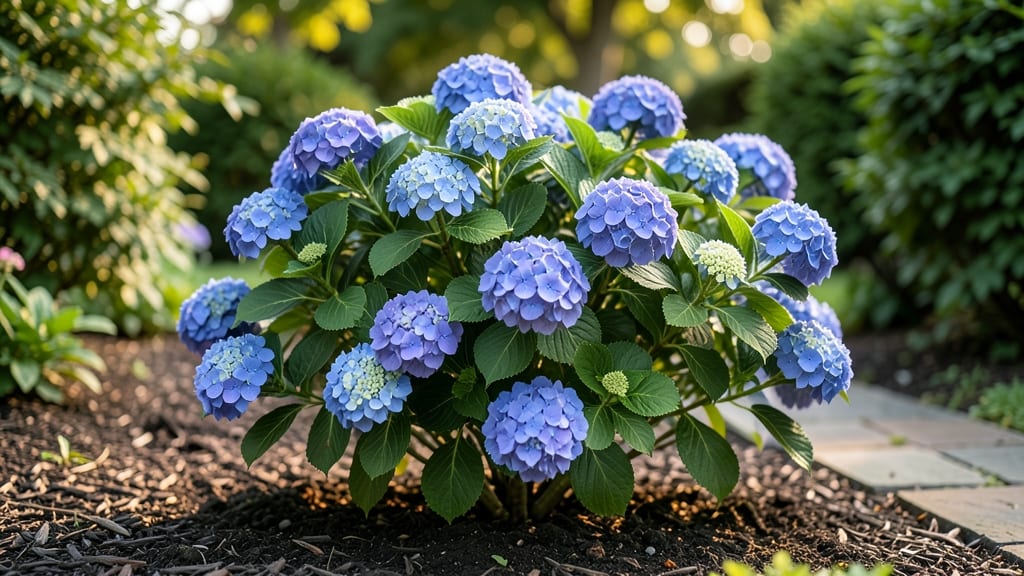
The Bloomstruck hydrangea bloom time defies the usual rules—it blooms twice a year when summer heat triggers its second flush. 🌸 Last summer, my plants surprised me with a bold purple rebloom in August after the first spring flowers faded, proving these aren’t your typical one-and-done hydrangeas.
The secret lies in heat-sensitive buds that form after the first bloom cycle. Unlike traditional hydrangeas, Bloomstrucks store energy in their roots, waiting for warm days to push out fresh flowers.
Too much shade or inconsistent watering can delay this second show, but with the right care, you’ll get two seasons of blooms instead of one.
What makes this variety special is its ability to change colors based on soil pH—blue in acidic soil, pink in alkaline—while still delivering that reliable rebloom. Most gardeners miss this trick because they treat it like a standard hydrangea, but the heat trigger is the real game-changer.
For best results, prune lightly after the first bloom (never in fall) and keep soil consistently moist. Even in cooler climates, these plants outperform others by adapting to seasonal shifts. Here’s how to maximize those stunning repeat performances.
📚 In This Guide
- What you need
- Instructions
- Tips and common mistakes
- Wrapping up and next steps
What you need
- ● Bloomstruck Hydrangea Plant – 1 mature plant (3-5 years old for best results)
- ● Pruning Shears – Sharp, clean shears (sterilized with rubbing alcohol)
- ● Gloves – Heavy-duty gardening gloves (to protect from thorns and sap)
- ● Watering Can or Hose – With a gentle spray nozzle
- ● Mulch – 2-3 inches of organic mulch (e.g., shredded bark or pine needles)
- ● Fertilizer – Balanced granular fertilizer (10-10-10) or hydrangea-specific food
- ○ Heat Source (Optional but Helpful) – Heat lamp or row cover for early-season warmth (if needed)
- ● pH Test Kit – To monitor soil acidity (ideal range: 5.2–6.0 for blue blooms)
- ● Aluminum Sulfate or Hydrangea Bloom Booster – For adjusting bloom color (if desired)
- ● Staking or Support – For heavy blooms (if your plant is top-heavy)
- ● Plant Food with Micronutrients – For extra vibrancy and health
How to time Bloomstruck hydrangea reblooms by variety
Here's the method I use to predict—and trigger—your hydrangea's second flush of blooms.
🌿 Step 1: Identify Your Variety's Heat Requirements
Bloomstruck hydrangeas bloom on both old wood (last year's growth) and new wood (current season), but timing varies by variety. 'Limelight' and 'Vanille Fraise' need two full weeks of consistent 80°F+ days to trigger reblooming, while 'Endless Summer' responds to just one heatwave above 75°F. Check your plant tag—some varieties bloom earlier if they're already established.
Here's the thing—if your area gets mild summers, you might need to provide temporary shade (50% shade cloth) during heatwaves to protect blooms from scorching while still allowing enough heat to trigger reblooming. I've seen 'Limelight' drop buds when temps hit 90°F+ without afternoon shade.
☀️ Step 2: Monitor Heat Accumulation for Rebloom Signals
Start tracking temperatures June 1—that's when most Bloomstruck varieties begin preparing for rebloom. Use a maximum-minimum thermometer near your plant to record daily highs. Reblooming typically starts when your plant accumulates at least 700 degree-days (sum of daily highs minus 50°F). For example, if your daily high is 85°F, that's 35 degree-days toward your total.
Watch for new leaf growth on stems that already have buds—this is your plant's signal that it's shifting energy toward reblooming. You'll also see small green buds forming at the tips of current season's growth by mid-July in most climates. If you don't see these by early August, your plant may need a light fertilizer application (10-10-10) to boost energy reserves.
💧 Step 3: Adjust Watering for Optimal Bloom Development
Once reblooming begins, consistent moisture becomes critical—hydrangeas need 1-1.5 inches of water weekly during bloom development. I water mine deeply every 4-5 days (not daily light sprinkles) to encourage strong root growth. The soil should feel damp 3 inches down after watering, but never soggy.
Here's where many gardeners go wrong: they cut back on water when blooms appear, thinking the plant is "set." But uneven moisture causes buds to drop. If your soil feels dry to the touch before your scheduled watering day, give it an extra drink. Mulch with 2-3 inches of shredded bark to retain moisture and regulate soil temperature.
✂️ Step 4: Prune Strategically After First Bloom Fade
Wait until after the first flush of blooms (usually late July to early August) to prune reblooming stems. Cut back one-third of the oldest stems to their first set of 5 large leaves—this encourages new growth that will produce your second bloom. Never prune more than one-third at a time, or you'll sacrifice next year's blooms.
Real talk: I've made the mistake of pruning too late (after August 15) and lost the second bloom entirely. If you miss this window, don't panic—just focus on next year's blooms by pruning in late winter instead. The key is to never prune into old wood (the brown, woody stems)—always cut above a leaf node on current season's growth.
⏰ Step 5: Time Second Bloom Harvest for Peak Color
Your second flush will appear 8-10 weeks after the first heat trigger—typically mid-to-late September in most climates. Harvest stems when 2/3 of the buds are open for the longest vase life. Cut stems at a 45-degree angle just above a leaf node, then immediately place them in lukewarm water to prevent air bubbles from blocking the stem.
Here's the pro tip: if your area gets early frosts, bring potted hydrangeas indoors before temperatures drop below 35°F. I've kept mine in an unheated garage with grow lights to extend the bloom season by 2-3 weeks. Just don't let them sit in cold drafts—they'll drop buds faster than you can say "hydrangea headache."
Tips & tricks for perfect Bloomstruck hydrangea reblooming
Mastering the second bloom isn't about luck—it's about understanding your plant's heat language. Here's what I've learned after years of trial and error with these finicky beauties.
Variety-Specific Heat Tracking: Don't just guess at temperatures—use a maximum-minimum thermometer placed near your plant to get precise daily highs. For 'Limelight' and 'Vanille Fraise', count those 80°F+ days carefully. I keep a small notebook where I jot down each day's high and cross off days when they hit the threshold. This visual tracking makes the two-week requirement much clearer than just relying on memory.
Shade Strategy for Hot Climates: If your area regularly hits 90°F+, afternoon shade becomes non-negotiable. I've seen buds drop completely when exposed to direct sun at these temperatures. Use 50% shade cloth from midday to 4 PM during heatwaves—this protects blooms while still allowing enough light for photosynthesis. The key is timing: remove the shade by late afternoon to let the plant recover and prepare for evening cooling.
Watering Consistency Check: The 1-1.5 inches weekly guideline is your baseline, but here's the real test: stick your finger 3 inches into the soil between waterings. If it feels dry, water immediately—don't wait for your scheduled day. I've found that hydrangeas actually prefer slightly drier conditions during the initial heat trigger phase (June-July), but once you see those small green buds forming, consistent moisture becomes everything. The difference between bud drop and successful blooming often comes down to this one detail.
Pruning Timing Rescue: Missed the late July to early August window? Don't panic—you can still salvage next year's blooms. If you prune after August 15, focus on late winter pruning instead (February-March). Cut back all stems to 5-6 inches from the ground, which encourages vigorous new growth from the base. This won't give you a second bloom this year, but it sets you up for a spectacular first flush next season. Think of it as a reset button for your hydrangea's blooming schedule.
Pro Tips for Bloomstruck Hydrangea Bloom Time
- Mastering the second bloom isn't about luck—it's about understanding your plant's heat language.
- Variety-Specific Heat Tracking: Don't just guess at temperatures—use a maximum-minimum thermometer placed near your plant to get precise daily highs.
- Shade Strategy for Hot Climates: If your area regularly hits 90°F+, afternoon shade becomes non-negotiable.
Frequently asked questions
about Bloomstruck hydrangeas and their heat-triggered bloom time can save you time and frustration. Here are the answers to the most common queries:When will my Bloomstruck hydrangea bloom for the second time?
The Bloomstruck hydrangea typically reblooms 6-8 weeks after the first heatwave of the season (above 80°F/27°C). If your area experiences early summer heat, you might see flowers by mid-to-late summer. Monitor your local weather—consistent warmth is key!
What if my Bloomstruck hydrangea isn’t reblooming?
If your plant skips the second bloom, check these factors: lack of sunlight (needs 6+ hours of sun), over-pruning (never trim after mid-summer), or nutrient deficiency. Deadhead spent blooms in spring to encourage new growth, and fertilize lightly with balanced, acidic fertilizer (e.g., 10-10-10).
Can I force an earlier rebloom with heat?
While you can’t control the weather, you can simulate heat in late spring by placing the plant in a sunny, sheltered spot (like a patio) for a few days. Avoid extreme heat stress—gradual warmth (75–85°F/24–29°C) works best. Once blooms appear, move it back to its permanent location.
Are there other heat-loving hydrangeas like Bloomstruck?
Yes! Consider these reblooming varieties:
- Endless Summer – Classic rebloomer, thrives in partial shade.
- Vanille Fraise – Compact, fragrant, and heat-tolerant.
- Limelight – Bold colors, loves sun, but needs consistent moisture.
How do I keep my Bloomstruck hydrangea blooming in hot climates?
Heat can stress plants, but these tips help:
- Water deeply 2–3x/week (mulch to retain moisture).
- Avoid wetting leaves (use drip irrigation or soaker hoses).
- Provide afternoon shade in extreme heat (use shade cloth if needed).
- Prune lightly in early spring to encourage airflow.
Wrapping up and next steps
Understanding your Bloomstruck hydrangea’s bloom time is the first step to unlocking a garden bursting with color all season! 🌸 From late spring to fall, these heat-triggered beauties reward patience with stunning reblooms—just give them the right care and timing.
Whether you’re pruning for big blooms or adjusting sunlight, every effort counts.
Ready to transform your garden? Start by booking a spot in our next Hydrangea Care Workshop—or grab your shears and try a test prune this weekend! Your hydrangeas (and future neighbors) will thank you.