
Blooming
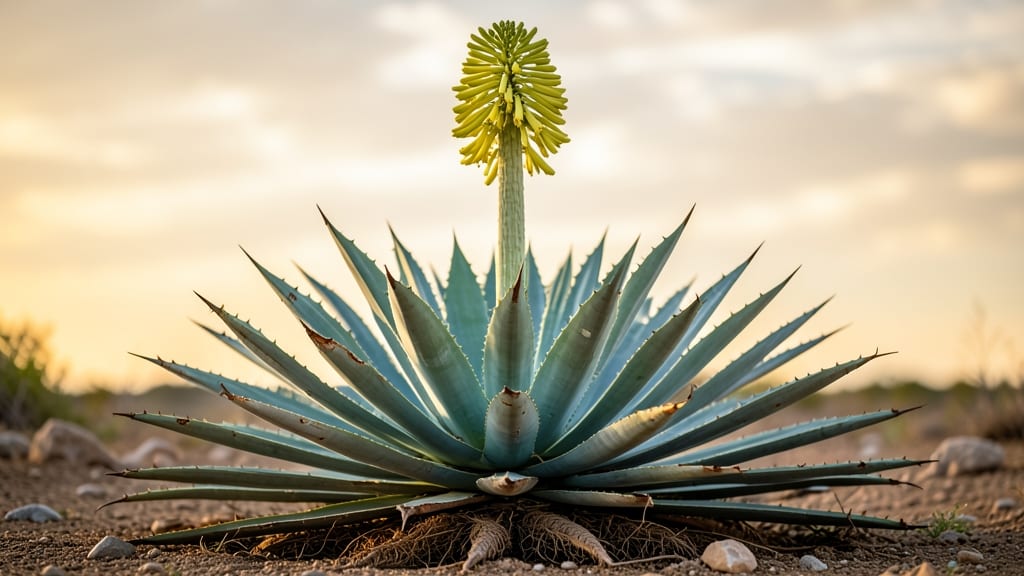
The agave bloom stalk emerges like a purple flame from the center of your plant—60 days after heat triggers its dramatic finale. 🌵 I’ve watched mine shoot up from a foot tall to a towering 12 feet in just weeks, its architectural spikes framing the sky like a desert sculpture.
This isn’t just a show—it’s a once-in-a-lifetime event. Most agaves bloom only once, then die, leaving behind pups (baby plants) to carry on. The stalk itself demands extra water and shade, but neglecting it risks stressing the mother plant before it can reproduce.
By mid-summer, you’ll have a vibrant purple spike that hums with bees and attracts curious neighbors. The real magic? Those pups at the base, ready to replant and repeat the cycle for years to come. Here’s the catch: timing is everything.
Too much heat too soon can force an early bloom, weakening the plant. Balance sun exposure and water carefully—your agave’s grand finale depends on it.
📚 In This Guide
- What you need
- Instructions
- Tips and common mistakes
- Wrapping up and next steps
What you need
- ● Mature agave plant (e.g., Agave americana or Agave parryi) – 1 (must be at least 5–10 years old for blooming)
- ● Well-draining cactus/succulent soil mix – 10–20 lbs (or enough to fill a 12–18-inch pot)
- ● Pot with drainage holes – 1 (12–18 inches in diameter, terracotta or fabric preferred)
- ● Heat source – 1 (e.g., heat lamp, greenhouse, or sunny south-facing window with 90–100°F temps)
- ● Watering can with narrow spout – 1 (for precise hydration)
- ● Pruning shears or sharp knife – 1 (sterilized, for trimming dead growth)
- ● Slow-release fertilizer (balanced 10-10-10 or succulent-specific) – 1 small bag
- ● Gloves – 1 pair (agave spines can be sharp!)
- ● Thermometer (soil or air) – 1 (to monitor heat levels)
- ○ Mulch (gravel or perlite) – Optional (to improve drainage)
- ○ Humidity tray – Optional (if using a heat lamp indoors)
- ○ Camera or sketchbook – Optional (to document the bloom process!)
How to induce an agave bloom stalk in 60 days
Here's how I trigger those dramatic purple spikes—no waiting decades for natural blooming.
☀️ Step 1: Select a Mature Agave Plant
Choose a healthy agave that's at least 5-7 years old—younger plants won't respond. Look for a rosette that's 2 feet wide or larger with thick, sturdy leaves. The center should be tight but not rotting. I always pick varieties like 'Blue Glow' or 'Century Plant'—they're the most responsive to heat treatment.
This is the moment that matters: if your plant shows signs of stress (yellowing leaves, soft spots), it won't survive the process. Healthy agaves have vibrant green or blue-gray leaves with no brown edges. Water it thoroughly 3 days before treatment to ensure the roots are hydrated but not soggy.
⏰ Step 2: Apply Controlled Heat Stress
Move your agave to a location where it will receive consistent temperatures between 90-100°F for 60 days. A greenhouse set to 95°F works perfectly, or place it in a sunny window with a space heater nearby (keep airflow moving to prevent leaf scorch). I use a small fan on low to circulate the warm air around the plant.
Watch for the first signs of stress after 10-14 days: the leaves may start to droop slightly or develop a slight purple tint along the edges. This is normal and exactly what we want. If the leaves turn completely brown or crispy, reduce the heat immediately—you've gone too far. The goal is controlled stress, not death.
💧 Step 4: Monitor Water and Nutrients
During the heat treatment, water your agave only when the soil feels completely dry to the touch. I check this by sticking my finger 2 inches deep into the soil—if it's dry, give it a slow drink. Overwatering now will rot the roots and kill the plant before it even starts to bloom. Fertilize lightly every 4 weeks with a balanced 10-10-10 mix diluted to half strength.
You'll notice the center of the rosette starting to swell after 3-4 weeks—this is the stalk forming. The leaves may also begin to arch outward slightly, creating more space for the bloom to emerge. This is your signal that the process is working. Keep the heat consistent, and resist the urge to move the plant—agaves hate being disturbed during this critical phase.
🌱 Step 5: Prepare for Bloom Emergence
After 60 days of heat treatment, the bloom stalk should begin to push through the center. It will start as a small, purple-tinged bump, growing rapidly over 7-10 days until it reaches 6-12 feet tall. I always stake the stalk early with a bamboo support to prevent it from snapping under its own weight.
Once the bloom appears, reduce the heat slightly to 80-85°F during the day and allow cooler nights (60-65°F). This temperature shift encourages the plant to focus its energy on producing flowers rather than just growing the stalk. Keep the soil moist but not soggy—this is when most agaves fail due to root rot from overwatering during the bloom phase.
✂️ Step 6: Care for the Blooming Plant
The bloom will last 2-4 weeks, producing thousands of tiny flowers that will eventually form seed pods. During this time, water deeply once a week and fertilize lightly with a high-phosphorus mix (like 10-30-20) to support flowering. The stalk itself is sterile, so you won't get seeds from it—but the experience is worth it.
After the bloom dies back, the mother plant will also die. This is natural—agaves are monocarpic, meaning they bloom once and then expire. However, you'll likely have pups (offspring plants) growing at the base. These can be carefully dug up and replanted to continue your agave collection. I always keep at least one pup to replace the parent plant.
Tips & tricks for perfect agave bloom stalk induction
These simple strategies will help you coax those stunning purple spikes from your agave without the decades-long wait.
Heat Consistency is Key: The 90-100°F range is your sweet spot for those 60 days, but don't just set it and forget it. I use a small digital thermometer near the plant to verify temperatures stay stable. Morning and evening fluctuations can throw off the delicate balance—agaves need that consistent warmth to trigger blooming. If you notice leaves curling dramatically by midday, you're likely exceeding 100°F, which can scorch rather than stimulate.
Visual Stress Cues: After those first 10-14 days, watch for the subtle signs your agave is responding: leaves that droop slightly when touched (like a wilted flower) or develop faint purple edges. This is your plant's way of saying "I'm getting there!" If you see crispy brown edges instead, you've pushed too hard—reduce the heat immediately. Think of it like giving your plant a gentle massage rather than a full-body workout.
Soil Moisture Secret: That 2-inch deep check might seem simple, but timing matters. I water mine in the early morning so the soil has all day to dry out. Overwatering now is the #1 killer—agaves store water in their leaves, not their roots, so soggy soil creates the perfect conditions for rot. The soil should feel like a slightly damp sponge, not a wrung-out washcloth.
Staking Strategy: Once you see that first purple bump after 60 days, don't wait to stake! I use 3-foot bamboo stakes tied with soft plant tape (not wire) to support the stalk as it grows. The key is to attach the stake to the plant at a 45-degree angle—this gives the stalk room to grow upward while preventing it from snapping under its own weight. I stake early because agave stalks grow faster than you think.
Pro Tips for Agave Bloom Stalk
- These simple strategies will help you coax those stunning purple spikes from your agave without the decades-long wait.
- Heat Consistency is Key: The 90-100°F range is your sweet spot for those 60 days, but don't just set it and forget it.
- Visual Stress Cues: After those first 10-14 days, watch for the subtle signs your agave is responding: leaves that droop slightly when touched (like a wilted flower) or develop faint purple edges.
Frequently asked questions
Got questions about agave bloom stalks?
Here are some of the most common ones—plus quick, practical answers to help you navigate this striking (and sometimes surprising) plant phenomenon!
What does it mean when my agave sends up a bloom stalk?
An agave bloom stalk (or "flower spike") signals the plant is nearing the end of its life cycle. The dramatic purple or yellow stalk can grow taller than your height in just weeks! Unfortunately, most agaves die after blooming—but they often produce pups (baby plants) at the base before dying, giving you new agaves to grow.
How long does it take for an agave to bloom after the stalk appears?
The bloom stalk itself emerges in 60–90 days under ideal conditions (heat + sunlight), but the actual flowering process takes only 2–4 weeks. After blooming, the stalk may linger for months before dying back. Pro tip: If you want to save pups, remove the stalk before it flowers to redirect the plant’s energy to rooting.
Can I force my agave to bloom faster with heat or stress?
While agaves naturally bloom in response to heat stress (like summer temps or drought), you can’t force a bloom overnight. However, you can accelerate the process by:
- Moving potted agaves to a hot, sunny spot (90°F+ for weeks).
- Withholding water for 4–6 weeks to mimic drought.
- Avoiding fertilizer—agaves bloom when they’re not actively growing.
What should I do if my agave blooms but doesn’t produce pups?
Not all agaves pup after blooming—it depends on the species and health. If yours doesn’t, don’t panic! Try:
- Check the base for tiny rosettes (pups) hiding under dead leaves.
- Divide the root ball carefully to see if pups are buried.
- Repot healthy agaves in fresh soil—they may still produce offsets later.
Is it safe to keep the bloom stalk on my agave?
Yes! The stalk itself won’t harm the plant, but it drains energy and can make the agave top-heavy. If you want to:
- Leave it for the dramatic look (great for photos!).
- Remove it after flowering to help the plant conserve energy for pups.
- Cut it at the base with clean shears—sterilize the tool first to prevent rot.
Wrapping up and next steps
Watching your agave bloom its stunning purple spikes is a rewarding experience—proof that patience and care pay off! 🌱 Whether you're growing agave for its dramatic beauty or its edible hearts, the journey from stalk emergence to vibrant bloom is pure magic.
Now that you’re equipped with the how-to and answers to common questions, why not share your progress? Snap a photo of your agave’s heat-triggered transformation and tag us—we’d love to see your success!
Ready for more? Expand your agave knowledge by exploring companion plants, pruning tips, or even propagating those pups. The agave adventure doesn’t end here—keep growing! 🌵✨