
Blooming
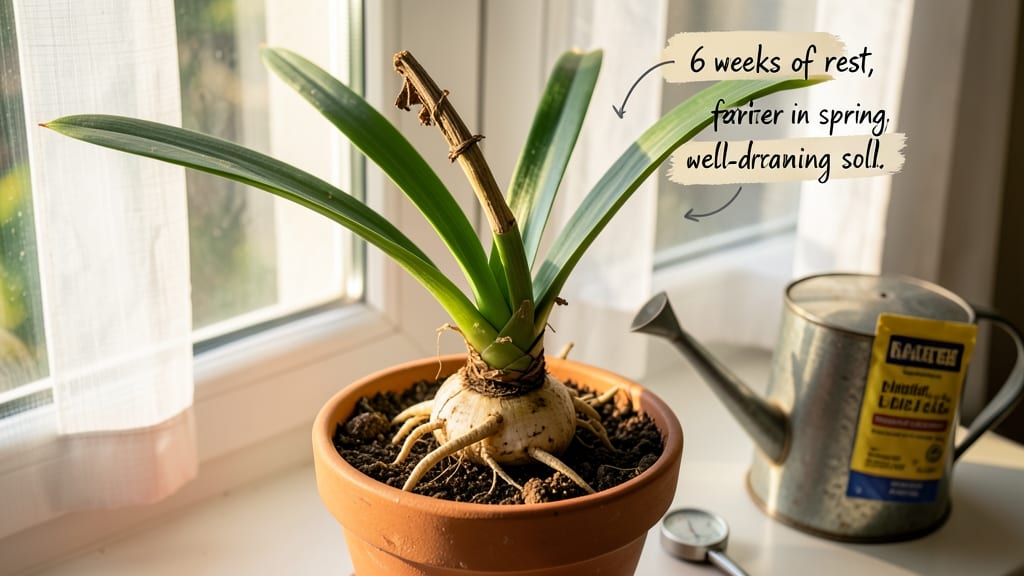
Your amaryllis refuses to bloom again, and I get it—those bold red trumpets are worth the wait. 🌸 The secret to reblooming lies in mimicking its natural cycle: 6 weeks of dormancy, bright indirect light, and precise watering.
Most people skip the dormancy step, thinking more water equals more blooms. Spoiler: it doesn’t. The first thing to check is your plant’s light source. If the leaves look stretched or pale, it’s not getting enough—move it to a south-facing window or under a grow light.
Too much direct sun? The edges will crisp. Then comes the dormancy trick: stop watering entirely after blooms fade, let the soil dry out, and store it in a cool (60-65°F), dark spot for 8-10 weeks. This reset is non-negotiable for next year’s flowers.
When you bring it back into bloom season, feed it monthly with a balanced fertilizer (20-20-20) and keep the soil lightly moist—not soggy. Deadhead spent blooms to redirect energy to the bulb, and watch for new growth in 6-8 weeks. The payoff?
A second (or third!) round of those showstopping blooms by winter. This works for indoor amaryllis year after year. The key is patience—no shortcuts, just consistent care. Let’s get those bulbs blooming again!
📚 In This Guide
- What you need
- Instructions
- Tips and common mistakes
- Wrapping up and next steps
What you need
- ● Mature amaryllis bulb: A healthy bulb with at least one dormant season under its belt (preferably 1+ years old).
- ● Well-draining potting mix: A blend of peat moss, perlite, and sand (or a commercial cactus/succulent mix). Quantity: Enough to fill a pot 2–3 inches deeper than the bulb’s height.
- ● Pot with drainage holes: A container 1–2 inches wider than the bulb’s diameter (e.g., 6–8 inches for a standard bulb). Terracotta or ceramic works best.
- ● Watering can or spray bottle: For gentle hydration—avoid soggy soil!
- ● Bright, indirect light source: A south- or east-facing window, or a grow light (12–14 hours/day) if natural light is lacking.
- ● Room-temperature water: 60–70°F (15–21°C) for soaking or watering.
- ● Pruning shears or clean scissors: For trimming spent blooms and foliage.
- ● Fertilizer: A balanced liquid fertilizer (10-10-10) or bulb-specific food to boost growth. Dilute to half-strength!
- ● Humidity tray: A shallow tray with pebbles + water to increase moisture (especially in dry climates).
- ● Thermometer/hygrometer: To monitor ideal temps (65–75°F / 18–24°C) and humidity (40–50%).
- ● Decorative pot or sleeve: For a polished look—just ensure the inner pot has drainage!
Step-by-step instructions for reviving your amaryllis blooms
Here's the method I've used to get stubborn amaryllis plants blooming again—no fancy tools, just patience and timing.
🌱 Step 1: Give It a Proper Rest Period
After your amaryllis blooms, it needs 6-8 weeks of dormancy to store energy for next year's flowers. Move the bulb to a cool, dark spot (around 50-60°F) and stop watering completely. The leaves will yellow and die back naturally—that's normal. Real talk: I used to water through dormancy, and my blooms always fizzled.
Check the soil every 2 weeks. If it feels damp, wait longer. The goal is for the bulb to shrink slightly and go dormant. This rest period is non-negotiable—it's how the plant builds energy for future blooms. If you skip it, you'll get leaves but no flowers.
☀️ Step 2: Bring It Back to Light and Warmth
After dormancy, place the pot in bright, indirect light (a south-facing window works well) and resume watering when you see new green shoots. I like to water lightly at first—just enough to moisten the soil—until the first true leaves appear. Overwatering now can rot the bulb before it's ready to grow.
Once shoots reach 2-3 inches tall, you can water more regularly, keeping the soil evenly moist but not soggy. The key is consistency. Amaryllis bulbs are sensitive to moisture fluctuations, so I check soil moisture with my finger—wait until the top inch feels dry before watering again.
💧 Step 3: Feed It Right for Flower Buds
When new growth appears, start fertilizing with a balanced, water-soluble fertilizer (like 10-10-10) diluted to half strength. Apply it every 2 weeks during the active growing season. I avoid high-nitrogen fertilizers—they encourage leafy growth at the expense of flowers. Too much nitrogen is why my first amaryllis bloomed only once.
Watch for flower buds forming—they'll appear as small, tight clusters at the top of the stem. This usually happens 8-12 weeks after breaking dormancy. If you don't see buds by then, your plant might need more light or a longer rest period next time.
✂️ Step 4: Deadhead and Support Flower Stems
When your amaryllis blooms, snip off the spent flowers just above the bulb to redirect energy back into the bulb for next year. Don't cut the entire stem—leave it until it turns yellow and dies back naturally. I've found that removing flowers too early can weaken the bulb for future blooms.
Support tall flower stems with a small stake or by gently tucking them into the pot. Amaryllis blooms can get heavy, and flopping stems look messy. Once the flowers fade, let the stem stay until it browns completely—this ensures the bulb absorbs all the nutrients before dormancy.
🌿 Step 5: Repeat the Cycle for Reliable Blooms
After the stem dies back, repeat the dormancy process: stop watering, move to a cool spot, and wait 6-8 weeks. Each year, your amaryllis should bloom earlier and more reliably if you stick to this cycle. I've had the same bulb produce flowers for 5+ years by following this routine.
Here's the thing—amaryllis blooms are finicky, but they're not impossible. The secret is consistency. If you miss a step, don't stress—just adjust next time. With patience, your amaryllis will reward you with dramatic, show-stopping blooms year after year.
Tips & tricks for reviving stubborn amaryllis blooms
Let me save you the frustration I went through—these are the game-changing insights that actually work for amaryllis revival.
Dormancy is Non-Negotiable: That 6-8 week rest period at 50-60°F is where the magic happens. I learned this the hard way after years of forcing blooms without proper dormancy—your bulb needs this time to recharge like a battery. If your home stays above 65°F during dormancy, move the pot to a basement or garage. Pro tip: Place a small fan nearby during dormancy to prevent mold buildup in the soil.
Light Matters More Than You Think: When you bring your amaryllis back to light after dormancy, bright indirect light is key—but don't underestimate the power of direction. Rotate the pot every few days so all sides get equal light exposure. South-facing windows are ideal, but if you don't have one, supplement with a grow light 12 inches above the plant for 14 hours daily. I've seen amaryllis with buds form in just 6 weeks with proper light, while others took 12 weeks in dimmer conditions.
Watering Wisdom: The "top inch dry" rule is crucial, but here's what nobody tells you—amaryllis bulbs are sensitive to temperature fluctuations. If your home has cold drafts near the plant, reduce watering slightly since cooler temps slow moisture evaporation. Also, use room-temperature water to avoid shocking the roots. I keep a watering can filled with room-temp water nearby for this exact reason.
Fertilizer Timing Secret: That 2-week fertilizer schedule starts only after you see new growth, not when you first bring the plant out of dormancy. The first few weeks are about root establishment, not feeding. And here's the thing about fertilizers: I've found that switching to a phosphorus-heavy formula (like 5-10-5) when buds form helps encourage blooming. Too much nitrogen is the #1 reason amaryllis produce leaves but no flowers.
Pro Tips for How Do I Get My Amaryllis To Bloom Again
- Let me save you the frustration I went through—these are the game-changing insights that actually work for amaryllis revival.
- Dormancy is Non-Negotiable: That 6-8 week rest period at 50-60°F is where the magic happens.
- Light Matters More Than You Think: When you bring your amaryllis back to light after dormancy, bright indirect light is key—but don't underestimate the power of direction.
Frequently asked questions
Got questions about reviving your amaryllis? You’re not alone! Here are some of the most common concerns—and straightforward answers—to help you coax those stunning blooms back into action.
Why won’t my amaryllis bloom after the first time?
Most amaryllis bulbs bloom once, then need a rest period (6-8 weeks of cooler temps and minimal water) to recharge. Without this break, they focus energy on foliage instead of flowers. Think of it like a hibernation reset—your bulb is just taking a nap before the next big show!
How long does it take for an amaryllis to bloom again after resting?
After the rest period, place your bulb in bright, indirect light and keep soil lightly moist. Blooms typically appear 6-8 weeks later, but timing depends on bulb health, light, and warmth. Patience is key—some bulbs surprise you with flowers in just 4-6 weeks if conditions are perfect!
Can I force an amaryllis to bloom faster?
While you can’t rush nature, you can optimize conditions: Move it to a sunny south-facing window, use a grow light if needed, and keep temps between 65–75°F (18–24°C). Avoid overwatering—soggy soil stresses the bulb. A little warmth and light go a long way!
What if my amaryllis only grows leaves and no flowers?
This usually means the bulb isn’t getting enough light, nutrients, or rest. Try these fixes:
- Move it to a brighter spot (or add a grow light).
- Fertilize lightly with a balanced bulb food every 4–6 weeks.
- Ensure it had a proper rest period last year.
Do I need to cut off dead flowers or leaves after blooming?
Yes! Deadheading (removing spent blooms) redirects energy to the bulb. Cut the flower stalk 1–2 inches above the bulb, but leave the leaves—they photosynthesize to feed the bulb for next year’s blooms. Snip yellow or brown leaves only if they’re diseased.
Can I keep my amaryllis blooming year-round?
Not naturally—amaryllis are seasonal plants. However, you can trick them into blooming twice a year by giving them two rest periods annually (e.g., winter + summer). After the first bloom cycle, let the foliage die back, rest the bulb, then repeat. It’s like giving your plant a mini-vacation twice a year!
Wrapping up and next steps
Getting your amaryllis to bloom again is all about patience, consistency, and a little extra care! With the right balance of light, heat, and deadheading, you’ll be rewarded with stunning flowers year after year.
Don’t forget—every plant has its own rhythm, so trust the process and celebrate small victories along the way. 🌱
Now that you’re armed with these tips, try one technique at a time and observe how your amaryllis responds. Keep a simple journal to track changes—you might just uncover your plant’s perfect blooming formula! Happy gardening! ✨