
Blooming
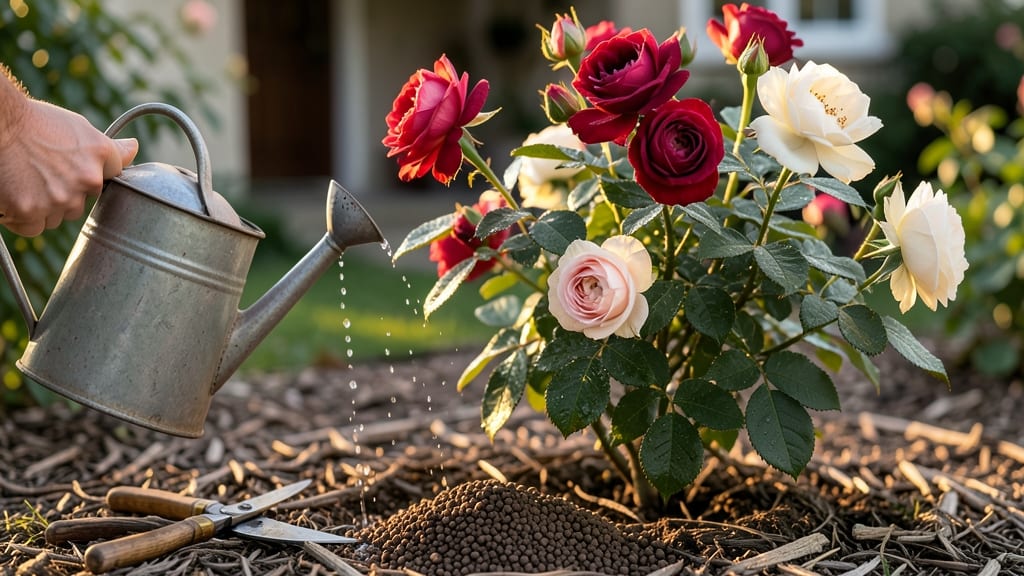
To make roses bloom more, the secret lies in heat-triggered rebloom cycles—something most gardeners miss. 🌹 I’ve watched my own bushes go from a handful of blooms to hundreds by timing pruning and feeding with the seasons, not just the calendar.
The key isn’t just cutting back; it’s understanding when roses wake up from dormancy and how to push them into a second (or third) flush of flowers.
Start with late winter pruning when buds swell, then feed with a high-phosphorus fertilizer when new growth appears. Roses bloom best with 6-8 hours of direct sun daily and consistent watering—drought stress halts flowers faster than any other factor.
My biggest breakthrough? A mid-summer trim after the first bloom wave forces a second flush by early fall, extending color until frost.
By next summer, you’ll see thicker canes, more buds, and blooms that last weeks instead of days. The trick is consistency: prune at the right time, feed when they’re hungry, and never let them dry out.
Even my first-year mistakes (over-pruning, wrong fertilizer) taught me how delicate the balance is—but once you get it, roses reward you with nonstop color.
Works for hybrid teas, floribundas, and shrub roses alike. The same principles apply whether you’re in a hot-summer zone or a cooler climate—just adjust timing. Let’s get those blooms going!
📚 In This Guide
- What you need
- Instructions
- Tips and common mistakes
- Wrapping up and next steps
What you need
- ● Roses: Healthy, mature roses (hybrid teas, floribundas, or grandifloras work best for reblooming). Aim for at least 3–5 plants for noticeable results.
- ● Pruning shears: Sharp, clean shears (sterilize with rubbing alcohol between cuts to prevent disease).
- ● Balanced fertilizer: A 10-10-10 or 20-20-20 NPK ratio (organic options like composted manure or fish emulsion also work!). Use 1–2 tbsp per plant every 4–6 weeks.
- ● Heat source (for reblooming): Heat mat or heating pad (for container roses; 70–80°F range).
- ● Black plastic mulch (for in-ground roses; retains heat and suppresses weeds).
- ○ Grow lights (optional for indoor roses; LED full-spectrum bulbs, 12–16 hours/day).
- ● Watering can or hose with nozzle: Drip irrigation or soaker hoses are ideal for consistent moisture.
- ● pH test kit: Roses thrive in 6.0–6.5 pH soil. Adjust with lime (to raise pH) or sulfur (to lower pH) if needed.
- ● Epsom salt (magnesium sulfate): 1 tbsp per gallon of water, applied monthly for greener foliage and stronger blooms.
- ● Slow-release granules: Mix 1–2 cups per plant into soil at planting for steady nutrients.
- ● Rose-specific food: Products like Miracle-Gro Rose & Flower Food for a quick nutrient boost.
- ● Mulch (straw or wood chips): 2–3 inches thick to retain moisture and regulate soil temperature.
- ● Compost or worm castings: Improves soil structure and microbial activity for healthier roots.
- ● Thermometer: Monitor soil temps (ideal: 60–75°F for optimal growth).
Step-by-Step instructions for encouraging roses to bloom more
Here’s how I coax roses into nonstop blooming—no fancy tricks, just proven techniques that work in any garden.
🌿 Step 1: Prune for Airflow and Light
Start by removing dead, crossing, or crowded branches—this opens the plant up to better airflow and sunlight. I cut back to an outward-facing bud just above a leaf node, using clean, sharp shears. This ensures new growth emerges from the right spot and avoids stubs that rot.
Watch for thick clusters of canes—these compete for energy. Thin them out so sunlight reaches the center of the bush. You’ll see new shoots emerge within 2-3 weeks, signaling the plant is focusing energy on blooms instead of struggling branches.
☀️ Step 2: Feed with the Right Fertilizer at the Right Time
Use a balanced rose fertilizer (like 10-10-10) in early spring when new growth appears. This jumpstarts blooming. Then switch to a low-nitrogen, high-phosphorus formula (like 5-10-5) when buds form—this boosts flower production. I apply it every 4-6 weeks during the growing season.
Stop fertilizing 8 weeks before your first frost—this lets the plant harden off properly. Overfeeding late in the season leads to tender new growth that won’t survive winter. You’ll notice buds forming 2-3 weeks after feeding with the high-phosphorus mix.
💧 Step 3: Water Deeply and Consistently
Roses need 1-2 inches of water per week, delivered at the base—not overhead. I water early in the morning so leaves dry quickly, preventing fungal diseases like black spot. Let the top 2-3 inches of soil dry out between waterings to encourage deep root growth.
Mulch around the base with 2-3 inches of organic mulch (like shredded bark) to retain moisture and regulate soil temperature. This keeps roots cool in summer and insulated in winter. You’ll see stronger stems and more buds when roots stay consistently moist but not soggy.
✂️ Step 4: Deadhead and Prune Spent Blooms
Snip off faded blooms just above a set of 5 leaves—this redirects the plant’s energy into new buds instead of seed production. I use clean pruners and make cuts at a 45-degree angle to keep water from pooling on the stem. Do this weekly during bloom season for continuous flowers.
If you see hip formation (the green seed pod), remove it immediately—this signals the plant to stop blooming. Regular deadheading keeps roses producing flowers until frost. You’ll notice fresh buds forming within 10-14 days of consistent deadheading.
🌱 Step 5: Protect from Stressors That Halt Blooming
Avoid late-season pruning—this can shock the plant and stop flower formation. Also, watch for pests like aphids or spider mites, which weaken roses. Spray with neem oil if you spot them early. Stress from pests or disease forces the plant to focus on survival, not blooms.
Finally, don’t move established roses—transplanting mid-season disrupts root systems and halts flowering. If you must relocate, do it in early spring before buds swell. A healthy, undisturbed rose will reward you with nonstop blooms all season.
Tips & tricks for encouraging roses to bloom more
Real talk: These small adjustments make all the difference between a few summer blooms and a garden bursting with color all season.
Pruning Precision: When you're thinning those thick clusters of canes in Step 1, aim to leave at least three healthy canes per bush. This balance lets sunlight reach the center while giving the plant enough structure to support blooms. I learned this the hard way—over-pruning one year left my rose bush looking like a skinny twig with no energy for flowers! Also, always make cuts at a 45-degree angle just above an outward-facing bud—this simple technique creates stronger growth points that'll produce more buds.
Fertilizer Timing Secret: The 4-6 week feeding schedule in Step 2 works best when you align it with your rose's natural growth cycles. Start with that balanced fertilizer in early spring when you see fresh green growth, then switch to high-phosphorus when you notice buds starting to swell. Pro tip: Mix your fertilizer with water and apply it directly to the soil—not the leaves—to avoid burning foliage. I also recommend applying fertilizer in the morning so it has time to soak in before evening moisture.
Watering Wisdom: That 1-2 inches per week guideline in Step 3 is perfect, but here's what nobody tells you—morning watering is non-negotiable. Watering in the evening leaves leaves damp overnight, creating the perfect conditions for fungal diseases like black spot. I've seen beautiful roses ruined by this simple oversight. Also, consider installing a drip irrigation system at the base of your roses—it delivers water exactly where the roots need it without wetting the foliage. This small investment pays off with healthier plants and more blooms.
Deadheading Discipline: The weekly deadheading in Step 4 is your secret weapon for continuous blooms. When you remove those faded blooms just above a set of 5 leaves, you're essentially telling the plant, "Keep making more flowers!" I can't emphasize enough how important it is to use clean pruners—dull blades crush stems and create entry points for diseases. And those 45-degree cuts? They're not just for looks—they help water run off the stem instead of pooling and causing rot.
Pro Tips for Make Roses Bloom More
- Real talk: These small adjustments make all the difference between a few summer blooms and a garden bursting with col...
- Pruning Precision: When you're thinning those thick clusters of canes in Step 1, aim to leave at least three healthy ...
- Fertilizer Timing Secret: The 4-6 week feeding schedule in Step 2 works best when you align it with your rose's natur...
Frequently asked questions
Got questions about coaxing more blooms from your roses? You're not alone! Here are some of the most common queries—and straightforward answers—to help you grow a garden bursting with color.
Why aren’t my roses blooming even after pruning and fertilizing?
Roses need consistent care. Check for these issues first: overcrowded roots (they need space to breathe), poor drainage (waterlogged soil suffocates roots), or lack of sunlight (6+ hours of direct sun daily is a must). Heat-triggered rebloom techniques—like strategic pruning in late spring—can also reset growth cycles. If pests (like aphids) or disease (black spot) are present, treat them before expecting blooms.
How long does it take for roses to rebloom after heat treatment?
With the right heat-triggered method (like our late-spring pruning hack), most hybrid teas and floribundas rebloom in 6–8 weeks. Knock Out® roses and other modern varieties may bloom faster—sometimes in 4–6 weeks. Patience is key! Monitor for new buds (they’ll look like tiny green eggs) and adjust water/fertilizer as needed.
Do I need to water roses more to encourage blooms?
Yes—but smartly. Deep watering 1–2 times per week (1–2 inches total) encourages strong root growth, which fuels blooms. Avoid wetting leaves to prevent disease. Morning watering is best—it reduces evaporation and fungal risks. During heatwaves, increase frequency but check soil moisture first (stick your finger 2 inches down; if dry, water again).
Can I use coffee grounds or eggshells to make roses bloom?
These are myth-busters! Coffee grounds (even used ones) can lower soil pH slightly, but roses prefer slightly acidic to neutral soil (6.0–6.5). Eggshells add calcium, but roses don’t need extra—focus on balanced fertilizer (like 10-10-10) instead. For real blooms, prioritize sunlight, pruning, and heat-triggered techniques over home remedies.
Will frost or cold weather ruin my roses’ reblooming chances?
Not necessarily! Hardy roses (like Rugosa or David Austin varieties) tolerate light frosts. However, new buds and blooms are frost-sensitive—cover them with a blanket or cloth if temps drop below 28°F (-2°C). For heat-treated roses, avoid late-spring pruning if frost is forecast. Once buds swell in spring, protect them until nighttime temps stay above 50°F (10°C) consistently.
What if my roses keep blooming but the flowers fall off quickly?
This usually means stress—often from over-fertilizing with nitrogen (which fuels leaves, not blooms) or poor pollination (bees love roses, but wind/pesticides can interfere). Try a low-nitrogen, high-phosphorus fertilizer (like 5-10-5) and hand-pollinate by gently shaking stems on warm, sunny days. Deadheading spent blooms also redirects energy to new buds!
Wrapping up and next steps
With the right care—like strategic pruning, heat-triggered techniques, and proper soil nutrition—your roses can burst into year-round color! 🌸 Remember, consistency is key: monitor their needs, adjust as seasons change, and don’t hesitate to experiment with what works best for your climate.
Ready to see your garden transform? Start small—pick one method to try this week, and watch your roses reward you with blooms that keep coming!