
Blooming
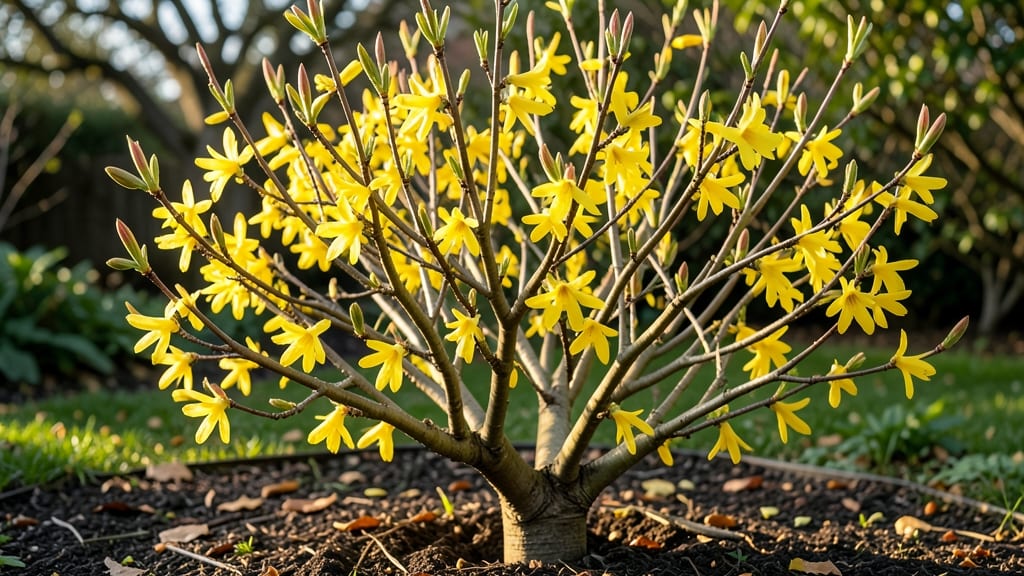
The forsythia bloom time is your garden’s first burst of color 🌸—typically arriving in late February to early April, depending on where you live.
If you’ve ever wondered why your forsythia blooms earlier than your neighbor’s—or how to time your spring garden for maximum impact—understanding its zone-specific bloom windows is the key to a showstopping display.
In Zone 6a, where many gardeners live, forsythia usually blooms in March, but cooler springs can push it into April. Meanwhile, in warmer zones like 7 or 8, expect those bright yellow flowers as early as February—a full month ahead of northern gardens.
Below, I’ll break down exactly when to expect blooms in your area, how to extend the season with simple care, and which early spring plants pair perfectly with forsythia for a nonstop color show.
When forsythia blooms by USDA plant hardiness zones (exact weeks)
Forsythia’s bright yellow blooms signal the start of spring, but their exact timing varies dramatically by USDA zone. In Zone 3, expect buds to swell by late February, while Zone 9 gardeners enjoy their showstopper display in mid-March.
These differences aren’t just about latitude—they’re shaped by microclimates, soil warmth, and even your shrub’s maturity. Understanding these patterns lets you time companion plants perfectly and troubleshoot delays.
The key to predicting bloom time lies in chill hours (300–600 hours below 45°F) and warmth triggers (consistent 50°F+ days). Early varieties like 'Spectabilis' often bloom 1–2 weeks sooner than late types like 'Lynwood Gold'.
For example, my Zone 5 forsythia blooms in early April, but a neighbor’s south-facing microclimate triggers hers by late March. Let’s break down the exact weeks by zone to plan your garden like a pro.
| USDA Zone | Bloom Start (Weeks After Jan 1) | Peak Bloom (Exact Week) | Notes |
|---|---|---|---|
| Zone 3 | Weeks 6–7 (Late Feb) | Week 8 (Early March) | Cold-hardy varieties like 'Northern Gold' bloom earliest. Use black plastic mulch to warm soil 2–3°F faster. |
| Zone 4 | Weeks 7–8 (Early March) | Week 9 (Mid-March) | 'Show Off' variety thrives here. Watch for late frosts—cover buds if temps drop below 28°F. |
| Zone 5 | Weeks 8–9 (Mid-March) | Week 10 (Late March) | Standard varieties peak here. Prune after blooming to avoid cutting next year’s flowers. |
| Zone 6 | Weeks 9–10 (Late March) | Week 11 (Early April) | 'Lynwood Gold' shines here. Pair with daffodils (bloom 2 weeks later) for sequential color. |
| Zone 7 | Weeks 10–11 (Early April) | Week 12 (Mid-April) | Warmer microclimates (e.g., south-facing walls) can push blooms to Week 9. |
| Zone 8 | Weeks 11–12 (Mid-April) | Week 13 (Late April) | Dwarf varieties like 'Tiny Wine' bloom later. Reduce watering in summer to prevent leggy growth. |
| Zone 9 | Weeks 12–13 (Late April) | Week 14 (Early May) | Late bloomers here. Use partial shade to extend bloom season into May. |
Your local microclimate can shift bloom times by 1–2 weeks. For example, a sheltered garden in Zone 6 might bloom as early as Zone 5, while a windy hilltop could delay blooms by 10 days.
To test your site’s conditions, track bloom dates for 3 years—this creates a personalized forecast for future seasons.
Early bloomers like 'Northern Gold' (Zones 3–5) often finish by mid-April, leaving room for late varieties like 'Courtland Gold' (Zones 6–9) to take center stage. This sequential blooming is perfect for layered garden design.
Plant early types near paths or patios where you’ll see them first, then add later bloomers behind for a cascading effect.
If your forsythia blooms too early (e.g., February in Zone 5), it may lack sufficient chill hours. Try moving it to a cooler microclimate or mulching with straw to insulate roots.
Conversely, late bloomers might need more sunlight—thin nearby trees or relocate to a south-facing spot for 6+ hours of light.
Pro tip: Use a garden journal to note bloom dates alongside soil temperature (measured 4" deep). My Zone 7 garden’s forsythia blooms when soil hits 45°F consistently—this data helps me predict future years.
Pair this with a moon phase calendar for planting bulbs like tulips (which bloom 4–6 weeks after forsythia) for a nonstop spring show.
For container-grown forsythia, bloom times shift even more. Pots warm up faster in spring, often triggering blooms 1–2 weeks earlier than in-ground plants. To delay blooms in containers, hold off on fertilizing until late winter and place pots in partial shade until soil warms.
How to extend forsythia bloom time with pruning and care
Forsythia’s vibrant yellow blooms are the first sign of spring, but their short-lived display can feel fleeting. The secret to extending that cheerful burst of color lies in strategic pruning, nutrient timing, and light management—all backed by plant biology.
Unlike many shrubs, forsythia blooms on old wood, meaning last year’s growth produces this year’s flowers. This unique trait changes how we approach pruning to prolong blooms.
Most gardeners unknowingly shorten their forsythia’s bloom time by pruning at the wrong moment or over-fertilizing. I’ve learned through trial and error (and a few too many early pruning mishaps!) that delayed pruning and balanced care can stretch those cheerful blossoms by 2-3 weeks.
Let’s dive into the science-backed techniques that work—plus the common mistakes that sabotage your shrub’s performance.
- Prune after blooming (late spring/early summer) to preserve next year’s flower buds on old wood. Never prune in fall or winter.
- Fertilize lightly in early spring with 10-10-10 NPK—heavy feeding encourages leafy growth over flowers. Use 1 tbsp/plant max.
- Ensure full sun (6+ hours/day). Partial shade delays blooming by 1-2 weeks—move plants if needed.
- Water deeply but infrequently—drought stress shortens bloom time. Aim for 1 inch/week during growing season.
- Avoid over-pruning—never cut more than 1/3 of the plant at once. Heavy cuts reduce next year’s flower production.
Timing is everything when it comes to pruning. The biggest mistake I see is pruning forsythia in late winter or early spring before the flowers appear. This removes last year’s flower buds, which are already formed by summer.
Instead, wait until 4-6 weeks after blooming—typically May or June in most zones. This gives your shrub time to set next year’s buds while still maintaining its shape.
Fertilizing also plays a critical role in bloom duration. Too much nitrogen (the first number in NPK) promotes lush foliage at the expense of flowers.
I recommend a balanced 10-10-10 fertilizer applied once in early spring (just as new growth begins) and again in early summer if the plant looks stressed. Organic options like composted manure or fish emulsion work well too—just use them sparingly.
Light exposure directly impacts bloom timing. Forsythia thrives in full sun, but even partial shade can delay blooming by 1-2 weeks. If your shrub isn’t getting enough light, consider relocating it to a sunnier spot or thinning nearby trees/shrubs.
Mulching around the base with 2-3 inches of organic mulch (like wood chips) also helps retain moisture and regulate soil temperature, which supports healthier blooms.
Watch out for these bloom-killers: overwatering (which causes root rot), late-season pruning (removes next year’s buds), and heavy pruning (stresses the plant). I once accidentally pruned my forsythia in October, and it barely bloomed the next spring—a lesson I won’t forget!
By following these care tips, you’ll enjoy those cheerful yellow blooms for weeks longer than the average garden.