
Blooming
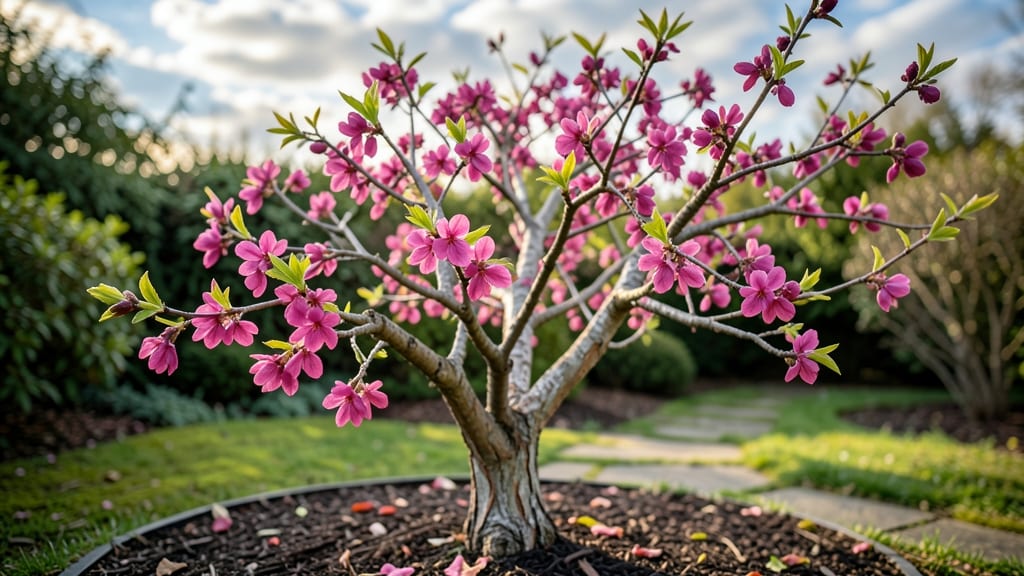
The eastern redbud bloom time transforms gardens into a dreamy sea of pink 🌸 in early spring, often between late March and early April, as the flowers emerge before the leaves.
Picture this: you’re sipping your morning coffee when the first delicate blossoms catch your eye—proof that winter’s grip is finally loosening. But here’s the catch: whether you see those blooms in February or May depends entirely on where you live.
From the chilly Zone 3 northlands to the milder Zone 9 south, the timing shifts by weeks. A tree in Zone 6a might burst into color by mid-April, while its cousin in Florida could start as early as February.
In this guide, I’ll break down the exact bloom windows by region, share the secrets to coaxing earlier flowers, and show you how to pair your Redbud with other spring stars for a showstopping display.
Eastern Redbud bloom time by USDA hardiness Zone: exact months
The Eastern Redbud (Cercis canadensis) is one of the first trees to bloom each spring, but its exact timing shifts dramatically depending on your USDA hardiness zone and local climate.
In colder zones like Zone 3, you might spot those iconic pink flowers as early as late March, while gardeners in Zone 9 could enjoy them by February. Understanding these patterns helps you time pruning, companion planting, and even spring garden cleanups for maximum impact.
Microclimates play a huge role too—urban heat islands can push blooms 1-2 weeks earlier, while mountainous regions may delay them by the same amount. For example, a Zone 6 Redbud in Denver (elevation 5,280 ft) might bloom 10 days later than one in St. Louis (elevation 460 ft).
Let’s break down the exact bloom windows for each zone, including early, peak, and late phases.
In Zone 3, where winters are harsh, the Eastern Redbud often waits until late March to bloom, aligning with the last average frost date in most northern states.
This timing ensures buds survive sub-zero temperatures common in Minnesota or Upstate New York. Meanwhile, gardeners in Zone 9—like those in Florida or Southern California
How to predict your Eastern Redbud’s first blooms: 5 key factors
The Eastern Redbud (Cercis canadensis) is a gardener’s favorite for its early spring blooms, but predicting exactly when those pink flowers will appear requires understanding five critical factors.
These elements—tree age, sunlight exposure, soil conditions, winter chill hours, and last-frost dates—can shift bloom timing by weeks or even months in your region. Let’s break down how each influences your tree’s schedule. 🌱
Your Eastern Redbud’s age is the first clue. Young trees (under 5 years old) often bloom later because they’re still focusing energy on root and trunk growth. A mature tree (10+ years), however, will typically flower 2-4 weeks earlier once established.
For example, a 3-year-old sapling in Zone 6 might bloom in late April, while a 15-year-old specimen could burst into color by mid-March. 🌸
- 🌿 Tree Age: Mature trees bloom 2-4 weeks earlier than young saplings
- ☀️ Sunlight: Full sun advances blooms by 10-14 days vs. partial shade
- 🌡️ Soil pH: Ideal 6.0-7.0 ensures vibrant, on-time blooms
- ❄️ Winter Chill: Needs 500-1,000 hours below 45°F for reliable flowering
- ⏰ Last Frost: Blooms typically appear 2-3 weeks after average last frost date
Sunlight exposure is another game-changer. Eastern Redbuds thrive in full sun (6+ hours daily), which can push blooms 10-14 days earlier compared to trees in partial shade. For instance, a tree in a south-facing border might bloom in early April, while one under dappled shade from oaks could wait until late April. If your tree isn’t getting enough light, consider thinning nearby foliage or transplanting it to a sunnier spot. 🪴
Don’t overlook soil pH and fertility. Eastern Redbuds prefer slightly acidic to neutral soil (pH 6.0-7.0), and a pH outside this range can delay or reduce blooms.
Test your soil in fall—if it’s too acidic (below 5.5), amend with lime; if alkaline (above 7.5), add sulfur or peat moss. Well-draining, nutrient-rich soil also encourages earlier flowering. A simple soil test kit (available at garden centers) will give you precise adjustments. 💧
Winter chill hours are often the overlooked factor. Eastern Redbuds require 500-1,000 hours of temperatures below 45°F (7°C) during dormancy to trigger blooming. In warmer climates (Zones 7-9), insufficient chill can cause delayed or sparse blooms. If you’re in a mild-winter region, choose chill-resistant cultivars like ‘Rubicon’ or ‘Forest Pansy,’ or use artificial chilling methods (like a cold frame) for young trees. ❄️
Finally, your local last-frost date sets the baseline. Eastern Redbuds typically bloom 2-3 weeks after the average last frost in your area. Check your USDA Zone and microclimate—urban areas often warm up faster than rural zones, advancing bloom time by 5-7 days.
For example, in Zone 5, blooms might arrive in late March, while Zone 8 gardeners could see them as early as February. Use local weather apps or Cooperative Extension Service data to refine your predictions. ⏰
Tracking these five factors isn’t just about planning your garden—it’s a way to monitor climate change in your region. If your Eastern Redbud blooms 2+ weeks earlier than historical averages, it may signal warmer winters or shifting frost patterns.
Jot down bloom dates yearly to spot trends, and share your observations with local citizen science projects like the USA National Phenology Network. Your tree could be a living barometer for spring’s arrival! 🌿