
Blooming
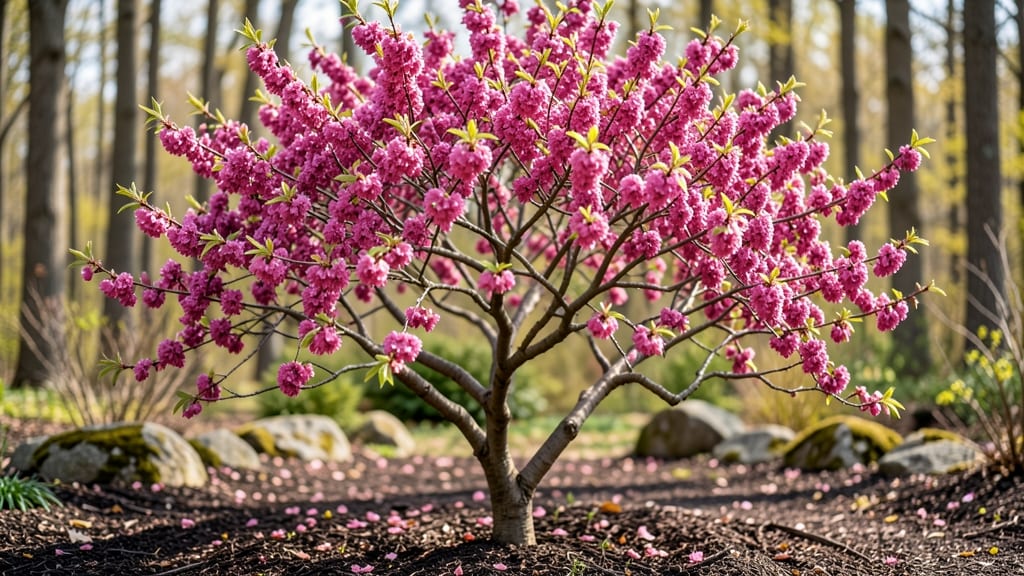
Redbud trees burst into heat-triggered purple spikes when the soil warms to 50°F—but timing depends entirely on your zone. 🌸 In Zone 4, expect blooms by mid-April; by Zone 7, they arrive as early as February, often before leaves appear.
The contrast of magenta flowers against bare branches makes them a spring showstopper no garden should miss.
Climate plays a bigger role than variety—late frosts can delay blooms, while warm winters may push them earlier. Southern redbuds (Cercis canadensis) tend to bloom 2-3 weeks ahead of northern varieties like Cercis canadensis var. alba.
The key is watching for leaf buds swelling before the flowers appear, signaling it’s time to admire (or photograph) the spectacle.
Timing matters for pruning too—wait until after blooming to shape the tree, or you’ll cut off next year’s flowers. Pair redbuds with early bloomers like hellebores or winter jasmine to extend the color show, and avoid planting them where late frosts linger—their delicate blooms won’t survive cold snaps.
Pro tip: Mulch heavily in fall to protect roots from temperature swings, and water deeply during droughts to keep blooms vibrant. Once established, redbuds thrive with minimal care, rewarding you with 3-4 weeks of stunning color that’s impossible to ignore.
📚 In This Guide
- What you need
- Instructions
- Tips and common mistakes
- Wrapping up and next steps
What you need
- ● Redbud tree seedlings or saplings: Choose zone-hardy varieties (e.g., Eastern redbud for Zones 4-9, Texas redbud for Zones 6-9). Opt for 1- to 3-gallon containers for mature trees or bare-root seedlings for spring planting.
- ● Well-draining soil mix: Combine 2 parts topsoil, 1 part compost, and 1 part perlite/sand (for sandy or clay-heavy soils). Aim for 6.0–7.0 pH.
- ● Organic mulch: 2–3 inches of wood chips or pine straw to retain moisture and regulate soil temperature.
- ● Slow-release fertilizer: 10-10-10 NPK ratio (apply ½ cup per tree in early spring before blooms appear).
- ● Watering can or hose with adjustable nozzle: For deep watering (1–1.5 inches per week, especially during redbud bloom time prep).
- ● Shovel or trowel: For digging holes twice as wide as the root ball and slightly shallower than the container.
- ● Pruning shears or loppers: Bypass pruners (for clean cuts) and sterilized loppers (for thicker branches).
- ● Garden gloves: Heavy-duty nitrile-coated gloves to protect against thorns and soil.
- ○ Soil pH test kit: To verify acidity/alkalinity before planting (optional but helpful for zone-specific adjustments).
- ○ Staking kit (optional): 3 wooden stakes and flexible ties for young trees in windy areas.
- ● Sunlight assessment: Confirm your planting spot gets full sun (6+ hours/day) for optimal redbud bloom time (though they tolerate partial shade).
- ● Frost date knowledge: Plant bare-root seedlings in late fall or early spring (after last frost) or container trees in spring.
- ● Heat tolerance prep: If in Zones 7–9, ensure adequate irrigation during summer droughts to prevent stress before blooming.
How to time redbud blooms by planting zone
Predicting when your redbuds will burst into color comes down to heat exposure and variety selection.
🌱 Step 1: Identify Your Redbud Variety and Zone
Redbuds bloom based on chill hours and heat triggers—start by matching your tree to its hardiness zone. Southern varieties like 'Alba' bloom earliest in Zones 6-9, often by late February, while northern types such as 'Forest Pansy' wait until April in Zones 4-5. Check the cultivar tag or research your specific tree, as even within species, bloom timing varies by 7-10 days.
Here's the thing—some redbuds need 600-1,000 chill hours below 45°F to trigger buds, while others bloom regardless. If you're in a mild winter zone, look for 'Riverside' or 'Royal Purple' varieties bred for inconsistent cold snaps. I always verify with local nurseries, as microclimates can shift bloom windows by weeks.
☀️ Step 2: Monitor Heat Accumulation for Bloom Trigger
Redbuds bloom when daytime temperatures consistently reach 50°F for 5 consecutive days. Use a weather app to track daily highs—this is your critical threshold. In Zones 6-7, blooms often appear within 2-3 days of this heat spike, while Zone 5 trees may need 7-10 days of stable warmth before showing color.
Don't rely solely on calendar dates. Last year, my 'Forest Pansy' bloomed 3 weeks early because of an unseasonable heatwave in March. Watch for bud swell—they'll plump up noticeably before opening. If buds appear but don't open, it's usually a late frost warning.
⏰ Step 3: Track Bud Development Stages
Redbud buds go through three key stages before bloom: tight green buds (2-3 weeks before opening), pink buds (5-7 days out), and fully open purple spikes. Start checking your tree weekly once daytime temps stabilize above 50°F. I mark each stage on a calendar to predict when neighbors' trees will follow—redbuds often bloom synchronously within a 1-mile radius.
Real talk: Buds can drop if nights stay below 35°F after swelling begins. If you see buds darken and fall, wait for another 5-day heat wave—secondary blooms sometimes occur, though they're less abundant. Mulch around the base now to insulate roots and reduce temperature stress.
🌿 Step 4: Adjust Care for Post-Bloom Health
Once blooms fade, redbuds set seed pods that can weigh down branches. Prune any dead or crossing branches immediately after bloom to redirect energy to leaf production. I never prune in late summer—it triggers new growth that won't harden off before winter. Focus on removing 10-20% of the canopy to improve air circulation and next year's bud formation.
Water deeply once weekly during dry spells, aiming for 1-1.5 inches of moisture. Drought stress reduces next season's bloom quality, so don't skip this. I use a rain gauge to track totals—redbuds hate soggy roots but also can't handle wilting during bud development.
Tips & tricks for perfect redbud bloom timing
Timing redbud blooms isn't just about guessing—it's about understanding your tree's specific needs and environmental cues. Here's how to get it right every season.
Variety-Specific Heat Requirements: The 50°F threshold for 5 consecutive days is your golden rule, but don't overlook how chill hours affect different varieties. Southern types like 'Alba' need fewer chill hours (closer to 600) while northern varieties like 'Forest Pansy' thrive with 1,000 chill hours below 45°F. I always double-check my local nursery records—some microclimates can shift bloom windows by weeks, even within the same zone.
Visual Cues Over Calendar Dates: In Step 3, when you're tracking bud development, focus on these visual signals: tight green buds appear 2-3 weeks before opening, pink buds show up 5-7 days out, and fully open purple spikes are your final confirmation. I mark these stages on my garden calendar—it's the only way to predict when neighbors' trees will follow, since redbuds often bloom synchronously within 1-mile radius areas.
Frost Protection Strategy: The 35°F nighttime threshold is critical after buds begin swelling. If you see buds darken and fall, don't panic—secondary blooms often occur after another 5-day heat wave. I've found that mulching 3-4 inches deep around the base helps insulate roots and reduces temperature stress, which can make all the difference in marginal zones.
Pro Tips for Redbud Bloom Time
- Timing redbud blooms isn't just about guessing—it's about understanding your tree's specific needs and environmental cues.
- Variety-Specific Heat Requirements: The 50°F threshold for 5 consecutive days is your golden rule, but don't overlook how chill hours affect different varieties.
- I mark these stages on my garden calendar—it's the only way to predict when neighbors' trees will follow, since redbuds often bloom synchronously within 1-mile radius areas.
Frequently asked questions
about redbud bloom time—because every gardener deserves clarity! Here are answers to the most common questions to help you plan and troubleshoot like a pro.When is the best time to plant redbud trees for optimal blooming?
Plant redbuds in early spring or fall (4–6 weeks before the first frost). This gives roots time to establish before summer heat arrives. Avoid planting in late spring, as summer stress can delay—or even prevent—next year’s vibrant blooms. Choose a spot with full sun to partial shade for best results!
Why isn’t my redbud tree blooming this year?
Redbuds are heat-triggered, so blooms appear after winter dormancy breaks. Common delays include:
- Young trees (under 3 years old) may not bloom yet—they focus on root growth first.
- Extreme weather (late frosts, drought, or heatwaves) can shock buds. Mulch and water consistently to help.
- Over-fertilizing with nitrogen can reduce flowering. Use a balanced 10-10-10 fertilizer instead.
Do redbuds bloom earlier in warmer climates?
Yes! Redbuds are zone-sensitive:
- Zones 6–7: Bloom in early to mid-spring (March–April), often before leaves emerge.
- Zones 8–9: May bloom later (February–March) or even in winter if mild.
- Zones 3–5: Blooms push to late spring (April–May) to avoid frost damage.
Can I force redbud blooms indoors or in containers?
Redbuds are not ideal for forcing indoors—they’re woody plants adapted to outdoor cycles. However, you can grow them in large containers (15+ gallons) with:
- Well-draining soil (mix potting soil with perlite).
- Full sun exposure (6+ hours daily).
- Winter protection (move indoors if temps drop below 20°F).
What are some redbud alternatives for early spring color?
If you love redbud’s pink-purple blooms but want options with different timings or care levels, try:
- Eastern Redbud (Cercis canadensis) – Classic choice, blooms March–April.
- Japanese Tree Lilac (Syringa reticulata) – Fragrant white blooms in late spring.
- Dwarf Fothergilla (Fothergilla gardenii) – White bottlebrush blooms in April–May.
- Weigela (Weigela florida) – Pink/red blooms May–June, thrives in heat.
Wrapping up and next steps
Watching redbud trees burst into vibrant purple blooms is a true springtime delight! 🌸 Whether you're in Zone 4 or Zone 9, understanding their heat-triggered bloom time helps you plan for that stunning display.
With the right variety and care, you’ll enjoy those iconic spikes of color year after year.
Ready to bring more magic to your garden? Start by selecting the perfect redbud variety for your climate—then share your blooming progress with fellow gardeners! 🌿💬