
Blooming
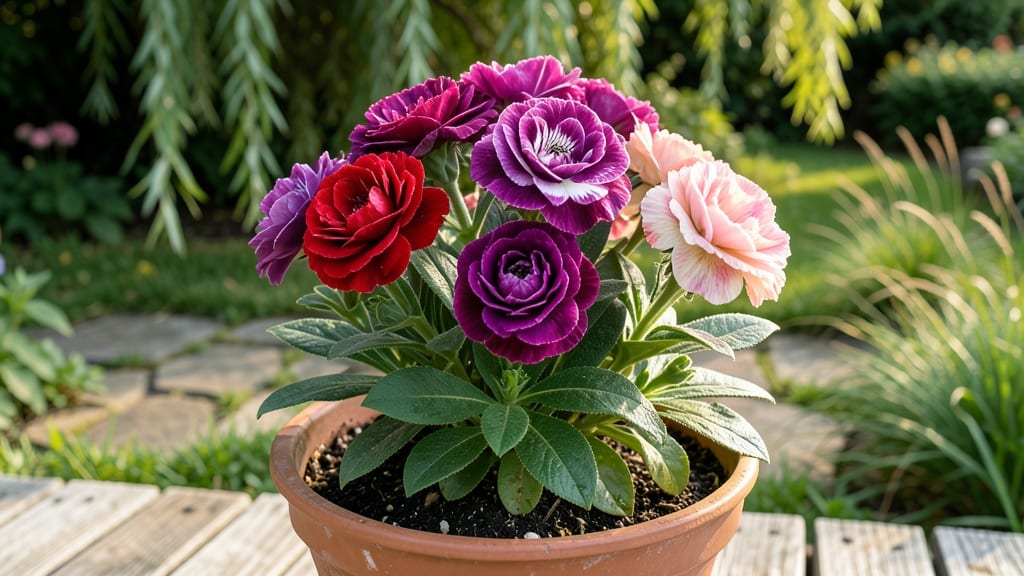
Double bloom petunias thrive by producing vibrant flowers twice a year when exposed to consistent warmth, typically reblooming after their first summer display. This second flowering cycle depends on proper care—balancing water, sunlight, and deadheading to keep plants healthy through fall or even winter in mild regions.
This heat-triggered reblooming isn't just about temperature—it's a botanical response to consistent warmth combined with adequate light. 🌡️ When daytime temperatures stay above 75°F for several weeks, petunias recognize it as a signal to reset their growth cycle.
The key is maintaining moisture without overwatering, as soggy roots can stress the plant just when it needs energy for new buds. I've seen double bloom petunias extend their second flowering into late fall when given the right conditions, making them a gardener's favorite for seasonal color.
What sets these varieties apart is their ability to adapt—unlike single-bloom types that focus energy on one burst of flowers, double bloomers allocate resources for two cycles. This makes them ideal for container gardens or hanging baskets where space is limited but you want continuous color.
The trade-off? They need more attention during the transition between blooms, especially when pruning spent flowers to encourage new growth.
💡 In This Article
- How Heat Triggers Petunia Second Flowering
- Optimizing Conditions for Double Bloom Petunias
How heat triggers petunia second flowering
Double bloom petunias trigger their second flowering cycle through a fascinating interplay of temperature and plant hormones.
When daytime temperatures consistently reach 75°F or higher for at least 2-3 weeks, the plant's photoperiodism (light response) combines with heat to stimulate ethylene production—a hormone that signals the end of the first bloom cycle.
This hormonal shift causes the plant to reset its growth pattern, much like a biological "reboot" that prepares it for new bud formation. 🌡️ The key threshold is 75°F, but sustained warmth above 80°F accelerates the process, often resulting in a more vigorous second bloom.
The process begins in the plant's apical meristems—growth points at the tips of stems—where heat activates dormant cells. These cells then differentiate into flower buds rather than leaves or stems.
What's particularly interesting is how light interacts with this process: petunias need 6-8 hours of direct sunlight daily to convert the heat energy into chemical signals. Without adequate light, even warm temperatures won't trigger reblooming, which explains why some gardeners see inconsistent second blooms.
The combination of heat and light creates what botanists call "thermophotoperiodism"—a temperature-sensitive version of the photoperiodic response that controls flowering.
What most gardeners don't realize is that nighttime temperatures also play a crucial role. While daytime heat initiates the process, nights cooler than 60°F can actually slow down or even halt bud development.
This is why double bloom petunias often struggle in regions with hot days but cool nights—the plant can't complete the full cycle.
In ideal conditions (daytime 75°F+, nighttime 60-70°F), the second flowering typically begins 4-6 weeks after the initial heat trigger, producing flowers that are often more vibrant than the first cycle due to the plant's mature growth stage.
There's a scientific reason why second blooms often appear more abundant: mature petunia plants have developed a stronger root system and more energy reserves. The first bloom cycle depletes some of these reserves, but the heat-induced reset allows the plant to redirect energy more efficiently toward flower production.
This is particularly noticeable in varieties like 'Wave' or 'Supertunia,' which are bred specifically for their double-blooming capabilities. The trade-off is that these varieties require more consistent care during the transition period to avoid stress from the energy redistribution.
Another fascinating aspect is how petunias adapt their leaf structure during reblooming. As the plant prepares for the second cycle, older leaves may yellow and drop (a process called senescence), while new leaves develop thicker cuticles to reduce water loss—a survival mechanism for the energy-intensive flowering process.
This leaf turnover is your visual cue that the reblooming process is underway, and it's why many gardeners notice their petunias looking slightly "tired" before the new buds emerge. 🌿
The entire process is nature's way of ensuring survival—petunias evolved in South American climates where warm, consistent conditions trigger multiple flowering cycles to maximize pollination opportunities.
When you replicate these conditions in your garden, you're essentially helping the plant behave as it would in its native habitat, just with a little extra care to compensate for our less predictable climates.