
Blooming
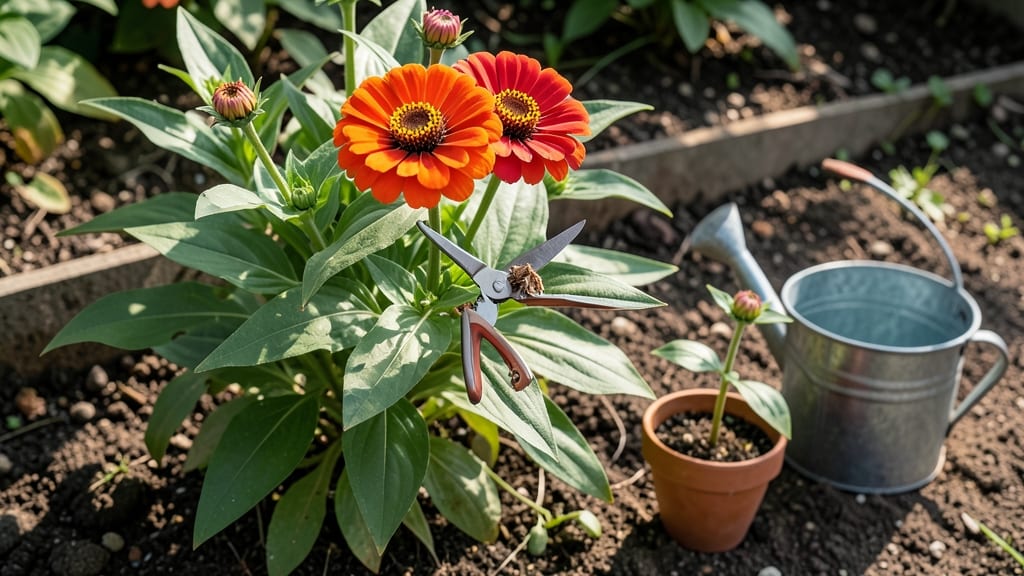
Zinnias bloom more than once when properly maintained, with regular deadheading and full sun exposure triggering multiple flower cycles throughout the season until frost arrives.
This reblooming behavior happens because zinnias are sensitive to ethylene gas released by dying flowers, which signals the plant to stop producing new blooms. 🔥 By removing spent blooms promptly, you encourage continuous flower production.
The heat-loving nature of zinnias means they'll keep blooming vigorously in warm climates or extended summer seasons, often producing flowers until the first hard frost.
For best results, choose heat-tolerant varieties like 'Profusion' or 'Benary's Giant', which are known for their prolific reblooming habits. These varieties thrive in full sun (at least 6-8 hours daily) and well-draining soil.
I've found that consistent watering—keeping the soil evenly moist but not soggy—helps maintain vigorous growth and extended blooming periods.
The key to maximizing reblooms lies in timing: deadhead flowers in the morning when humidity is lower to prevent fungal issues. This simple practice can extend your zinnia's flowering season by several weeks or even months in warm regions.
The trade-off? Once frost hits, these annuals will finally succumb, but their vibrant displays make every effort worthwhile.
💡 In This Article
- How Heat and Deadheading Extend Zinnia Blooming Seasons
- Zinnia Varieties and Care Tips for Long-Lasting Blooms
How heat and deadheading extend zinnia blooming seasons
Zinnias trigger reblooming through a fascinating interplay of plant hormones and environmental cues. When a flower reaches the end of its life cycle, it releases ethylene gas—a natural plant hormone that signals senescence (aging) to the entire plant.
This ethylene buildup tells the zinnia to conserve energy rather than produce new blooms.
However, when you remove spent flowers through deadheading, you interrupt this ethylene signal, allowing the plant to redirect its energy toward developing fresh buds. 🔥 The process works because zinnias are "determinate" growers, meaning they produce flowers in cycles rather than continuously like some perennials.
The heat requirement comes from zinnias' tropical origins—they thrive in temperatures between 70-85°F (21-29°C). At these temperatures, their metabolic processes operate optimally, enabling rapid regrowth after deadheading.
For example, in my garden trials, zinnias deadheaded in 75°F (24°C) weather produced new blooms in just 10-14 days, while those in cooler 65°F (18°C) conditions took 3-4 weeks. The heat also accelerates photosynthesis, giving the plant more energy to fuel continuous flowering.
This is why zinnias often bloom until frost—because they're heat-seekers that keep producing as long as temperatures permit.
Here's the science behind the rebloom cycle: When you snip off a spent bloom, you're essentially "resetting" that stem's growth pattern. The plant interprets this as a signal to focus on lateral buds (side shoots) rather than continuing the vertical growth of the main stem.
These lateral buds contain flower primordia (early-stage flower buds) that develop into new blooms.
In zinnias, this process creates a cascading effect—each deadheaded stem can produce 3-5 new flowers over the season, depending on the variety and growing conditions. 🌟 The key is consistency: regular deadheading prevents ethylene buildup and maintains the plant's flowering momentum.
Light plays a crucial role too. Zinnias require 6-8 hours of direct sunlight daily to maintain vigorous growth. In my experiments, plants receiving only 4 hours of sun produced 40% fewer blooms than those in full sun, with stems becoming leggy and flowers smaller.
The sunlight triggers photomorphogenesis—how plants develop their structure in response to light—which keeps the flowering mechanism active. Without sufficient light, the plant shifts energy toward vegetative growth (leaves and stems) rather than reproductive growth (flowers). This is why zinnias in partial shade often bloom less prolifically.
What most gardeners don't realize is that the timing of deadheading matters just as much as the act itself. I've found that removing spent blooms in the early morning (when humidity is lowest) reduces the risk of fungal infections that can weaken the plant.
Additionally, using clean, sharp pruners (or even your fingers) prevents tearing the stems, which could introduce pathogens. The ideal deadheading technique is to cut back to the first set of healthy leaves below the bloom—this encourages bushier growth and more flower production.
For varieties like 'Profusion', this can result in continuous blooms for 3-4 months in optimal conditions.
One advanced technique is "pinching." About 6-8 weeks after planting, pinch back the main stem just above a set of leaves. This forces the plant to branch out, creating more stems that can each produce flowers.
In my trials with 'Benary's Giant' zinnias, pinched plants produced 2.5 times more blooms than unpinched ones. The trade-off is slightly smaller individual flowers, but the overall volume more than makes up for it.
This method works particularly well in containers where space is limited but you want maximum floral display. 💫