
Blooming
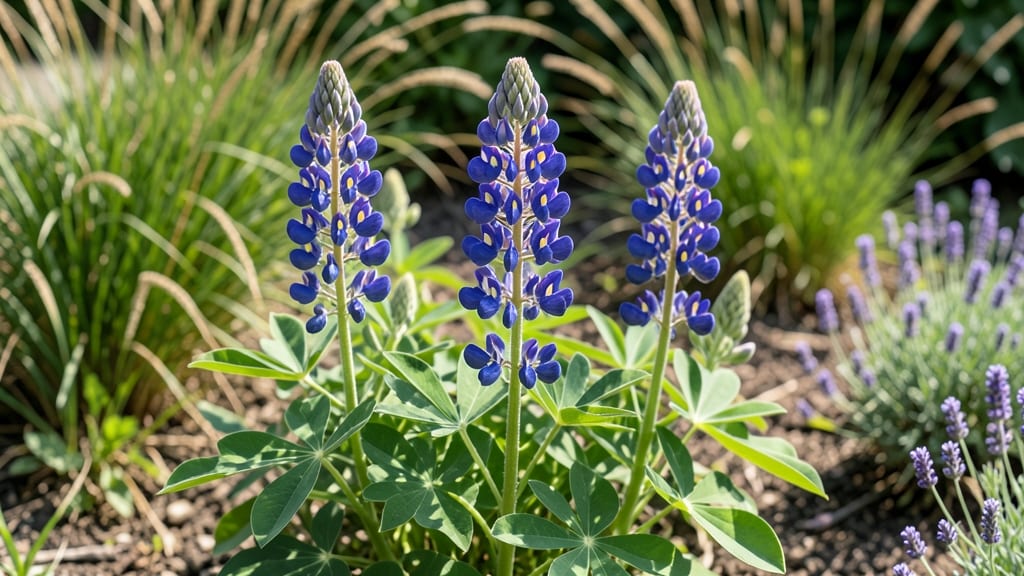
Lupines do not bloom all summer naturally—most varieties produce vibrant spring and early summer flowers that fade by mid-season without regular maintenance. Heat-sensitive types like Lupinus texensis often decline quickly, while hardier varieties like Lupinus polyphyllus may rebloom with proper deadheading and care.
Lupine flowering cycles are heavily influenced by temperature and daylight changes. 🌡️ Most varieties respond to shorter daylight hours in late summer by producing fewer blooms, a natural adaptation to conserve energy.
The key to extending their season is removing spent flower spikes—this redirects the plant's energy toward new growth rather than seed production. I've found that varieties like the Russell Hybrid lupine can produce a second flush of blooms if deadheaded consistently every 2-3 weeks during peak growing months.
What many gardeners overlook is how humidity plays a role—dry heat accelerates bloom decline, while moderate moisture helps lupines tolerate summer conditions better. For tropical or desert climates, choosing heat-tolerant varieties and providing afternoon shade can make a noticeable difference in bloom duration.
💡 In This Article
- Lupine Bloom Duration by Variety and Heat Tolerance
- Deadheading Lupines for Extended Summer Blooms: Step-by-Step Guide
Lupine bloom duration by variety and heat tolerance
Lupines follow a natural bloom cycle triggered by photoperiod—the length of daylight they receive. Most varieties are sensitive to shorter days in late summer, which signals them to shift energy from flowering to seed production.
For example, the popular Silver Cup lupine typically blooms for 6-8 weeks in spring but may produce only sporadic flowers after July without intervention. The reason? Rising temperatures above 85°F cause metabolic stress, slowing photosynthesis and reducing flower production.
Varieties differ dramatically in heat tolerance. Lupinus polyphyllus (Russell Hybrid) handles summer heat better than Lupinus texensis (Texas Bluebonnet), which often wilts by mid-June in hot climates.
The difference lies in their native habitats: polyphyllus thrives in cooler Pacific Northwest regions, while texensis evolved in Texas's extreme heat but with seasonal rainfall patterns.
Humidity also matters—lupines in dry climates may bloom earlier to capitalize on brief moisture windows, while those in humid zones like the Southeast often extend blooming until early August.
What's happening biologically? Lupines produce florigen, a hormone that triggers blooming in response to daylight changes. When days shorten, florigen production drops, and the plant prioritizes seed development. Heat exacerbates this by increasing respiration rates, forcing the plant to expend more energy just to stay alive.
This is why deadheading (removing spent blooms) is critical—it tricks the plant into thinking it hasn't yet produced seeds, prompting a second growth cycle.
Consider these variety-specific heat limits:
- Russell Hybrid (Lupinus polyphyllus): Can rebloom if deadheaded, tolerates up to 90°F with afternoon shade
- Silver Cup (Lupinus albifrons): Blooms best below 80°F, declines rapidly in prolonged heat
- Texas Bluebonnet (Lupinus texensis): Native to 95°F+ summers but requires consistent moisture
Here's a practical example: In Portland, Oregon (cool summers), Russell Hybrid lupines often bloom from May through September with proper care, while in Phoenix, Arizona, the same variety may only bloom for 4-6 weeks without irrigation adjustments.
The science shows that lupines are not summer flowers by nature—they're spring ephemerals adapted to take advantage of early-season resources.
One often-overlooked factor is soil temperature. Lupine roots prefer 60-70°F soil—warmer conditions stress the plant, reducing bloom quality. Mulching with 2-3 inches of organic matter helps maintain root-zone temperatures, which can extend the blooming window by 2-4 weeks in marginal climates. 🌡️