
Blooming
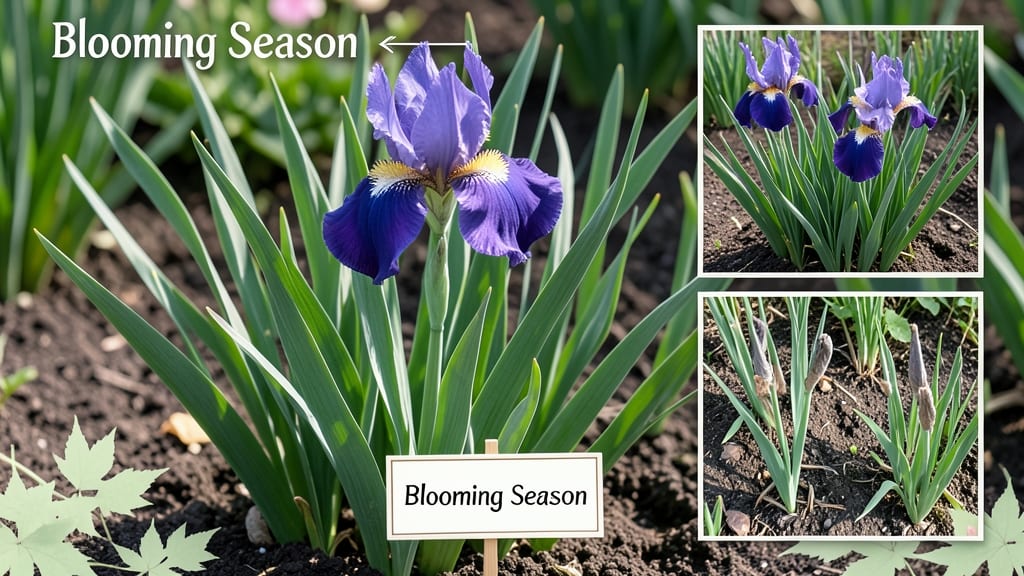
Iris plants don't bloom every year—they follow a natural 2-3 year flowering cycle based on energy storage in their rhizomes, sunlight exposure, and seasonal climate patterns. Proper care can help them flower more consistently.
Iris blooms depend on how well the plant stores energy during its growing season.
These perennials use their underground rhizomes to build up nutrients through photosynthesis, and when conditions are right—like full sunlight and well-draining soil—they'll produce flowers. 🌸 The key is balancing care: too much fertilizer can force blooms but weaken the plant, while neglect may delay them.
I’ve seen irises skip years after harsh winters or if they’re overcrowded, so dividing clumps every 3-4 years often brings back regular blooming.
💡 In This Article
- Why Iris Blooms Skip Years: Plant Biology and Growth Cycles
- How to Encourage Annual Iris Blooms: Care and Maintenance Tips
Why iris blooms skip years: plant biology and growth cycles
Iris blooms follow a carefully timed biological rhythm tied to their rhizome system—the thick, underground stems that store carbohydrates and nutrients like a natural battery. During the growing season, irises absorb sunlight through their leaves and convert it into energy via photosynthesis, which gets stored in these rhizomes.
This stored energy fuels flower production, but the plant won't bloom unless it has accumulated enough reserves—typically requiring 1-2 full growing seasons of ideal conditions. 🌱 Think of it like saving money in a bank account: you need a healthy balance before making a big purchase.
The flowering cycle is also triggered by specific environmental cues. Irises need 6-8 hours of direct sunlight daily to produce enough energy, and temperatures between 50-75°F during the growing season optimize their metabolism. In colder climates, the plant may enter dormancy earlier, delaying blooms until it regains strength.
For example, irises in Zone 5 might bloom every 2-3 years because winter stress depletes their reserves faster than in warmer regions where they can photosynthesize longer.
Another critical factor is the plant's age and health. Young iris rhizomes (under 3 years old) often skip flowering entirely as they focus on root development. Even mature plants may delay blooms if they're stressed by poor soil drainage, pests, or overcrowding.
The rhizomes of established irises can grow 1-2 inches per year, but if they're too crowded, they compete for nutrients, weakening the plant's ability to produce flowers. This is why gardeners often divide iris clumps every 3-5 years—it refreshes the plant's energy stores and encourages more frequent blooming.
Seasonal climate changes play a surprising role too. Irises native to Mediterranean climates (like Iris xiphium) often bloom annually because their natural environment provides consistent warmth and minimal winter stress.
In contrast, species like the Siberian iris (Iris sibirica) may bloom every other year in colder zones because their growing season is shorter. The key difference lies in how quickly they can replenish their energy reserves between blooming cycles. 🌡️
What most gardeners don't realize is that even well-cared-for irises may skip a year if they've been recently transplanted. The shock of moving disrupts their energy balance, forcing them to prioritize root regrowth over flower production.
This is why it's best to transplant irises in early autumn—they'll have a full growing season to recover before winter dormancy. The plant's natural survival strategy is to conserve energy for critical functions, and flowering often takes a backseat when other priorities (like root expansion or disease resistance) demand attention.
Here's the science behind the dormancy trigger: as daylight hours shorten in late summer, irises detect the change through their leaves' photoreceptors. This signals the plant to shift resources from growth to storage, preparing for winter.
The rhizomes then enter a state of reduced metabolic activity, and it's from this stored energy that next year's blooms will emerge.
This cycle explains why some irises bloom in early spring (like the Dutch iris) while others wait until late spring or summer—it's all about when they've accumulated enough reserves to support the energy-intensive process of flower development.