
Blooming
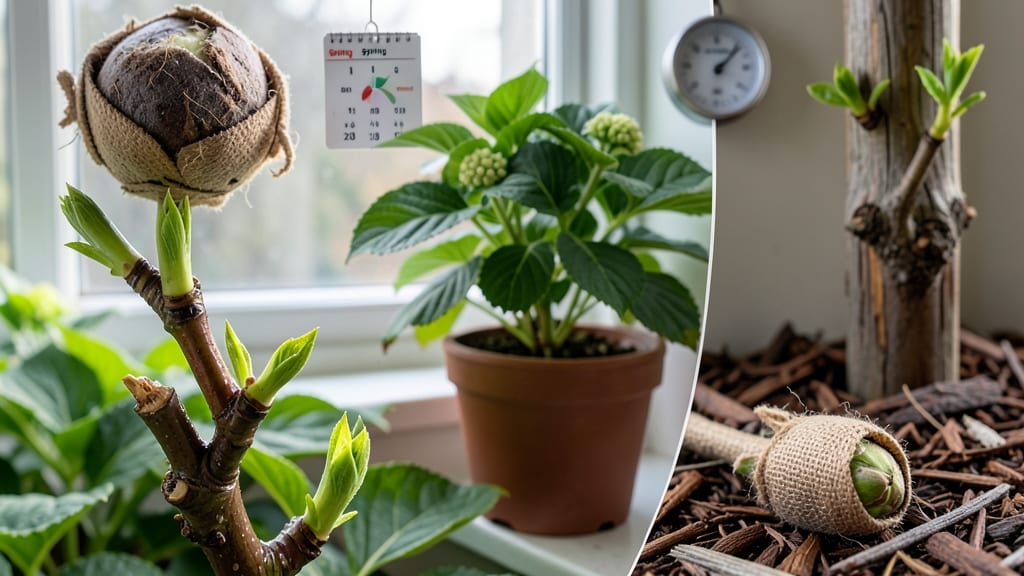
Hydrangeas don't bloom all year in most climates, but tropical varieties like Hydrangea macrophylla or Hydrangea arborescens can keep flowering continuously in USDA Zones 7-11 with the right growing conditions.
Most hydrangeas follow seasonal bloom cycles because they're triggered by temperature shifts and daylight changes.
The tropical varieties that can flower year-round thrive in warmer climates where winter dormancy never occurs. 🌸 For example, Hydrangea arborescens (smooth hydrangea) naturally blooms from late spring to summer, but with proper pruning and care, you can coax multiple bloom cycles in favorable zones.
Even in cooler areas, some varieties show extended blooming if protected from harsh winter freezes.
What truly makes the difference is how you care for them. In non-tropical zones, deadheading spent blooms and adjusting pruning times can stretch the flowering season by 4-6 weeks.
The key is understanding whether your hydrangea blooms on old wood (last year's growth) or new wood (current season's growth), as this determines when and how you should prune to encourage new blooms.
💡 In This Article
- Hydrangea Bloom Cycles by Climate Zone
- Extending Hydrangea Blooms: Pruning and Care Tips
Hydrangea bloom cycles by climate zone
Hydrangeas in temperate climates (USDA Zones 3-6) follow strict seasonal bloom cycles because their flowering is triggered by specific temperature ranges.
For example, varieties like Hydrangea paniculata (panicle hydrangea) typically bloom from late summer to early fall because they require 60-90 days of cool temperatures (below 50°F) to set flower buds. These buds form on old wood—last year's growth—during summer, then bloom the following season.
When winter temperatures drop below 10°F for extended periods, the plant enters dormancy, halting all growth until spring warmth returns.
In contrast, tropical hydrangeas like Hydrangea macrophylla (bigleaf hydrangea) thrive in Zones 7-11 where winter temperatures rarely drop below 20°F. These varieties bloom on new wood (current season's growth), allowing them to produce flowers continuously if provided with consistent warmth, moisture, and partial shade.
The lack of freezing temperatures means no dormancy period, enabling near-year-round blooming. For instance, in Zone 9, a Hydrangea macrophylla planted in a sheltered microclimate might produce flowers in spring, summer, and fall, with minimal breaks between cycles. 🌿
The science behind this difference lies in photoperiodism—the plant's response to daylight length. Temperate hydrangeas rely on shorter days and cooler nights to trigger bud formation, while tropical varieties respond more to consistent warmth and water availability.
Even within tropical zones, bloom duration varies: Hydrangea arborescens (smooth hydrangea) typically blooms for 6-8 weeks in Zones 7-8, but with proper care (like deadheading and fertilization), this can extend to 10-12 weeks in ideal conditions.
For gardeners in cooler zones, understanding these mechanisms is key to maximizing blooms. For example, Hydrangea quercifolia (oakleaf hydrangea) blooms on old wood but produces a second flush of smaller flowers on new wood if pruned correctly.
In Zones 5-6, this can add 4-6 weeks of additional blooms if you prune after the first flush. The trade-off? Over-pruning old wood can sacrifice the following year's primary bloom cycle. 🌸
Soil temperature also plays a hidden role. Roots need to stay above 50°F for continuous growth, which is why mulching with 3-4 inches of organic matter helps insulate roots in marginal zones (like Zone 6).
This small adjustment can prevent early dormancy and extend the growing season by 2-3 weeks, indirectly supporting longer bloom periods.
Here’s a quick comparison of bloom cycles by zone:
- Zones 3-5: Seasonal blooms (spring/summer), 6-8 weeks duration, triggered by cold dormancy
- Zones 6-7: Extended blooms (spring-fall), 8-12 weeks with proper care, partial dormancy
- Zones 8-11: Near-continuous blooms, 12+ weeks, no dormancy in tropical varieties