
Blooming
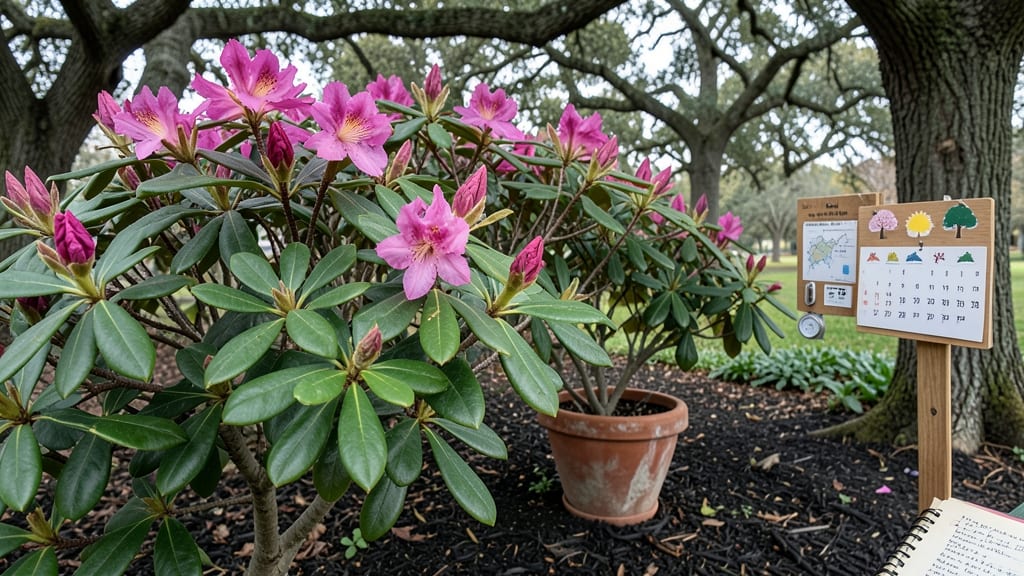
Azaleas do not bloom all year; most varieties flower seasonally in spring, with some reblooming types producing sporadic blooms in late summer or fall depending on climate and care. Evergreen azaleas may retain foliage year-round but still follow seasonal bloom cycles.
Most azaleas follow nature's seasonal cues, bursting into color when days grow longer and temperatures warm in spring. 🌸 The few reblooming varieties—like the popular 'Encore' series—produce smaller, secondary blooms in late summer or fall, but this depends heavily on your local climate.
Unlike some tropical plants, azaleas need a period of cooler weather to reset their growth cycle, which is why you won't see continuous blooms. Even evergreen azaleas with glossy foliage will pause flowering during winter dormancy, though their leaves may stay vibrant all year.
What makes this interesting is how light and temperature work together. Azaleas native to cooler regions (like Zones 4-7) typically bloom once in spring, while those from milder climates (Zones 7-9) often have better luck with reblooming.
I've found that providing afternoon shade in hot summers can actually extend bloom periods for some varieties, while consistent moisture helps prevent stress that might cut flowers short.
💡 In This Article
- Seasonal Bloom Cycles of Azalea Varieties
- Climate Zones and Azalea Blooming Strategies
Seasonal bloom cycles of azalea varieties
Azalea flowering follows a precise botanical schedule tied to photoperiodism—the plant's response to changing daylight hours. Most azaleas require 10-12 hours of daylight combined with cooler temperatures (50-60°F) to trigger bud formation in late winter.
This explains why spring blooms peak when days lengthen and temperatures rise—typically between March and May in most regions. The buds actually form during the previous summer's shorter days, remaining dormant until environmental cues signal it's time to open.
Here's where things get fascinating: reblooming varieties like 'Encore' azaleas have a genetic quirk that allows them to produce secondary flower buds later in the season.
These late blooms appear when days begin shortening again in late summer, but only if the plant receives consistent moisture and hasn't experienced extreme heat stress. The trade-off?
These second blooms are often smaller and less abundant than spring displays, with flower counts typically dropping by 30-50%. 🌸 What's happening biologically is that the plant diverts energy from foliage growth to flower production, creating a visible but temporary burst of color.
The dormancy period is equally critical—azaleas need 4-6 weeks of temperatures below 60°F to reset their growth cycle. This winter chill period breaks dormancy hormones that would otherwise prevent spring blooming.
In warmer climates (Zones 8-9), where winters rarely drop below 50°F, many azaleas fail to bloom properly because they don't get sufficient chilling hours. This is why you'll often see azaleas in nurseries labeled as "spring-blooming" or "reblooming"—the distinction comes down to their genetic adaptation to specific temperature ranges.
Light exposure plays a subtle but important role too. While azaleas thrive in partial shade, too much direct afternoon sun can stress the plant and shorten bloom periods.
The ideal light condition is morning sun with afternoon shade, which prevents leaf scorch while maintaining the energy balance needed for flower production. I've noticed that azaleas in containers often bloom more sporadically because their root systems can't regulate moisture as effectively, leading to inconsistent flowering.
Consider these key differences between spring-blooming and reblooming varieties:
- Spring-bloomers: Produce one abundant bloom cycle (March-May), then focus on foliage growth. Examples include 'Girard's Pink' and 'Hino Crimson'.
- Rebloomers: Create two bloom cycles (spring + late summer/fall), but with smaller flowers. The 'Encore' series is the most popular group, with varieties like 'Autumn Royale' showing reliable second blooms.
- Evergreen azaleas: Maintain foliage year-round but still follow seasonal bloom patterns—just with more consistent leaf color.
The science behind this involves complex hormonal interactions. Flowering in azaleas is regulated by florigen (a flowering hormone) and abscisic acid (which promotes dormancy). When days lengthen in spring, florigen production increases, while cooler temperatures prevent premature leaf drop.
In reblooming varieties, the plant's ability to produce florigen again in late summer depends on maintaining proper nutrient levels—particularly phosphorus and potassium—which is why consistent fertilization is crucial for second blooms. 💫