
Blooming
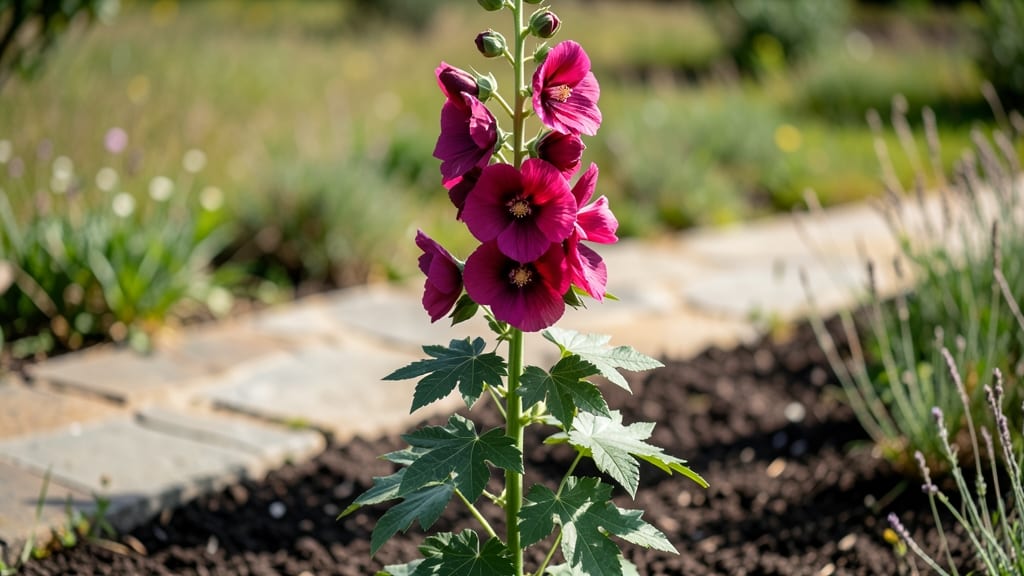
Hollyhocks do not bloom all summer—most varieties produce flowers in late spring to early fall, with peak blooming lasting 4-8 weeks depending on heat tolerance and care. Perennial types may rebloom lightly in cooler months, while annuals often fade by mid-summer without deadheading or proper watering.
Hollyhocks are seasonal showstoppers, not year-round performers, with their bloom cycles tightly linked to temperature and daylight. 🌸 Most varieties thrive in cooler weather, so their vibrant displays typically peak in early summer before wilting under intense heat.
Perennial hollyhocks often reward gardeners with a second, lighter flush of blooms in fall when temperatures drop, while annuals usually put on their best show in late spring before tapering off.
The key to extending their display lies in proper care—regular deadheading, consistent moisture, and strategic pruning can coax a few extra weeks of color from both types.
What many gardeners don't realize is that some modern cultivars, like 'Black Knight' or 'Peach Blossom', have been bred for better heat tolerance, allowing them to bloom slightly longer in hotter climates.
However, even these varieties won't match the continuous flowering of tropical plants. The trade-off is worth it for their old-fashioned charm and disease resistance compared to more finicky perennials.
💡 In This Article
- Hollyhock Bloom Duration by Variety and Climate
- Extending Hollyhock Blooms: Pruning and Care Tips
Hollyhock bloom duration by variety and climate
Hollyhocks' bloom cycles are primarily governed by temperature and daylight hours, with most varieties following a late spring to early fall window. Perennial types typically bloom from May through July in cooler climates (USDA zones 3-7), while annuals often start earlier in late April but fade by August.
The key trigger is day length—longer daylight hours stimulate flowering, but excessive heat (90°F+) accelerates senescence (aging) of blooms. 🌸
Varieties differ significantly in heat tolerance. Early-season types like 'Lady Alice' bloom in 50-60°F temperatures and may last 6-8 weeks if protected from afternoon sun, while late-season 'Peach Blossom' can extend flowering into September in coastal climates where evenings stay cool.
Humidity also plays a role—high moisture levels in zones 8-9 can prolong blooms by 2-3 weeks compared to dry inland areas.
The science behind this involves photoperiodism, where plants respond to changing light cycles. Hollyhocks are short-day plants, meaning they flower when daylight shortens after the summer solstice. This explains why perennials often produce a second, smaller bloom cycle in fall when temperatures drop below 75°F.
In contrast, annuals lack this genetic adaptation and typically exhaust their energy by mid-summer.
Regional growing zones dramatically affect bloom duration. In Pacific Northwest gardens, hollyhocks may bloom continuously from June to October due to mild summers, while Midwest gardens see peak blooms in June-July with minimal fall reblooming.
The 'Black Knight' cultivar stands out for its ability to tolerate up to 85°F while maintaining color, making it ideal for Southern gardens where other varieties wilt.
What most gardeners overlook is how soil temperature impacts root development. Hollyhocks prefer 60-70°F soil for optimal flowering—cooler roots in shady microclimates can extend bloom time by 10-14 days compared to full-sun exposures. This is why partial shade in hot climates often yields better results than direct afternoon sun.
For those in USDA zone 10+, hollyhocks may only bloom in winter months when temperatures dip below 80°F, creating a reverse seasonal display. This adaptation highlights how these plants have evolved to thrive in temperate climates rather than tropical ones.