
Blooming
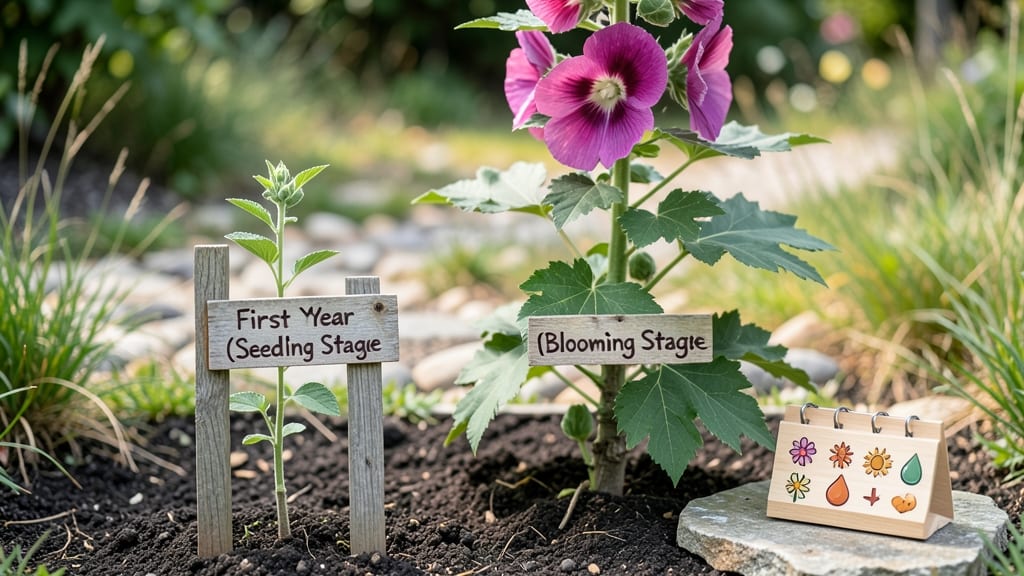
Hollyhocks typically do not bloom the first year, focusing instead on establishing strong roots and foliage before flowering. Some dwarf varieties may produce sparse blooms, but full-size plants usually wait 1-2 years for vibrant summer flowers.
Most hollyhock plants prioritize root development over flowering in their first season, a survival strategy that ensures robust growth for future blooms. 🌱 The delay isn't a flaw—it's biology!
Some compact varieties like 'Black Prince' might surprise you with occasional flowers, but even these typically wait until their second year for full, showy displays. If you're eager for color, consider starting with established plants or choosing fast-growing annuals like cosmos to fill gaps while your hollyhocks build strength underground.
What's fascinating is how environmental factors accelerate or slow this process. Plants in nutrient-rich soil with consistent moisture often bloom earlier, while those struggling with poor drainage or shade may take even longer.
I've seen some gardeners coax first-year blooms by fertilizing lightly with phosphorus-rich amendments, but this isn't guaranteed—patience usually wins with these old-fashioned beauties.
💡 In This Article
- Why Hollyhocks Delay Flowering in Their First Season
- Fastest-Blooming Hollyhock Varieties for Impatient Gardeners
Why hollyhocks delay flowering in their first season
Hollyhocks follow a biological strategy called "determinate growth," where they prioritize vegetative development—roots, stems, and leaves—before devoting energy to flowers. This isn't laziness; it's survival. 🌱 In their first year, hollyhocks focus on building a strong taproot system that can reach 3-5 feet deep, anchoring them securely in the soil.
The plant allocates up to 70% of its energy to root and stem growth, leaving minimal resources for blooms. This deep-rooted approach helps them access water and nutrients during droughts, a trait inherited from their wild ancestors that thrived in rocky, nutrient-poor soils.
The timing of flowering is also tied to dormancy cycles. Hollyhocks are biennials, meaning they complete their life cycle over two growing seasons. In their first year, they enter a period of vegetative growth, storing energy in their roots for winter.
Only when they've built sufficient reserves—typically by late summer or early fall—will they begin flowering in their second year. 🌿 This two-year cycle is similar to how biennial vegetables like carrots or onions mature.
The delay ensures that when they finally bloom, they produce 50-100 flowers per stalk, a spectacular display that compensates for the wait.
Environmental factors can accelerate or delay this process. Hollyhocks need full sun (6-8 hours daily) to trigger flowering hormones called florigen. In shaded conditions, they may never bloom. Soil quality matters too—plants in well-draining, slightly alkaline soil (pH 6.5-7.5) with added compost grow faster.
Overwatering or soggy soil can stunt root growth, while consistent moisture (about 1 inch per week) encourages robust development. I've noticed that hollyhocks in containers bloom slightly earlier because their roots can't spread as widely, forcing them to prioritize above-ground growth sooner.
Temperature plays a subtle but critical role. Hollyhocks are cool-season plants that prefer 60-75°F growing conditions. If planted in hot climates, they may enter dormancy prematurely, delaying flowering.
In colder regions, they might need winter protection to survive and bloom the following year. 🌡️ The first frost often signals the plant to focus on root development rather than flowering, which is why many gardeners in Zone 5 or colder see blooms in their second summer rather than the first.
What most gardeners don't realize is that even dwarf varieties follow this pattern. While 'Black Prince' or 'Lady Jane' might produce a few small blooms in their first year, these are often abortive flowers—buds that form but fail to open fully.
These early blooms drain energy that could be used for root growth, potentially weakening the plant. The trade-off is worth it, though, because second-year plants often produce 20-30% more flowers than their first-year counterparts, making the wait worthwhile for the dramatic summer displays.
If you're eager to see blooms sooner, you can try a few tricks.
Planting hollyhocks in late summer or early fall gives them a head start on root development before winter, sometimes resulting in first-year flowers the following spring. 🌸 Alternatively, fertilizing with a low-nitrogen, high-phosphorus mix (like 5-10-10) in early spring can encourage earlier flowering, though this isn't guaranteed.
The key is balancing patience with the right growing conditions—hollyhocks reward those who nurture their roots with stunning, old-fashioned beauty.