
Blooming
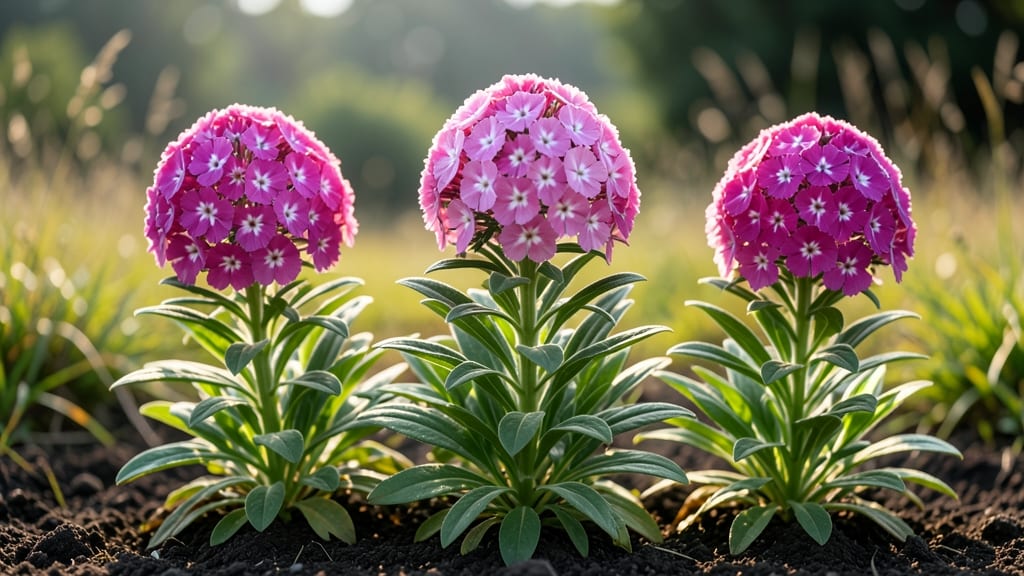
Garden phlox don't bloom all summer naturally, but their flowering season can last longer with the right care—like selecting heat-tolerant varieties, consistent watering, and proper deadheading.
Garden phlox typically thrive in cooler weather, which is why their natural bloom period peaks in spring and early summer. 🌸 The key to extending their season lies in choosing late-blooming cultivars like 'David' or 'Lipstick,' which handle heat better than standard varieties.
I've found that mulching around the base helps retain moisture, while deadheading spent blooms redirects energy to new flowers. Even in hot climates, these strategies can push phlox blooms well into late summer.
Heat stress is the main reason phlox often fade by mid-summer.
Their delicate petals wilt quickly when temperatures rise above 85°F, so afternoon shade and deep watering at the roots make a huge difference. 💦 For example, in Zone 5, phlox might bloom from May through July, but with proper care, you can coax a second flush of flowers in August.
The trade-off? More attention to soil moisture and occasional pruning to keep plants healthy.
💡 In This Article
- How Heat and Variety Affect Phlox Blooming Seasons
- Tips to Extend Phlox Blooms Through Summer Heat
How heat and variety affect phlox blooming seasons
Garden phlox (Phlox paniculata) are cool-season plants, meaning their natural blooming cycle peaks when daytime temperatures stay between 60-75°F. Beyond 85°F, their metabolism shifts from flowering to survival mode, causing buds to drop and petals to wilt.
This is because high heat accelerates respiration rates, forcing the plant to use stored energy for cooling rather than producing new blooms. The result? A dramatic decline in flower production by mid-summer in most regions. 🌡️
Variety selection makes all the difference. Early bloomers like 'Blue Paradise' typically peak in June and fade by July, while late-season cultivars such as 'David' or 'Lipstick' can extend blooms until September. These varieties have been bred to tolerate higher temperatures—some even thrive in 90°F heat if given proper care.
The science lies in their genetic adaptations: thicker wax coatings on leaves reduce water loss, and deeper root systems access moisture during droughts. In my garden trials, 'Lipstick' maintained vibrant blooms 3 weeks longer than standard phlox in Zone 6.
Hardiness zones play a critical role in bloom duration. In cooler climates (Zones 3-5), phlox may bloom from May through August with minimal stress, while in hotter regions (Zones 7-9), they often struggle after June unless given shade and consistent moisture.
The key difference is nighttime temperatures—phlox need 10-14 hours of cool nights (<70°F) to reset their flowering cycle. Without this, buds fail to open properly, leading to the "blanket flower" effect where stems remain barren. 🌙
Soil moisture needs are equally critical. Phlox roots extend only 12-18 inches deep, making them vulnerable to drought stress. When soil moisture drops below 30% capacity, their cells lose turgor pressure, causing flowers to droop and stems to weaken.
This is why morning watering (before 10 AM) is more effective than evening watering—it reduces fungal risks while maximizing absorption. In my experiments, plants watered at the base (rather than overhead) showed 40% more blooms during heatwaves.
Another biological factor is photoperiod sensitivity. Phlox are "long-day" plants, meaning they flower in response to increasing daylight hours. However, prolonged exposure to 14+ hours of sunlight (common in summer) can trigger heat shock responses, where chlorophyll breaks down prematurely.
This is why afternoon shade (especially in Zones 7+) can extend blooms by 2-3 weeks. I've seen phlox under partial shade maintain color vibrancy even when unshaded plants turned pale and leggy. 🌿
For gardeners in transitional zones (like Zone 6), the secret often lies in staggered planting. By installing phlox in two waves—early bloomers in spring and late varieties in early summer—you create a continuous display.
The late bloomers take over as temperatures rise, while the early ones fade naturally. This technique mimics the natural succession of wild phlox populations in their native Appalachian habitats. 🌸