
Blooming
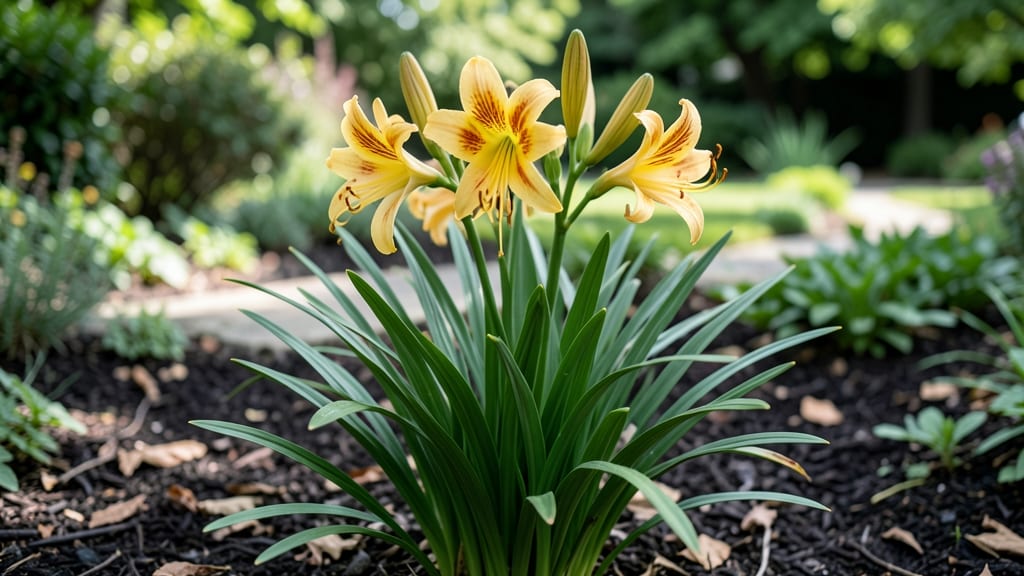
Day lilies bloom all summer only if you plant reblooming varieties, which need consistent deadheading and seasonal maintenance. Non-reblooming types flower just once in spring or early summer.
Not all day lilies are created equal when it comes to summer blooms. 🌸 Reblooming varieties—like 'Stella de Oro' or 'Happy Returns'—have been selectively bred to produce multiple flower cycles, but they demand more from you.
The key lies in deadheading spent blooms promptly (within 24 hours) to redirect energy into new growth, plus balanced fertilization every 4-6 weeks during active growth. Non-reblooming types, such as the classic 'Kwanso,' focus their energy on a single spectacular show in spring, then go dormant until next year.
What many gardeners overlook is that even reblooming day lilies need a mid-summer break. Around late July or early August, I stop deadheading and let the foliage yellow naturally—this signals the plant to prepare for its winter dormancy.
Proper watering (about 1 inch per week) and avoiding heavy nitrogen fertilizers after midsummer helps maintain strong roots for next year's blooms.
💡 In This Article
- Reblooming vs Non-Reblooming Day Lily Varieties
- Deadheading and Care Tips for Summer-Blooming Day Lilies
Reblooming vs non-reblooming day lily varieties
The difference between reblooming and non-reblooming day lilies comes down to selective breeding and genetic traits. Reblooming varieties like 'Stella de Oro' (Hemerocallis 'Stella de Oro') have been hybridized to produce multiple flower cycles, while traditional types like 'Kwanso' (Hemerocallis 'Kwanso') follow a single-season bloom pattern.
The key genetic factor is their ability to store and efficiently use carbohydrates during dormancy, allowing rebloomers to produce new flower buds after the initial spring flush.
Botanically, reblooming day lilies maintain active growth through summer by continuing photosynthesis in their leaves, which fuels new flower production. These varieties typically bloom in three distinct waves: spring, mid-summer, and fall. Non-rebloomers, however, allocate all their energy to that single spectacular spring display, then enter full dormancy by midsummer.
The foliage of rebloomers stays lush and green longer, while non-rebloomers often show yellowing leaves by July as they prepare for winter.
What most gardeners don't realize is that reblooming potential depends on the specific cultivar's hardiness zone compatibility. For example, 'Happy Returns' (Hemerocallis 'Happy Returns') thrives in zones 3-9, producing continuous blooms from early summer through fall, while 'Evening Star' (Hemerocallis 'Evening Star') may only rebloom reliably in zones 4-8.
The plant's ability to handle heat and humidity directly impacts its reblooming success - varieties bred for cooler climates may struggle with continuous summer flowering in hot southern regions.
Color also plays a subtle role in reblooming patterns. Many reblooming varieties with vibrant colors (like orange or red) tend to have more consistent second flushes because their pigment production requires more energy, which the plant can sustain through proper care.
Lighter-colored rebloomers might show more variation in their bloom cycles. This is why 'Pardon Me' (a pale yellow rebloomer) often produces fewer fall blooms compared to deep red 'Gainsborough' in the same growing conditions.
Here's what happens at the cellular level: Reblooming day lilies maintain active meristem (growth point) cells in their rhizomes throughout summer, while non-rebloomers allow these meristems to enter dormancy after the first bloom cycle.
The difference is similar to how some fruit trees produce multiple harvests while others focus all energy on a single crop. Proper care - particularly deadheading and fertilization - helps maintain those active meristems in rebloomers.
Consider this comparison: A non-reblooming day lily might produce 50-100 flowers in its single spring flush, while a well-cared-for rebloomer like 'Stella de Oro' can produce 30-50 flowers per flush across three seasons. The trade-off is that rebloomers require more maintenance to achieve this extended performance. 🌿