
Blooming
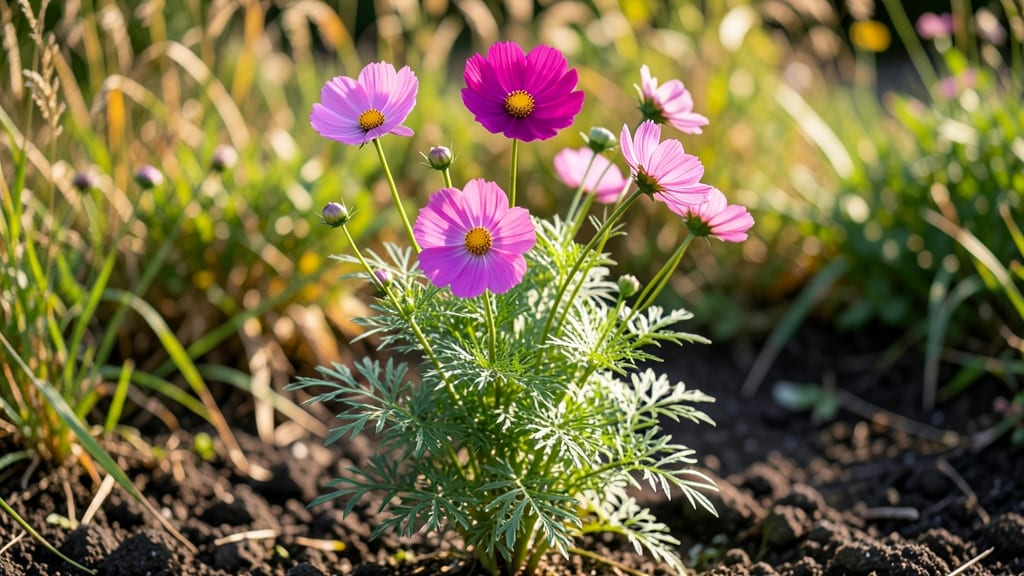
Cosmos don't bloom all summer continuously—they produce heat-triggered reblooms after their first flush of flowers, particularly when late-summer temperatures dip slightly and daylight hours shorten. Removing spent blooms (deadheading) keeps them flowering longer.
These hardy annuals actually pause blooming during the hottest summer months, conserving energy until conditions improve. 🌸 The rebloom happens naturally when nights cool down and days grow shorter, which is why you often see fresh flowers appearing in late August or September.
I've found that consistent moisture and well-draining soil help maintain this cycle, while over-fertilizing can actually reduce flowering.
What many gardeners don't realize is that cosmos respond to environmental cues rather than following a strict seasonal calendar. The key is providing consistent care during their dormancy period—watering deeply but not over-saturating the soil, and avoiding heavy pruning during peak heat.
This approach lets them store energy for their spectacular late-season comeback.
💡 In This Article
- How Heat and Daylight Affect Cosmos Blooming Cycles
- Extending Cosmos Blooms: Pruning and Care Tips
How heat and daylight affect cosmos blooming cycles
The blooming cycle of cosmos is governed by a fascinating interplay between temperature and daylight hours. These plants are sensitive to photoperiod—the length of daylight they receive—which triggers their flowering response.
During peak summer, when days are longest (typically 14-16 hours), cosmos often enter a temporary "bloom pause" to conserve energy. This isn't a permanent dormancy but rather a strategic response to intense heat and prolonged sunlight exposure. 🔥
Here's what's happening botanically: When daytime temperatures exceed 85°F consistently, the plant's metabolic processes slow down. The high heat causes increased transpiration (water loss through leaves), which forces the cosmos to allocate energy toward survival rather than flower production.
This is why you might notice fewer blooms during July and early August in hot climates. The plant essentially "waits out" the heat until conditions become more favorable.
Daylight length plays an equally crucial role. Cosmos are considered "short-day" plants in their flowering response—they detect when daylight hours begin to shorten (typically after the summer solstice). As days gradually shrink from 15 hours to 13 hours in late summer, the plant receives a signal to restart blooming.
This is why you often see a spectacular second flush of flowers in September, sometimes lasting until the first frost. The combination of cooler nights (65-75°F) and shorter days creates ideal conditions for renewed flowering.
Interestingly, cosmos exhibit this cycle even in cooler climates where summer temperatures never reach extreme highs. The key trigger is actually the change in daylight duration rather than absolute temperature.
For example, in northern regions where summer days are only 16 hours long, cosmos may bloom continuously throughout summer because they never experience the long photoperiod that triggers the pause. This regional variation explains why some gardeners see continuous blooming while others experience distinct flushes.
The reblooming mechanism involves complex hormonal changes within the plant. When environmental conditions improve, the plant's meristem (growth points) reactivate, producing new flower buds. This process is similar to how chrysanthemums bloom in response to shorter days, though cosmos are less sensitive to temperature extremes.
The result is often a second or even third wave of blooms that can last until frost, providing extended seasonal color. 🌟
What most gardeners overlook is how soil temperature affects this cycle. Cosmos roots prefer soil temperatures between 60-75°F. When soil gets too hot (above 80°F), root activity slows, further reducing the plant's ability to produce flowers.
This is why mulching with straw or wood chips can help maintain optimal soil temperatures and encourage more consistent blooming throughout the season.
Understanding this natural cycle helps explain why cosmos often perform better in cooler maritime climates than in hot desert regions.
The ability to "wait out" heat and respond to changing daylight makes them remarkably adaptable, but it also means gardeners in hot zones need to provide extra care during peak summer to support their plants through the bloom pause.
This might include afternoon shade or increased moisture to help them endure the heat stress. ✨