
Blooming
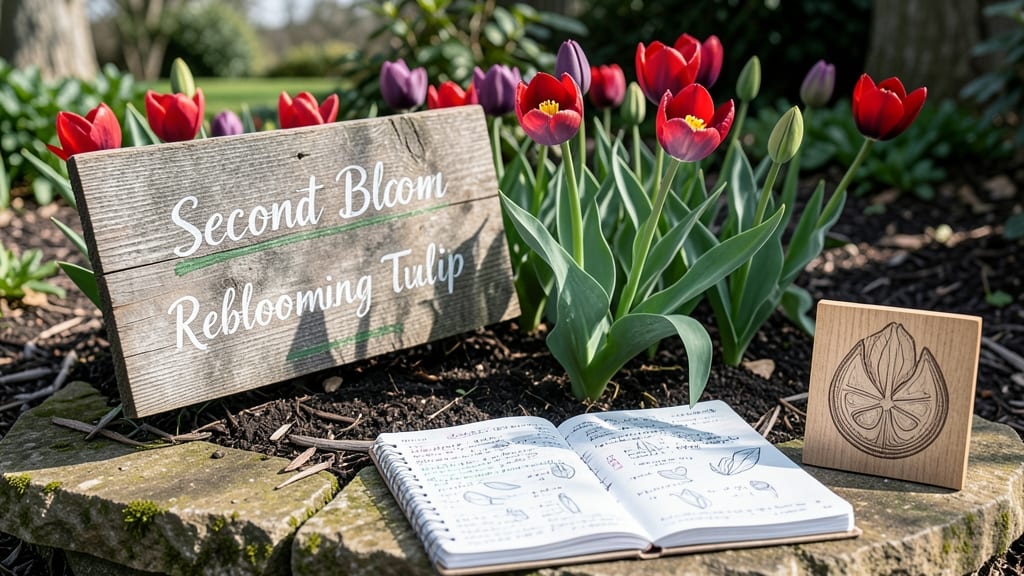
Can tulips bloom twice in one season? Most tulips flower only once per year, but reblooming varieties and careful gardening practices can produce a second flush of blooms under ideal conditions.
Most gardeners know tulips for their dramatic spring displays, but the science behind their blooming cycle explains why they usually only flower once. 🌸 The key lies in their energy reserves: after the first bloom, the bulb diverts resources toward storing energy for next year's growth rather than producing another flower.
This natural process is tied to photoperiodism—the plant's response to daylight changes—which triggers dormancy after the initial bloom.
However, reblooming tulip varieties (like 'Darwin Hybrid' or 'Fosteriana') are bred to resist this dormancy cycle. To encourage a second bloom, gardeners must provide consistent care: deadheading spent blooms, fertilizing with high-phosphorus feed, and ensuring 6-8 hours of sunlight daily.
The trick is balancing energy output—too much water or shade can exhaust the bulb before it reblooms.
💡 In This Article
- Why Most Tulips Bloom Only Once
- How to Encourage Tulip Reblooming
Why most tulips bloom only once
The natural blooming cycle of tulips is governed by a biological mechanism called photoperiodism, where plants respond to changes in daylight length.
After tulips produce their first bloom in spring, they enter a period of energy depletion—the bulb prioritizes storing nutrients for next year's growth rather than flowering again. This is why most traditional tulips, like the classic 'Dutch Master' or 'Parrot' varieties, only bloom once per season.
Here's what's happening at the cellular level: The tulip bulb contains a finite amount of stored carbohydrates and nutrients. When the first flower emerges, the plant diverts up to 70% of its energy into producing the bloom and seed development.
After flowering, the bulb shifts into dormancy mode, where it focuses on rebuilding its reserves through photosynthesis in the leaves. This process can take 6-8 weeks, leaving little energy for a second bloom.
The timing of this cycle is critical. Tulips are spring ephemerals, meaning they bloom early in the season when soil nutrients are still low. Their strategy is to complete their reproductive cycle quickly before trees leaf out and shade the garden.
This natural adaptation ensures the bulb survives until next year rather than risking a second, weaker bloom that might not produce viable seeds.
Another factor is the plant's hormonal balance. After the first bloom, the tulip produces higher levels of abscisic acid, a hormone that promotes dormancy and seed development.
This chemical signal effectively "shuts down" the flowering process until the bulb has fully recharged its energy stores. 🌱 Without intervention, the bulb will remain dormant until the following spring, when daylight length triggers the cycle to begin anew.
Consider this comparison: A traditional tulip bulb is like a battery that powers a single high-energy device (the bloom) before needing a full recharge.
Reblooming varieties, on the other hand, are bred to have a more efficient energy management system, allowing them to produce a second bloom without completely draining their reserves.
What most gardeners don't realize is that even reblooming tulips require specific conditions to perform this second flowering. Without proper care, they'll follow the same single-bloom pattern as their traditional counterparts.
This is where the science of selective breeding and gardening techniques comes into play to override the plant's natural instincts.