
Blooming
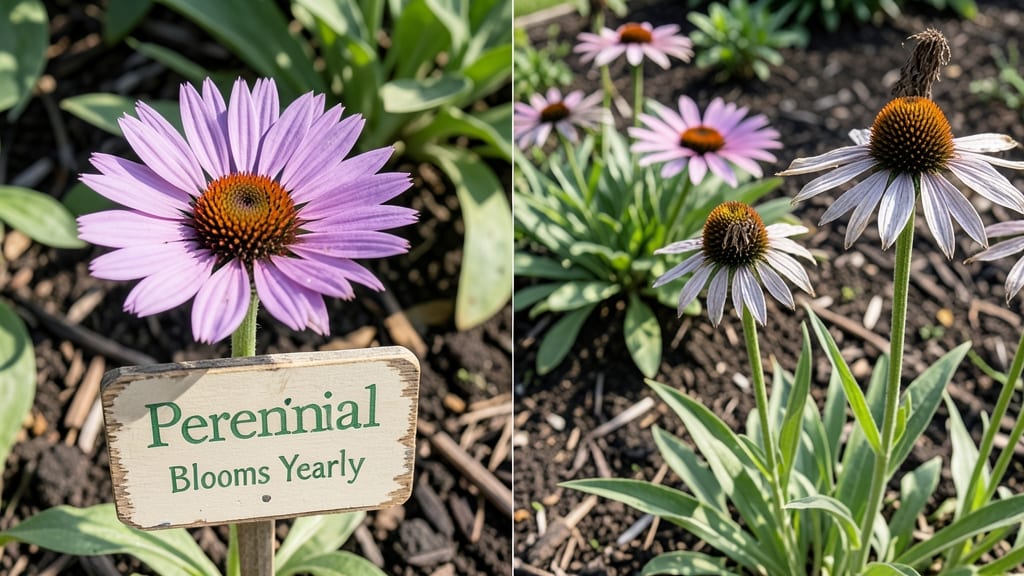
Perennials don't bloom every year—they need consistent sunlight, rich soil, and proper seasonal dormancy to flower reliably, though stress or immaturity can cause some to skip blooming entirely.
Perennial plants follow a natural cycle where blooming depends on stored energy reserves built during their active growing season. 🌱 Many perennials enter dormancy in winter to conserve resources, and without adequate sunlight or nutrients, they may prioritize root and foliage growth over flowering.
For example, peonies typically bloom for just a few weeks each spring, while coneflowers often produce multiple rounds of blooms if deadheaded regularly. Understanding your specific perennial's life cycle helps set realistic expectations for seasonal performance.
Some perennials have unique flowering patterns—like biennials that bloom only in their second year or monocarpic perennials that flower just once before dying. These exceptions highlight why gardeners must research each plant's native growing conditions to replicate them successfully.
The key to encouraging reliable blooms lies in mimicking nature's conditions while providing consistent care throughout the year.
💡 In This Article
- How Perennial Flowering Cycles Work Scientifically
- Tips to Encourage Year-Round Perennial Blooms
How perennial flowering cycles work scientifically
Perennial flowering is governed by three key biological triggers: photoperiodism (daylight exposure), temperature cues, and root energy reserves. Most perennials rely on 14-16 hours of daylight to initiate bloom formation—a process called "long-day" flowering.
For example, daylilies begin budding when daylight exceeds 12 hours, while hostas typically bloom in late spring when temperatures stabilize above 50°F after winter dormancy. These cues are hardwired into their genetics, explaining why some perennials bloom in spring (like daffodils) while others wait for summer (like black-eyed Susans).
The dormancy period serves as a critical reset button. During winter, perennials like bearded iris or Russian sage redirect energy to root growth, storing carbohydrates as starches. This stored energy fuels next year's blooms—similar to how a battery recharges.
Without proper dormancy (like 6-8 weeks below 40°F), perennials may produce fewer flowers or none at all. Even in mild climates, simulating dormancy through reduced watering and pruning can trigger blooming cycles. 🌿
Some perennials defy expectations with specialized life cycles. Biennials like foxglove bloom only in their second year, while monocarpic perennials (such as agave) produce a single spectacular bloom before dying. Even "reliable" perennials like lavender may skip flowering if stressed by drought or overcrowding.
The key difference lies in their energy allocation strategy: annuals prioritize rapid reproduction, while perennials balance growth, survival, and reproduction across seasons.
Light quality also plays a subtle but critical role. Perennials often respond to the red-to-far-red light ratio (a wavelength shift during sunset), which acts as a natural clock. For instance, coreopsis may delay blooming if shaded by taller plants, as this alters the light spectrum reaching its leaves.
Gardeners can exploit this by positioning perennials to receive 6+ hours of direct sunlight daily—the sweet spot for most flowering species. Without sufficient light, chlorophyll production drops, leaving plants energy-deficient for blooming.
Soil health ties directly to flowering potential. Perennials like coneflowers thrive in well-draining soil with pH 6.0-7.0, while azaleas require acidic soil (pH 4.5-5.5) to access nutrients like phosphorus, essential for flower development.
A soil test can reveal deficiencies—adding compost or bone meal in early spring replenishes reserves for peak blooming. The connection between roots and flowers is literal: healthier roots mean more energy for above-ground displays.
Temperature extremes further complicate blooming cycles. Heatwaves above 90°F can stress perennials like shasta daisies, causing buds to drop before opening. Conversely, late-season frosts may damage emerging blooms. Microclimates matter—south-facing beds warm faster, while north-facing areas stay cooler.
This explains why the same perennial may bloom profusely in one garden but struggle in another just a few miles away. 🌡️