
Shrubs
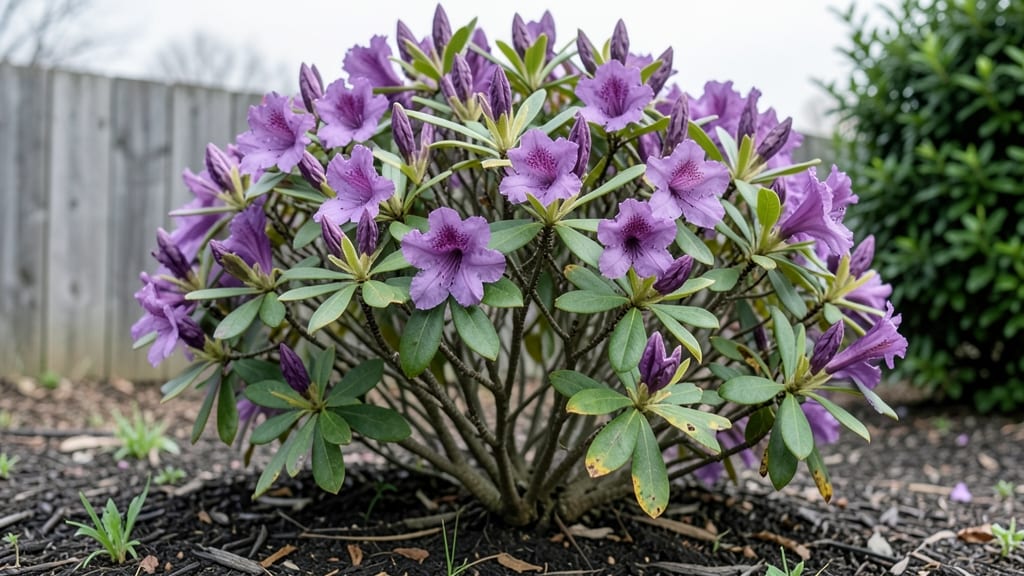
Azalea bushes are perennials that thrive in USDA zones 5-9, offering vibrant blooms in spring and summer with proper winter protection and acidic soil care. Choose cold-hardy varieties like 'Girard’s' or 'Hino Crimson' for reliable year-round growth.
These flowering shrubs stand out because their perennial nature means they return year after year, provided you meet their specific needs. 🌸 Unlike annuals that die back completely, azaleas develop deep root systems that help them survive winter dormancy when given proper protection—like mulch or burlap wraps in colder zones.
My favorite trick is planting them near evergreens to create a natural windbreak, which helps maintain consistent moisture and temperature for their delicate roots.
What many gardeners overlook is how their soil preferences tie directly to their longevity. Azaleas demand consistently acidic conditions, so I always recommend testing your soil before planting.
If your yard leans alkaline, you’ll need to amend it with pine needles or sulfur—this small step makes all the difference in keeping your azaleas thriving for decades.
💡 In This Article
- Cold-Hardy Azalea Varieties for Perennial Growth
- Year-Round Soil and Pruning Tips for Azalea Perennials
Cold-hardy azalea varieties for perennial growth
The secret to azaleas surviving winter lies in their dormancy mechanisms—a biological process where plants enter a state of reduced metabolic activity. Cold-hardy varieties like 'Girard’s' (zone 4-8) and 'Hino Crimson' (zone 5-9) have evolved to withstand sub-freezing temperatures by producing antifreeze proteins in their cells.
These proteins prevent ice crystals from forming in their tissues, similar to how some fish survive Arctic winters. 🌡️ The key difference between these hardy types and tropical azaleas is their root structure: cold-resistant varieties develop deeper, more fibrous roots that insulate against temperature swings.
Let’s compare the two main azalea groups: evergreen (like 'Rhododendron hybrids') and deciduous types. Evergreens keep their leaves year-round, which means they photosynthesize even in winter—though at a slower pace. Their waxy leaf coating acts like a natural insulator, reducing moisture loss.
Deciduous azaleas, however, shed their leaves in fall, conserving energy during dormancy. 🍂 What’s fascinating is how their bloom cycles adapt: evergreens often flower on old wood (last year’s growth), while deciduous types bloom on new wood (current season’s growth). This explains why pruning timing varies so dramatically between types.
For northern climates, the critical factor is winter protection. Azaleas in zones 5-6 need a 3-4 inch layer of mulch (like pine bark) around their base to regulate soil temperature.
I’ve seen 'Nova Zembla' (zone 3-8) survive -30°F when wrapped in burlap and covered with straw—its thick, leathery leaves help it retain moisture.
The science here is about thermal mass: mulch slows temperature fluctuations, preventing root freeze-thaw cycles that can rupture cell walls. 🌟 This is why tropical varieties (like 'Knap Hill') rarely survive winters without greenhouse protection—their thin leaves and shallow roots can’t handle prolonged cold.
Here’s what most gardeners miss: spring bloom timing depends on winter chill hours. Cold-hardy azaleas need 500-1,000 hours below 45°F to trigger flowering—this is why they bloom earlier in colder climates.
Tropical varieties, however, often require heat treatment (like 60°F for 4-6 weeks) to break dormancy, which is impossible in northern winters. That’s why 'George L. Taber' (zone 5-9) thrives in my zone 6 garden: it gets enough chill hours naturally, while 'Tiny Wine' (zone 7-10) would struggle without winter protection.
Consider these root zone strategies for perennial growth:
- Soil acidity: Maintain pH 4.5-5.5—use elemental sulfur (1 lb per 100 sq ft) if your soil tests higher.
- Winter mulching: Apply organic mulch (like pine straw) in late fall before hard frosts.
- Windbreaks: Plant near evergreens (like arborvitae) to reduce wind chill effects.
The Hino Crimson variety’s success in zone 5 gardens demonstrates how hybridization enhances cold tolerance. Its parentage includes Rhododendron species from Japan, which have adapted to mountain climates with rapid temperature shifts.
What’s remarkable is how these hybrids maintain their vibrant red blooms year after year—even after -20°F winters—while tropical azaleas would succumb to root rot from winter moisture. 💫 This shows that perennial azaleas aren’t just about survival; they’re about adaptive resilience in their genetic makeup.