
Blooming
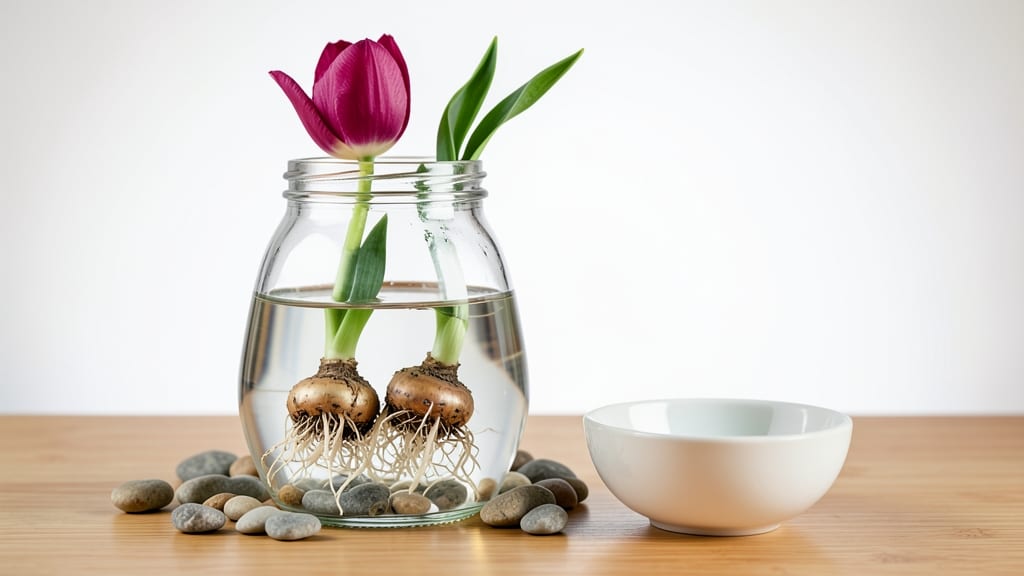
Tulip bulbs forced in water will not bloom again after replanting, because the indoor process exhausts their energy reserves and disrupts their natural dormancy cycle. You might still see leafy growth in future seasons if you replant them under ideal conditions, though flowers are unlikely.
Forcing tulips indoors for early blooms tricks them into using up their stored energy reserves months ahead of schedule. 🌱 This process mimics spring's arrival, but when you replant them outside, the bulbs haven't had time to replenish their energy through photosynthesis.
The result? Most forced bulbs simply focus on producing foliage rather than flowers, as their energy is already depleted. Even with perfect replanting conditions, the probability of reblooming remains low—typically under 20%—because the bulbs' natural flowering cues have been permanently altered.
What's interesting is that some gardeners report leafy regrowth without flowers in subsequent seasons. This happens when bulbs receive proper care after replanting—full sunlight, well-draining soil, and consistent moisture.
While blooms may never return, the foliage can still provide beauty, and the bulbs may eventually regain some strength over multiple growing seasons. The key is patience and creating the right conditions for recovery.
💡 In This Article
- Why Forced Tulip Bulbs Rarely Rebloom After Water Culture
- Maximizing Future Tulip Growth After Water Forcing
Why forced tulip bulbs rarely rebloom after water culture
When you force tulip bulbs indoors, you're essentially tricking them into believing spring has arrived prematurely. The process involves placing bulbs in water for weeks, which accelerates their metabolic activity to produce flowers months ahead of their natural outdoor schedule.
This rapid growth consumes a significant portion of the bulb's stored carbohydrates and nutrients—typically around 60-80% of their energy reserves—leaving little fuel for future regrowth. 🌱 Unlike outdoor-grown tulips that gradually deplete and replenish their reserves over seasons, forced bulbs exhaust their energy in a single burst.
The biological mechanism involves two key factors: photoperiodism and energy allocation. Tulips are long-day plants, meaning they require increasing daylight hours (typically 12-16 hours) to trigger flowering. When forced indoors, bulbs receive inconsistent light exposure, disrupting their internal clock.
This confusion causes the bulb to prioritize immediate flower production over root development and energy storage. Additionally, the water-forcing method prevents root establishment, which is crucial for nutrient absorption and long-term vitality. Outdoor bulbs develop extensive root systems that can absorb sunlight-converted energy throughout the growing season.
Consider this comparison: An outdoor tulip bulb might store enough energy to bloom for 3-5 years under ideal conditions, while a forced bulb may only have enough energy for one bloom cycle. The indoor environment also lacks the natural temperature fluctuations that help bulbs prepare for dormancy.
Without these cycles, the bulb's ability to reset and regenerate is severely compromised. Even if you replant a forced bulb, its weakened state means it will likely focus all remaining energy on leaf production rather than flower development.
There's also the issue of bulb size. Forced tulips often shrink because their energy goes toward flower production instead of bulb enlargement. A healthy outdoor tulip bulb can grow to 2-3 inches in diameter, while a forced bulb might only reach 1-1.5 inches.
Smaller bulbs have less capacity to store energy for future growth. This size reduction compounds over seasons, making reblooming increasingly unlikely without careful management.
What's particularly fascinating is how the bulb's internal chemistry changes. Forced bulbs experience elevated levels of gibberellins—plant hormones that promote flowering—while their auxin levels (which support root growth) remain suppressed.
This hormonal imbalance persists even after replanting, making it biologically challenging for the bulb to revert to its natural growth pattern. The result is a bulb that may produce leaves but lacks the energy reserves needed to initiate the complex flowering process.
However, there's a silver lining: while reblooming is unlikely, the bulb's foliage can still be productive. The leaves perform photosynthesis, converting sunlight into energy that can gradually rebuild the bulb's reserves over 1-2 growing seasons.
This process requires patience but demonstrates that the bulb isn't completely spent—it's just operating under different biological constraints than its outdoor counterparts.