
Blooming
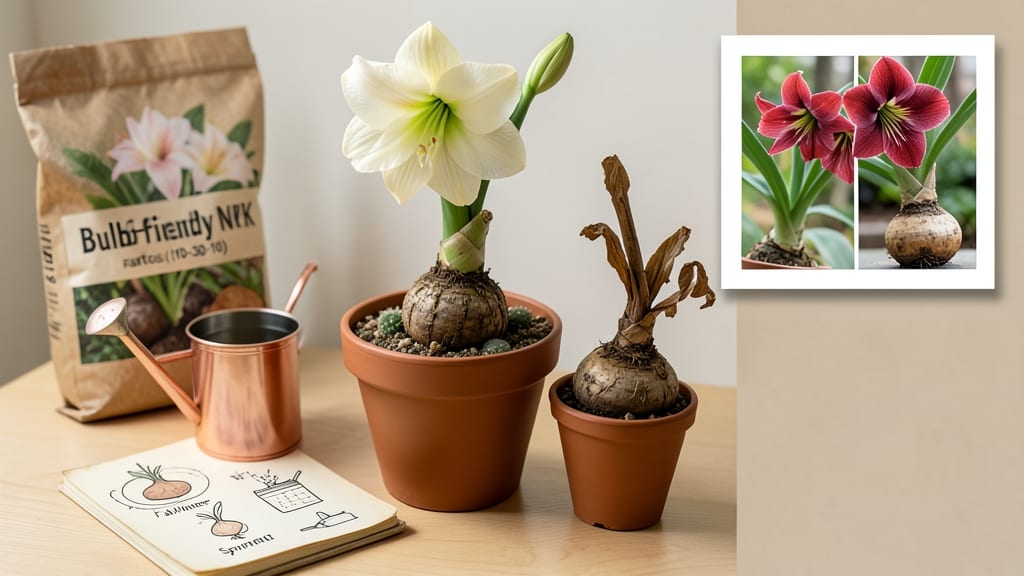
Will amaryllis bloom again after their first flowers? Yes, with proper care: provide 6-8 weeks of darkness, well-draining soil, bright indirect light, and consistent watering. Cutting spent blooms and fertilizing after flowering encourages repeat blooming in the same season or next year.
Amaryllis bulbs are like seasonal performers—they need a proper "backstage" routine to shine again. 🌱 The key is mimicking their natural dormancy cycle: after blooming, reduce watering and move them to a cool, dark spot for 6-8 weeks to recharge.
Once they sprout new leaves in spring, bright light and balanced nutrients (like a 10-10-10 fertilizer every 4-6 weeks) kickstart the process. I've seen amaryllis rebloom twice in a single year when I follow this schedule—though it takes patience, especially for first-timers.
What surprises many growers is that bulb maturity plays a huge role. Younger bulbs often need 1-2 years of proper care before reblooming, while established plants may reward you sooner.
The secret weapon? A well-draining potting mix with perlite or sand prevents rot while encouraging strong root growth—critical for storing energy for next season's flowers.
💡 In This Article
- Amaryllis Reblooming Science: Light, Dormancy, and Growth Cycles
- Step-by-Step Guide to Encouraging Amaryllis Reblooms
Amaryllis reblooming science: light, dormancy, and growth cycles
Amaryllis bulbs rely on a photoperiodic response—their biological clock triggers dormancy when daylight shortens. During the 6-8 weeks of darkness, the bulb's meristem (growth center) shifts from producing flowers to storing nutrients in its scales.
This process, called vernalization, mimics winter conditions and primes the bulb for next season's growth. Without this rest period, the bulb becomes nutrient-depleted, leading to weak or no blooms. Think of it like hibernation for plants—skipping it is like waking a bear too early from winter sleep! 🌙
The bulb's maturity level determines reblooming speed. Younger bulbs (under 2 years old) often need 12-18 months of consistent care before reblooming, while mature bulbs may reward you in just 9-12 months. The key difference? Mature bulbs have developed larger nutrient reserves in their scales.
For example, a 3-inch bulb might produce 1-2 stems, while a 5-inch bulb can yield 3-4 stems. Temperature also matters—ideal dormancy temps are 50-60°F; cooler than 45°F can shock the bulb, while warmer than 65°F prevents proper rest.
Light exposure during dormancy is critical. While the bulb rests in darkness, it's not completely inactive—it's photosynthesizing through its green leaves (if any remain) to supplement stored energy. This is why you'll sometimes see tiny leaves sprouting during dormancy.
The real magic happens when you reintroduce bright indirect light (like a south-facing window) after dormancy. This triggers the bulb to redirect stored nutrients toward flower bud formation.
A common mistake is moving bulbs to direct sunlight too soon—this can cause leaf burn and stress the bulb before it's ready to bloom.
Nutrient storage is where many growers go wrong. The bulb's scales act like a natural battery, storing starches and sugars produced during the growing season. When you fertilize heavily during active growth (spring/summer), you're essentially charging this battery.
But if you skip fertilization or overwater during dormancy, the bulb taps into its reserves too early, leading to weak blooms or no flowers at all.
For example, a bulb that receives balanced 10-10-10 fertilizer every 4-6 weeks during its active phase will have 30-50% more stored energy for reblooming than one that's neglected.
Seasonal blooming patterns vary by climate. In temperate zones, amaryllis naturally bloom in winter/spring (November-March) after a summer dormancy. But with artificial light control, you can coax blooms in any season.
For instance, I've grown amaryllis that bloomed in June by keeping them in darkness from December-February and then providing 12 hours of grow lights daily. The trade-off? These forced blooms often produce smaller, shorter-lived flowers compared to natural-season blooms, which develop over 5-7 days of gradual opening.
Here's what's happening at the cellular level: Flower buds form in the bulb's axillary meristems during dormancy. These tiny growth points require specific hormone ratios—particularly gibberellins (which promote growth) and abscisic acid (which regulates dormancy).
When you provide the right conditions (darkness + cool temps), these hormones rebalance, allowing the meristems to develop into full blooms. It's like conducting an orchestra—each element (light, temperature, nutrients) must play its part in perfect harmony! 🎻