
Blooming
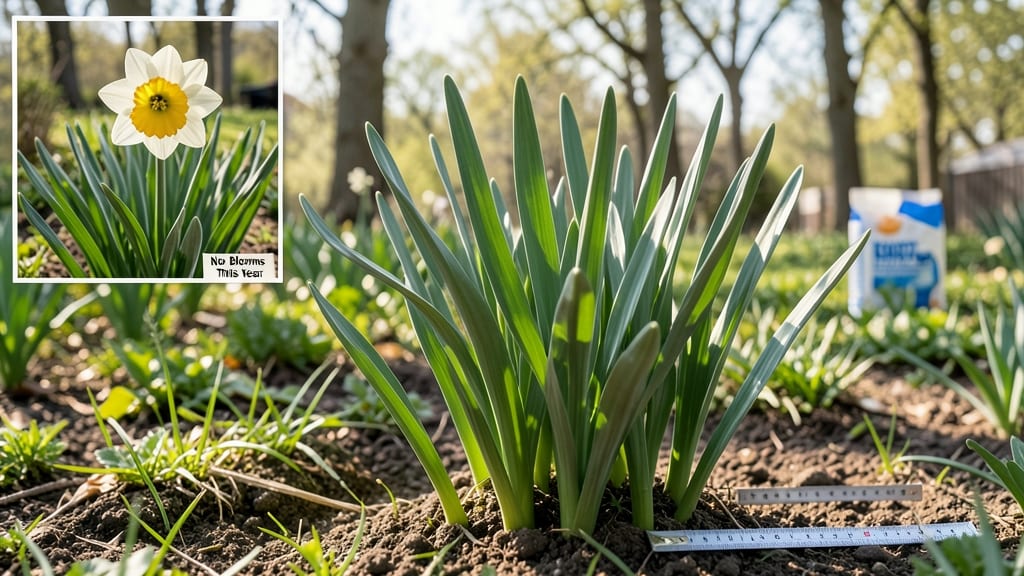
Your daffodils might be sending up leaves but the didn’t bloom this year—this happens more often than you’d think. 🌱 The good news? Most cases come down to simple fixes like sunlight, nutrients, or bulb health that you can address before next spring.
I’ve seen gardens go from "why no flowers?" to "neighborhood envy" in just one season with these adjustments.
First, check the basics: daffodils need 6+ hours of sunlight daily—if they’re in shade, they’ll focus on leaves, not blooms. Overcrowded bulbs also starve for space, while poor soil (especially low phosphorus) means no energy for flowers.
Even last year’s blooms can drain a bulb’s strength, leaving it too tired for another show.
Next season, divide congested clumps in fall, feed with bone meal (the phosphorus boost they crave), and move them to sunnier spots. Prune spent foliage after it yellows—this stores energy for next year’s blooms. With these tweaks, you’ll see buds forming by early spring.
Pro tip: Mark their location now so you don’t accidentally dig them up when prepping the bed. A little prevention turns "why no blooms?" into "when can I cut more?" by next March.
Hidden Reasons Behind Missing Blooms
Daffodils are hardy, cheerful plants that should burst into color each spring—but when they don’t, it’s often due to overlooked factors. Understanding the science behind these causes helps you troubleshoot and fix the issue before next season.
Let’s dig into the most common culprits and why they sabotage your daffodils’ blooming plans.
Daffodils thrive in full sun to partial shade (6+ hours of sunlight daily), but too little light or poor placement can stall blooming. Here’s why: - Photosynthesis slowdown: Without enough sunlight, the plant can’t produce the energy needed for flower development.
Weak stems and small buds are telltale signs. - Location mistakes: Planting near tall trees or structures blocks light.
Even dappled shade (filtering sunlight) can reduce bloom quality. - Northern climates: If your area gets limited winter sun, daffodils may struggle to store enough energy in their bulbs for spring blooms.
Fix it: Move your daffodils to a sunnier spot—even a few extra hours of morning sun can make a difference. If shade is unavoidable, choose varieties like Narcissus ‘Tête-à-Tête’ (compact and shade-tolerant).
Daffodils multiply over time, but too many bulbs competing for nutrients leads to weak, non-blooming stems. Here’s the science: - Nutrient depletion: Bulbs need phosphorus and potassium to produce flowers.
Overcrowding forces them to divert energy to bulb division instead of blooms. - Rootbound bulbs: When bulbs grow too close, their roots tangle, restricting water and nutrient uptake.
This stress triggers a survival response—prioritizing bulb growth over flowers. - Lack of fertilizer: Daffodils are light feeders, but a balanced, low-nitrogen fertilizer (like 5-10-10) in early spring encourages blooming.
Fix it:
- Divide bulbs every 3–5 years in late summer (after foliage dies back). Separate offsets (baby bulbs) and replant them 4–6 inches apart.
- Feed lightly: Apply a bulb-specific fertilizer in early spring (before shoots emerge) and again after blooming. Avoid high-nitrogen fertilizers—they promote leafy growth at the expense of flowers.
Daffodils need vernalization—a period of cold (typically 4–6 weeks below 40°F/4°C) to trigger flowering.
Without it: - Missed dormancy: Warm winters or early springs can confuse daffodils into thinking it’s time to grow without the necessary chill period. - Heat stress: Bulbs planted too deep or in hot, dry soil may struggle to establish roots, weakening their ability to bloom. - Frost damage: Late frosts after buds form can blacken or stunt blooms before they open.
Fix it:
- Check your hardiness zone: Daffodils need USDA Zones 3–8. If you’re in a mild-winter zone (like Zone 9+), choose low-chill varieties like Narcissus ‘Paperwhite’ or ‘February Gold’.
- Mulch in fall: Add 2–3 inches of mulch (straw or shredded leaves) to insulate bulbs and protect them from temperature swings.
- Avoid early fertilizing: Wait until after the last frost to fertilize—early feeding can encourage premature growth vulnerable to cold snaps.
Daffodils are drought-tolerant but water stress—either way—can halt blooming: - Overwatering: Soggy soil leads to rot (especially in clay or poorly draining soil), killing the bulb’s energy reserves.
Yellowing leaves or mushy bulbs are red flags. - Underwatering: Dry spells cause bulbs to shrink, reducing their ability to push up flowers.
Wilting foliage (even slightly) signals stress. - Timing matters: Too much water after blooming (while leaves are still green) starves the bulb of nutrients it needs to store for next year.
Fix it:
- Water deeply but infrequently: Aim for 1 inch of water per week (including rain). Use a soaker hose to avoid wetting foliage.
- Drainage check: Plant bulbs in well-draining soil (amend clay with compost or sand). If your garden floods, raise beds or plant on a slope.
- Post-bloom care: Let foliage yellow naturally—don’t cut it back until it browns. This process feeds the bulb for next year’s blooms.
Hidden attackers can siphon nutrients or damage bulbs before they bloom: - Squirrels and rodents: They dig up and eat bulbs, leaving no energy for flowers.
Chewed stems or missing bulbs are clues. - Narcissus fly (Merodon equestris): Larvae burrow into bulbs, causing rotting and stunted growth.
Look for small holes or wilting plants. - Fungal infections: Gray mold (Botrytis) or basal rot (Fusarium) thrive in wet conditions, weakening bulbs. - Aphids or spider mites: These sap-suckers drain leaves, reducing the plant’s ability to photosynthesize and store energy.
Fix it:
- Protect bulbs: Plant daffodils in containers (hard for rodents to access) or use chicken wire cages around bulbs in the ground.
- Monitor for pests: Inspect bulbs in late summer/fall for signs of damage. Treat with neem oil or insecticidal soap if needed.
- Rotate crops: Avoid planting daffodils in the same spot yearly to prevent soil-borne diseases.
Pro Tip 💡: Keep a garden journal! Note planting dates, sunlight, watering, and weather patterns. Patterns (like blooming every other year) often reveal the root cause.
Revive Your Daffodils Now
Daffodils are resilient, but even the hardiest bulbs need the right care to burst into bloom. If your garden missed its cheerful yellow trumpets this year, don’t panic—most issues have simple fixes.
Below, we’ve mapped out practical solutions for each common cause, along with prevention tips to ensure next year’s display is showstopping. Let’s get your daffodils back on track!
Problem: Daffodils thrive in full sun to partial shade (6+ hours of sunlight daily). If they’re buried under trees or tucked in a shady corner, they’ll focus energy on survival instead of blooming.
How to Fix It: ✅ 🔥 Relocate the Bulbs (Best Time: Fall)
- Dig up bulbs and replant them in a sunnier spot at least 6 inches deep.
- Choose a location with morning sun if full sun isn’t possible—it’s still better than deep shade.
✅ 🌳 Trim Overgrowth
- Prune nearby trees/shrubs to let more light reach the soil.
- Remove weeds or competing plants that steal sunlight.
✅ 💡 Prevention for Next Year
- Plant daffodils under deciduous trees (they lose leaves in winter, letting sunlight through).
- Avoid planting near evergreens—they block light year-round.
Problem: Daffodils hate soggy roots. Too much water (or clay-heavy soil) causes rot, stunting blooms.
How to Fix It: ✅ 👨🍳 Improve Soil Drainage
- Mix sand or perlite into heavy soil before replanting bulbs.
- Plant on a slight mound to encourage runoff.
✅ 🔪 Adjust Watering Habits
- Water only when the top 2 inches of soil are dry (spring/fall).
- Stop watering entirely once foliage yellows (mid-summer).
✅ 🌡️ Prevention for Next Year
- Test soil drainage: Dig a hole, fill it with water—if it drains in <1 hour, it’s safe.
- Choose well-draining bulb mixes if planting in containers.
Problem: Daffodils need balanced nutrients, especially phosphorus (for blooms) and potassium (for root strength). Poor soil = weak flowers.
How to Fix It: ✅ 📊 Fertilize at the Right Time
- Fall Planting: Add bone meal (high in phosphorus) when replanting bulbs.
- Early Spring: Use a balanced 10-10-10 fertilizer once shoots emerge.
✅ 🥗 Boost Organic Matter
- Work compost or aged manure into the soil before planting.
- Avoid fresh manure—it can burn bulbs!
✅ ✨ Prevention for Next Year
- Mulch lightly (1–2 inches) with straw or shredded leaves to retain nutrients.
- Rotate crops: Don’t plant daffodils in the same spot yearly (wait 3–4 years).
Problem: Bulbs planted too deep (below 6 inches) or too late (after early fall) may not get enough energy to bloom.
How to Fix It: ✅ 🔥 Replant at the Right Depth
- Dig bulbs up after foliage dies back (6–8 weeks post-bloom).
- Replant 6 inches deep, with the pointy end up (this is the shoot!).
✅ 🍳 Plant in the Correct Season
- Best time: 6–8 weeks before first frost (usually September–October).
- If you missed fall, wait until early spring (but blooms may be delayed).
✅ 🎯 Prevention for Next Year
- Mark planting spots with stakes or flags to avoid digging in the wrong place.
- Use a bulb planter for consistent depth.
Problem: Squirrels, deer, or bulb mites can damage bulbs, while fungal diseases (like basal rot) weaken them.
How to Fix It: ✅ 🔪 Protect Bulbs from Critters
- Chicken wire cages around bulbs to deter digging animals.
- Plant daffodils near alliums (garlic/onion family)—their smell repels pests.
✅ 🌡️ Treat Fungal Issues
- Remove infected bulbs and dispose of them (don’t compost!).
- Apply fungicide (like copper spray) if you see moldy growth.
✅ 💡 Prevention for Next Year
- Plant bulbs deeper (8+ inches) to deter squirrels.
- Rotate planting locations to avoid reinfecting soil.
Problem: Daffodils divide every 1–2 years. If they’re too crowded, they’ll produce fewer (or no) blooms.
How to Fix It: ✅ 🔪 Divide and Multiply
- Dig up bulbs after foliage yellows (late spring/early summer).
- Separate offsets (baby bulbs) and replant clumps 4–6 inches apart.
✅ 🌱 Give Them Space
- Thin out bulbs if they’re growing in tight clusters.
- Replant strong, firm bulbs—discard soft or shriveled ones.
✅ ✨ Prevention for Next Year
- Label planting spots to track age and avoid overcrowding.
- Fertilize lightly after dividing to encourage new growth.
Final Tip: 🌟 Patience is key! Daffodils often take 2–3 years to fully rebound after stress. With these fixes, your garden will be bursting with blooms by next spring. Happy gardening! 🌼
Frequently asked questions
Can daffodils bloom in the same spot every year?
Ideally, daffodils should be divided every 3-5 years to prevent overcrowding, which often causes weak or no blooms. Even if they bloom annually, their vigor declines without proper spacing. Rotating locations also prevents soil depletion and disease buildup.
Why do my daffodils have leaves but no flowers?
This usually means your bulbs are prioritizing leaf growth over flowering due to overcrowding, low sunlight, or poor nutrients. Daffodils need 6+ hours of sun daily and phosphorus-rich soil—try dividing bulbs and fertilizing with bone meal next spring.
Will cutting back daffodil foliage too early affect next year’s blooms?
Yes! Never cut foliage until it turns completely brown—this process feeds the bulb for next year’s flowers. Let leaves yellow naturally (about 6-8 weeks after blooming) before trimming. This stores energy in the bulb.
Can I force daffodils to bloom earlier than usual?
Forcing isn't recommended for outdoor daffodils, but you can encourage earlier blooms by planting low-chill varieties (like 'February Gold') and ensuring they get full sun. Warm fall temperatures can also trick bulbs into blooming sooner—just plant them 6-8 weeks before frost.
How do I know if my daffodil bulbs are still viable?
Healthy bulbs should feel firm and plump, with no soft spots or mold. If they’re shriveled or hollow, they’ve likely rotted. Test viability by cutting open a bulb—if the center is firm and white, it’s good; if mushy or dark, discard it. Replace old bulbs every 3-5 years.