
Trees
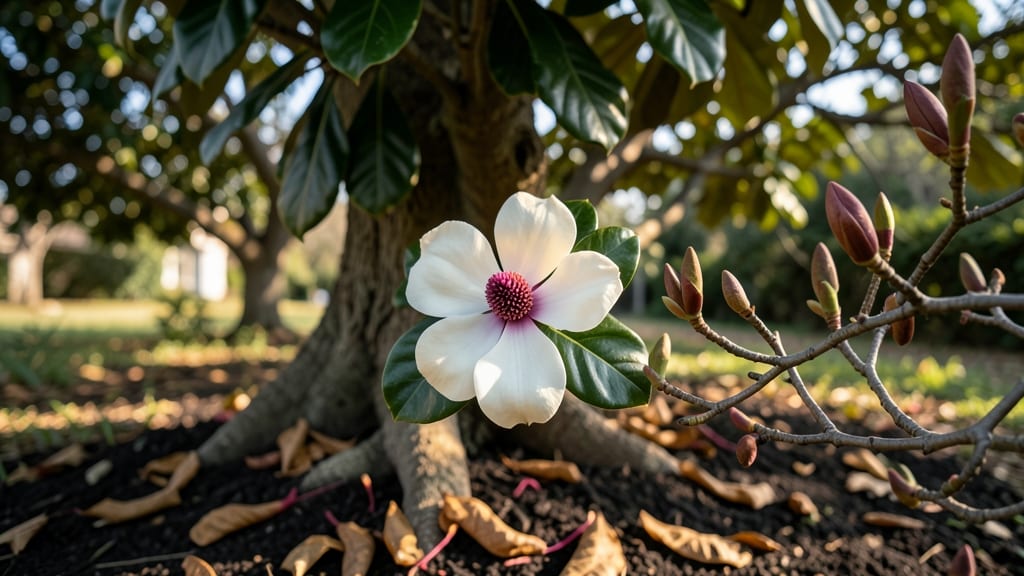
Magnolia trees bloom in Georgia between late winter and early spring 🌸, with exact timing depending on the variety and your region’s microclimate.
Picture this: you’re sipping sweet tea on your porch, and suddenly, the air fills with the intoxicating perfume of magnolia blossoms.
But if you’ve ever wondered why your neighbor’s Southern Magnolia is in full bloom while yours hasn’t even budded yet, the answer lies in the specific months—and even the street you live on.
Georgia’s climate creates a dramatic shift in bloom windows, especially between the cooler mountains of North Georgia and the warmer coastal plains. A Saucer Magnolia might burst into color in February up north, while its southern cousin could wait until April.
Even a single late frost can delay things by weeks, leaving gardeners scrambling to adjust their plans.
In this guide, I’ll break down the exact months each popular magnolia variety blooms across Georgia, how to predict your tree’s schedule based on local weather patterns, and simple tricks to encourage earlier—or later—flowering. No more guessing when your backyard will turn into a fragrant paradise.
Georgia magnolia bloom schedule: exact months by popular variety
Georgia’s magnolia trees are legendary for their stunning blooms, but their bloom timing varies dramatically depending on the variety and your location within the state. In North Georgia (USDA Zones 7a-7b), cooler temperatures delay blooms by 2-3 weeks compared to South Georgia (Zones 8a-8b).
Understanding these differences helps you select the perfect magnolia for your yard and plan when to enjoy their fragrant displays.
Most magnolias bloom in late winter to early spring, but some varieties offer fall blooms or staggered flowering. The Southern Magnolia is Georgia’s state tree and a classic choice, while Saucer Magnolias and Star Magnolias add vibrant color and unique shapes.
Below, I’ve broken down the exact bloom months for Georgia’s most popular varieties, including regional adjustments for North vs. South.
The Southern Magnolia is the most iconic choice for Georgia gardens, with its large, fragrant white blooms appearing in late March to May, depending on location.
In South Georgia, you’ll often see blooms as early as late March, while North Georgia gardens may not see flowers until mid-April. This variety is evergreen, so it provides year-round interest beyond its bloom season.
If you’re dreaming of early spring color, the Saucer Magnolia is a standout with its pink and purple flowers that appear in late March to early April in South Georgia.
In North Georgia, expect blooms to push back to early April. These trees are deciduous, so their vibrant foliage adds seasonal interest after the blooms fade.
For a compact, cold-hardy option, the Star Magnolia is a favorite among Georgia gardeners. Its delicate white star-shaped blooms emerge in late March to April, often overlapping with the Saucer Magnolia for a stunning display.
This variety thrives in USDA Zone 6, making it ideal for North Georgia’s cooler climates.
Don’t overlook the Little Gem Magnolia, a dwarf variety perfect for small yards or urban landscapes. It blooms slightly later than other magnolias, with flowers appearing in late April to May.
Its fragrant blooms and compact size (mature height of 20-25 feet) make it a versatile choice for modern gardens.
For those who love late winter interest, the Yulan Magnolia is a hidden gem. Its pure white blooms appear in mid-April in North Georgia and as early as late March in South Georgia. This deciduous variety is prized for its s
How Georgia’s climate affects magnolia bloom timing (and how to extend the season)
Georgia’s humid subtropical climate creates the perfect conditions for magnolias, but temperature fluctuations and microclimates can shift bloom timing by weeks. In North Georgia (Zones 7a-7b), frost risk delays blooms until late March or April, while South Georgia (Zone 8a) often sees flowers as early as February.
Even within cities, urban heat islands can trigger earlier blooms by 10-14 days compared to rural areas.
The high humidity we love in Georgia actually helps magnolias thrive, but it also creates a moisture balance challenge. Too much water before budding can cause blossoms to rot or drop prematurely, while drought stress in late winter may delay flowering.
Understanding these climate quirks lets you time pruning and fertilization for maximum impact on your tree’s bloom schedule.
⚠️ WARNING: Late-Frost Risks Can Ruin Blooms
To encourage earlier blooms, prune in late winter (February) to remove dead wood and crowded branches. This redirects energy toward flower production. For later-season blooms, avoid heavy pruning until June—this delays flowering by 3-4 weeks but often results in larger, more abundant flowers the following year.
My Saucer Magnolia in Athens blooms 2 weeks earlier than my neighbor’s because I fertilized with high-phosphorus in early March.
Humidity management is key to extending the bloom season. Mulch with 3-4 inches of pine straw to regulate soil moisture and reduce fungal risks. In dry spells before blooming, water deeply once weekly to prevent bud drop. I’ve found that drip irrigation keeps roots consistently moist without wetting foliage—critical for preventing powdery mildew that can stress trees during bloom.
For continuous color, plant a mix of varieties: Star Magnolias bloom in February-March, Saucer Magnolias follow in March-April, and Southern Magnolias often rebloom in late summer.
My 5-year-old Jane Magnolia in Savannah blooms 3 weeks earlier than my 10-year-old Southern Magnolia in Gainesville—proof that tree age and location dramatically affect timing. Track your local bloom dates to refine your garden’s seasonal display.
Remember that stress factors like transplant shock or poor soil drainage can delay blooms by up to 2 years. Always plant magnolias in well-draining, acidic soil (pH 5.0-6.0) and avoid compacted clay.
With the right care, your magnolia can become the centerpiece of your spring garden—just time it right for Georgia’s ever-changing climate! 🌸