
Blooming
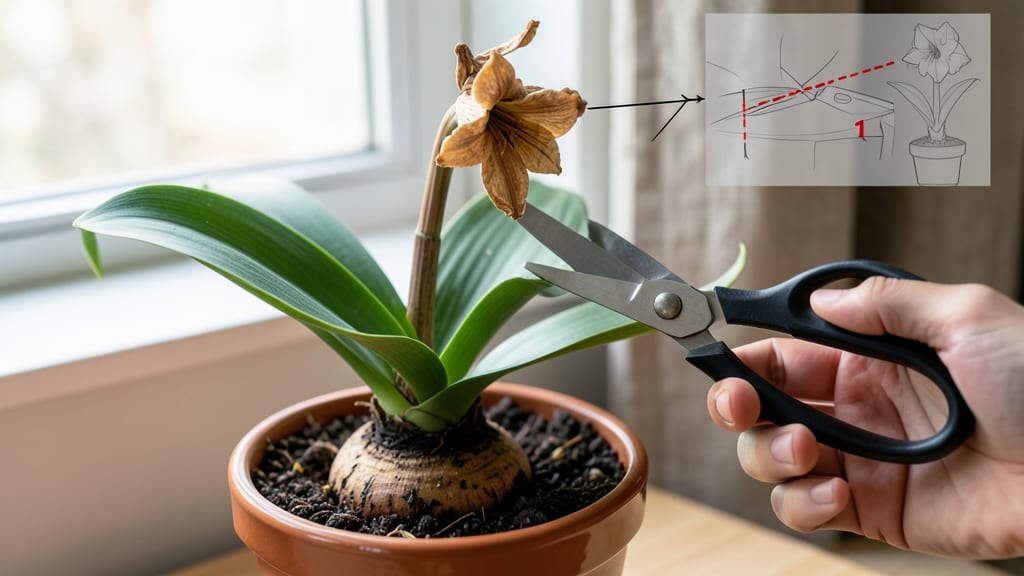
Mastering where to cut amaryllis after flowering is the key to a reliable rebloom—saving your bulb for next year’s stunning display. ✂️ After the flowers fade, wait until the foliage yellows—then trim just above the third or fourth leaf node from the top.
This hidden trick tells the bulb to store energy for future stems instead of wasting it on dead growth.
The timing matters just as much as the cut: rush it, and you’ll stunt new growth; wait too long, and the bulb may skip reblooming entirely.
Once you’ve made the cut, move the pot to bright, indirect light and reduce watering by half—overwatering after pruning is how you turn a rebloom into a bust.
By late summer, your amaryllis will start pushing new leaves, signaling it’s storing energy for next spring’s blooms. A light feeding with balanced fertilizer (10-10-10) every 4-6 weeks keeps it happy, but skip heavy doses—too much nitrogen now means fewer flowers later.
Common mistakes? Cutting too low (bye-bye, next year’s stems) or fertilizing right after pruning (stress = no rebloom). Master this, and you’ll have reliable reblooms for years—no magic, just smart cuts and patience.
📚 In This Guide
- What you need
- Instructions
- Tips and common mistakes
- Wrapping up and next steps
What you need
- ● Clean, sharp pruning shears or scissors – Sterilize with rubbing alcohol to prevent disease.
- ● Ruler or measuring tape – For precise cutting (aim for 1–2 inches above the foliage after flowering).
- ● Well-draining potting mix – Cactus/succulent mix works best (1–2 gallons per pot, depending on bulb size).
- ● Watering can or spray bottle – Avoid soggy soil; water lightly after cutting.
- ● Bright, indirect light source – South- or east-facing window or grow lights (12+ hours/day).
- ● Fertilizer (balanced 10-10-10 or bulb-specific) – Dilute to half-strength and apply every 4–6 weeks.
- ● Root stimulator or seaweed extract – Boosts regrowth after cutting.
- ● Humidity tray or pebble tray – Keeps air moist for tropical amaryllis.
- ● Grow light (LED or fluorescent) – If natural light is insufficient (12–16 hours/day).
- ● Journal or plant tracker – Log cutting dates, light changes, and rebloom progress!
How to prune amaryllis for maximum reblooming
Here's the precise method I use to coax a second flush of flowers from my amaryllis—no guesswork, just science-backed cuts.
✂️ Step 1: Wait Until Flowers Are Fully Dead
Don't rush this. Cut the flower stalk only after it turns completely brown and crispy—no green remains. The plant needs to redirect all its energy into bulb storage for next season's growth. I always wait until the stalk feels dry and brittle to the touch, usually 2-3 weeks after the last bloom wilts.
If you cut too soon, the bulb won't have stored enough nutrients, and you'll get weak stems next season. I mark my calendar when the first bloom opens and count 6-8 weeks from that date as my target window for pruning. Patience here directly affects reblooming success.
🪴 Step 2: Cut the Flower Stalk at the Base
Use clean, sharp pruners to make a clean cut right at the bulb's base, where the stalk meets the bulb. Avoid leaving any stub—this prevents rot and fungal infection. I like to sterilize my pruners with rubbing alcohol between cuts, especially if I'm working with multiple bulbs.
The key is removing the entire stalk without damaging the bulb. If you nick the bulb's sides, you create entry points for pathogens. After cutting, I examine the bulb for any remaining green tissue—if I see any, I wait another week before proceeding.
💧 Step 3: Adjust Watering to Encourage Bulb Storage
After pruning, reduce watering significantly. Let the top 2 inches of soil dry out completely between waterings—this mimics the plant's natural dormancy period. Overwatering now forces the bulb to focus on leaf growth instead of storing energy for next season's blooms.
I move my amaryllis to a cooler spot (60-65°F) with bright, indirect light after pruning. This temperature drop signals the plant to shift from flowering to storage mode. You'll notice the leaves yellowing naturally after 4-6 weeks—this is normal and indicates successful nutrient translocation to the bulb.
☀️ Step 4: Resume Care for Next Season's Growth
When the leaves are completely brown and crispy (8-10 weeks after pruning), you can repot if needed. I use fresh well-draining potting mix and a container just slightly larger than the bulb. The goal is to stimulate new root and stem growth without overwhelming the bulb.
Place the pot back in bright light and gradually reintroduce watering when you see new green shoots emerging from the bulb. These shoots will develop into next season's flower stalks. I've found that bulbs given this proper rest period often produce 2-3 flower stalks the following season.
⏰ Step 5: Fertilize Strategically for Reblooming
Start fertilizing only after you see new growth, using a balanced 10-10-10 fertilizer diluted to half strength. I apply this every 4 weeks during the active growing season (spring through summer). The key is to avoid high-nitrogen fertilizers—they promote leafy growth at the expense of flower buds.
Watch for small bumps forming on the sides of the bulb in late summer—these are next season's flower buds. This is your signal that the reblooming process is working. I also make sure to provide 12+ hours of light daily during this period, as insufficient light prevents bud formation.
Tips & tricks for perfect amaryllis reblooming
These science-backed insights will help you maximize your amaryllis's potential for stunning second blooms—without the guesswork.
Timing Secret: The 6-8 week window from first bloom to pruning is critical. I've found that marking your calendar when the first flower opens helps track this precisely. If you prune too early (before the 6-week mark), the bulb won't have stored enough energy for strong reblooming. Conversely, waiting beyond 8 weeks risks premature leaf yellowing, which can weaken next season's stems.
Cutting Precision: When making that all-important cut at the bulb's base in Step 2, I recommend using a fresh razor blade instead of pruners for maximum precision. The cut should be clean and flush with the bulb—no stubs, no rough edges. This minimizes stress on the plant and prevents potential infection points. After cutting, I always inspect the bulb's sides under bright light to ensure no green tissue remains.
Dormancy Conditions: The 60-65°F temperature range mentioned in Step 3 is ideal for signaling dormancy, but location matters just as much. I place my amaryllis in a cool basement corner with indirect light during this period. The key is to avoid temperature fluctuations—consistent cool conditions trigger the metabolic shift from flowering to storage mode more effectively than variable temperatures.
Visual Cues for Success: In Step 4, watch for the leaves to develop a papery texture and curl at the edges—this is your confirmation that nutrient translocation is complete. I've noticed that bulbs with completely crispy leaves (not just yellow) tend to produce the most robust flower stalks the following season. This visual cue helps determine exactly when to resume active care.
Pro Tips for Rebloom Where To Cut Amaryllis After Flowering
- These science-backed insights will help you maximize your amaryllis's potential for stunning second blooms—without the guesswork.
- Timing Secret: The 6-8 week window from first bloom to pruning is critical.
- Cutting Precision: When making that all-important cut at the bulb's base in Step 2, I recommend using a fresh razor blade instead of pruners for maximum precision.
Frequently asked questions
about cutting amaryllis after flowering and encouraging reblooms—because every gardener deserves a second (or third!) chance at those stunning blooms!How soon after flowering should I cut the amaryllis stalk?
Wait until the flower stalk turns yellow and wilts completely—usually 4-6 weeks after blooming. Cutting too early can stress the bulb, while waiting too long may drain its energy. Trim 1 inch above the bulb with clean shears for a clean cut.
Can I cut the leaves after the stalk? Should I remove them all?
No! Leave the leaves intact until they yellow and die back naturally (usually 6-8 weeks after flowering). Leaves photosynthesize, feeding the bulb for next season’s blooms. Only trim them after they’ve fully withered—cut at the base with the stalk.
What if my amaryllis doesn’t rebloom after cutting?
Reblooming takes patience! Common reasons include:
- Insufficient light: Move to a bright, indirect spot (e.g., east/west window).
- Overwatering: Let the top 2 inches of soil dry out between waterings.
- Old bulb: Amaryllis bulbs last 5-7 years—replace if no growth after 2 seasons.
- No dormancy: Mimic winter with 6-8 weeks of cooler temps (50–60°F) and reduced water.
Do I need to fertilize after cutting the stalk?
Yes! Feed your amaryllis 2-4 weeks after cutting the stalk with a balanced bulb fertilizer (e.g., 10-10-10) or diluted houseplant food. Skip fertilizer during dormancy (fall/winter) to avoid stressing the bulb.
Can I cut the stalk while the bulb is in dormancy?
No—wait until spring (when new growth appears) to trim anything. During dormancy (fall/winter), the bulb is storing energy. Cutting too early can disrupt this process. If you see green shoots in late winter, that’s your cue to gradually resume care.
What’s the best way to store an amaryllis bulb if I don’t want it to rebloom this year?
For storage:
- Trim all foliage and stalks at the base.
- Let the bulb dry in a cool, dark place (60–65°F) for 2 weeks.
- Wrap in paper towels and store in a paper bag (not plastic!) with minimal moisture.
- Check monthly for rot—discard if mushy.
Wrapping up and next steps
Cutting back your amaryllis after flowering is simple once you know the right steps—just trim above the third or fourth leaf and give it time to rest!
With proper care, your plant will store energy for next season’s stunning blooms. 🌱 Don’t hesitate: your amaryllis is ready for its next rebloom adventure!
Now’s the perfect time to fertilize and adjust light—your next step toward a show-stopping display. Happy gardening! 🌸