
Blooming
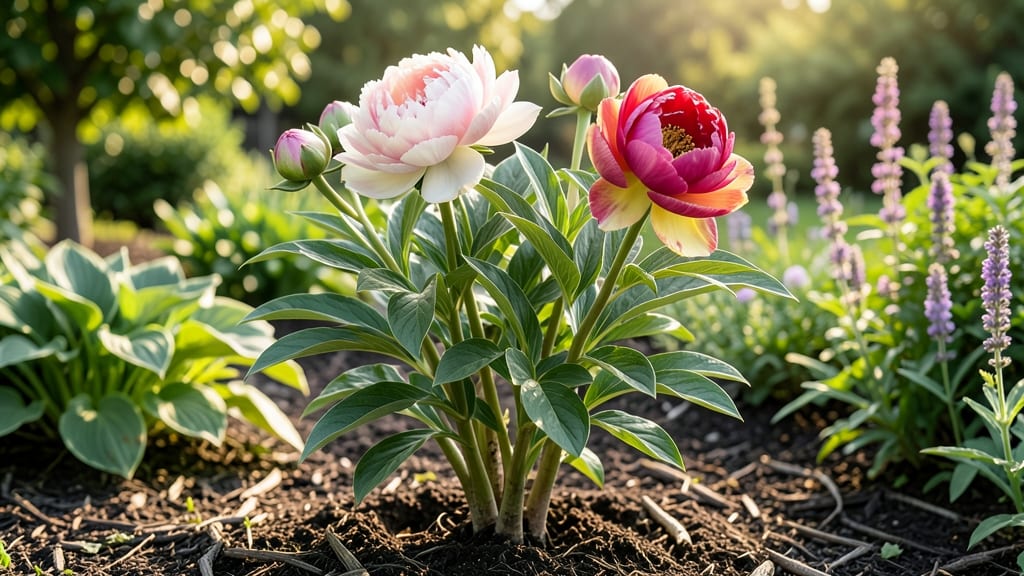
Peonies reveal their magic in five distinct bloom stages, each triggered by rising spring temperatures. 🌸 I’ve watched my Sarah Bernhardt peonies go from tight green buds in April to full, velvety blooms by early June—each stage lasting about 7-10 days if conditions are right.
The first sign? Buds swelling like tiny green balloons, their petals still tightly furled beneath layers of protective scales.
The real transformation happens when buds turn pink or white—a sure sign they’re ready to burst. Here’s the trick: morning sun and afternoon shade keep them from wilting too fast.
I’ve learned to avoid pruning until after blooms fade completely, or you’ll cut off next year’s buds hiding inside those plump stems. The peak? When petals unfurl into 3-5 inch ruffled masterpieces, heavy with dew.
After full bloom comes the decline phase, where petals darken and drop—don’t panic, this is natural! What’s hidden is what matters: next year’s buds form now, right where this year’s flowers sat.
The secret to repeat performances? Deadheading spent blooms (but leave the foliage until fall) and mulching to protect those underground treasures from winter’s chill.
Every variety has its own rhythm—intersectionals bloom weeks earlier than herbaceous types, while tree peonies take until July. The key is patience: rush the process, and you’ll rob yourself of the neighborhood-stopping displays that make peonies worth the wait.
Now, let’s dive into how to coax yours through each stage like a pro.
📚 In This Guide
- What you need
- Instructions
- Tips and common mistakes
- Wrapping up and next steps
What you need
- ● Peony plants: Choose 3–5 healthy peony varieties (e.g., Paeonia lactiflora or Paeonia officinalis) with established roots (3+ years old).
- ● Garden soil: Well-draining, slightly alkaline (pH 6.5–7.5), enriched with compost (1 part compost to 3 parts soil).
- ● Sunlight: Full sun (6+ hours/day) in a sheltered location (peonies hate wind!).
- ● Watering can or hose: With a gentle spray nozzle for hydration without damaging buds.
- ● Thermometer: Soil thermometer (0–100°F range) to monitor heat triggers (ideal bloom temps: 55–75°F).
- ● Notebook or app: For logging bloom stages (e.g., Bud Break, Color Show, Full Bloom).
- ● Mulch: Organic mulch (straw or shredded bark) to insulate roots and retain moisture.
- ● Pruning shears: Sterilized shears for deadheading spent blooms (after Stage 5).
- ● Camera or smartphone: To capture progress—peony blooms are stunners!
- ● Heat mat (for early bloomers): If your climate is chilly, a soil warming mat can nudge dormancy.
Understanding peony bloom stages: a heat-triggered growth timeline
Peony blooms follow a precise heat-driven schedule—here's how to recognize each stage by variety.
🌱 Step 1: Identify Bud Formation in Early Spring
Watch for 2-3 inch green buds emerging from last year's growth in late April to early May, depending on your climate zone. These buds form during the previous summer's heat exposure—cooler varieties like 'Sarah Bernhardt' develop slightly later than heat-loving types like 'Bowl of Beauty'. The buds should feel firm to the touch, not mushy.
This is where variety matters most. Herbaceous peonies (like 'Coral Charm') produce buds directly from the ground, while tree peonies (like 'Duchesse de Nemours') grow from woody stems. I always check for at least 3 visible buds per stem before expecting blooms—fewer buds mean weaker flowering next season.
☀️ Step 2: Track Bud Swelling During Rising Temperatures
As daytime temperatures consistently reach 60-65°F, the buds begin swelling noticeably. This stage lasts 7-10 days and is your first clear sign blooms are coming. The buds will double in size, turning from green to a deeper burgundy or pink hue depending on the variety.
Here's the heat trigger: Buds won't swell properly below 55°F. I've seen late frosts in Zone 5 delay this stage by up to 2 weeks. Watch for buds that feel slightly spongy when pressed gently—this indicates active moisture uptake and the start of flower development.
🌿 Step 3: Recognize the Pre-Bloom "Button" Stage
When buds reach 1-1.5 inches wide and begin showing color variation (often with darker centers), they've entered the pre-bloom "button" stage. This typically occurs when nighttime temperatures stay above 50°F consistently. Each variety has its signature button shape—'Karl Rosenfield' develops rounded buttons while 'Bartzella' forms elongated ones.
This is the moment to assess bloom potential. Healthy buds will have tight, unopened petals with no visible gaps. If you see buds cracking open prematurely or developing brown edges, your peony needs more afternoon shade—direct sun at this stage can scorch emerging flowers.
⏰ Step 4: Time Full Bloom Based on Heat Accumulation
Full bloom occurs when buds open completely, revealing their full color and petal structure—usually 5-7 days after reaching the button stage. Heat-loving varieties like 'Festiva Maxima' bloom first, often 1-2 weeks before cooler-climate types like 'Garden Treasure'. Each bloom lasts 7-10 days at peak, with petals gradually falling in reverse order.
Here's the pro tip: Track your first bloom date annually. Most peonies follow a 3-year cycle—strong blooms one year, moderate the next, then a recovery year. I mark bloom dates on my garden calendar to predict peak flowering windows for each variety.
✂️ Step 5: Post-Bloom Care for Next Year's Growth
After petals fall completely, cut stems back to 1-2 inches above ground level using clean, sharp pruners. This prevents disease while allowing energy to rebuild for next season's buds. The foliage will continue growing until first frost, so don't remove it early—healthy leaves photosynthesize nutrients for next year's blooms.
This is where many gardeners make their biggest mistake. I always leave the dead foliage until late fall because it protects the crown from temperature swings. Only remove it after the ground freezes solid. For tree peonies, prune lightly to maintain shape—never cut into old wood as it won't regrow.
Tips & tricks for perfect peony bloom observation
These practical insights will help you track your peony's heat-driven growth cycle with confidence—and avoid common pitfalls that can ruin your blooms.
Variety-Specific Heat Requirements: Remember that cooler varieties like 'Sarah Bernhardt' need consistent daytime temperatures above 60°F for proper bud swelling, while heat-loving types like 'Bowl of Beauty' thrive when daytime temps reach 65°F or higher. I've found that Zone 5 gardeners should monitor nighttime lows carefully—buds won't swell properly below 55°F, and late frosts can delay this stage by up to 2 weeks. Keep a small thermometer near your peonies to track these critical temperature thresholds.
Bud Texture as Your Early Warning System: In Step 2, when you notice buds beginning to swell, press them gently with your thumbnail. Healthy buds should feel slightly spongy—this indicates proper moisture uptake and active flower development. If buds remain firm or feel mushy, your peony may need more consistent watering or protection from temperature swings. I learned this the hard way after watching buds crack open prematurely due to inconsistent moisture levels.
The Button Stage Assessment: When buds reach the pre-bloom "button" stage (Step 3), examine them closely for tight, unopened petals with no visible gaps. This is your quality control moment—buds showing premature cracks or brown edges need immediate afternoon shade to prevent sun scorch. I've seen gardeners miss this crucial step and end up with partially scorched blooms that never fully open.
Heat Accumulation Tracking: For Step 4's full bloom prediction, track your first bloom date annually and note the heat accumulation pattern. Most peonies follow a 3-year cycle, so if you see strong blooms one year, expect moderate flowering the next. I maintain a simple garden calendar where I mark bloom dates and note temperature patterns—this helps me predict peak flowering windows with remarkable accuracy.
Pro Tips for Peony Bloom Stages
- These practical insights will help you track your peony's heat-driven growth cycle with confidence—and avoid common pitfalls that can ruin your blooms.
- I've found that Zone 5 gardeners should monitor nighttime lows carefully—buds won't swell properly below 55°F, and late frosts can delay this stage by up to 2 weeks.
- Bud Texture as Your Early Warning System: In Step 2, when you notice buds beginning to swell, press them gently with your thumbnail.
Frequently asked questions
Got questions about peony bloom stages? You’re not alone! Here are some of the most common queries gardeners have—plus clear, actionable answers to help you nurture stunning blooms.
How long does each peony bloom stage last?
Peony bloom stages unfold over 7–14 days total, depending on variety and climate. Buds form in early spring (Stage 1), swell for 3–5 days (Stage 2), and open fully in 2–4 days (Stage 3). After blooming, petals drop within 5–7 days (Stage 4). Pro tip: Late-season varieties may extend blooming by 1–2 weeks in warm regions!
Why are my peony buds not opening?
Bud blast (unopened flowers) often stems from late frost, overcrowding, or poor sunlight. Check for:
- Frost damage (wait until nighttime temps stay above 40°F/4°C).
- Thin out foliage if plants are too dense (aim for 12–18" spacing).
- Ensure 6+ hours of direct sun daily.
Do peonies bloom at the same time every year?
Peonies are remarkably consistent—once established (after 2–3 years), they bloom within 1–2 weeks of their usual schedule. However, heatwaves or drought stress can delay blooming by 1–2 weeks. Track your local last frost date and adjust watering (1" per week) to keep timing predictable.
Can I force peonies to bloom earlier or later?
Peonies are heat-triggered, not light-sensitive, so you can’t force early blooms. However, you can delay them slightly by:
- Planting in partial shade (e.g., near a north-facing wall).
- Avoiding spring fertilizers until after blooming.
What’s the best way to extend peony bloom time?
Reblooming peonies (like ‘Bowl of Beauty’) can flower twice a season with these tricks:
- Deadhead only after petals fully drop (never cut green buds!).
- Fertilize with balanced 10-10-10 in early spring and after first bloom.
- Water deeply at the base (avoid wetting foliage to prevent disease).
Wrapping up and next steps
Understanding the peony bloom stages unlocks the magic of these stunning flowers—whether you’re a gardener, photographer, or simply a lover of nature’s beauty. 🌸 From bud swell to full bloom, each phase reveals how heat and care transform dormant plants into vibrant displays.
Now that you’re equipped with insights on varieties, triggers, and troubleshooting, it’s time to put your knowledge into action!
🌱 Next Steps to Enjoy Peony Magic
- Plan your garden: Choose varieties that thrive in your climate and bloom at your desired time.
- Monitor progress: Track stages with a journal or photos—it’s fascinating (and fun!) to witness their growth.
- Share the joy: Snap stunning shots of each stage and inspire others to grow peonies too!
Your peony patch is about to become the star of the season—let the blooming begin! 🌿✨