
Blooming
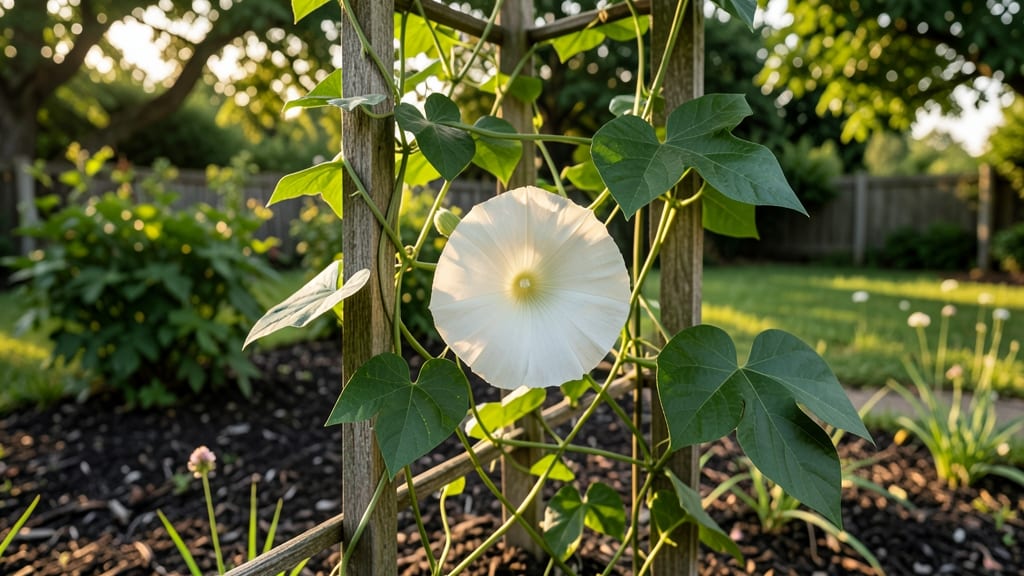
Moon flowers bloom at night because their petals open in response to darkness, triggered by a natural photoperiodic mechanism that aligns with nocturnal pollinators like moths and bats, maximizing reproductive success in low-light conditions.
Moon flowers—like the Ipomoea alba or moonflower vine—have evolved this nocturnal habit to sync with the active hours of their primary pollinators. 🌙 The plant's internal clock, regulated by phytochrome pigments, detects the absence of light and signals hormonal changes that cause the petals to unfurl.
This timing isn't just about aesthetics; it ensures the flowers release their sweet fragrance when night-flying insects are most abundant, creating a mutually beneficial relationship that boosts both pollination and seed production.
What's fascinating is how this behavior adapts to seasonal changes. In regions with longer summer nights, moonflowers may bloom earlier in the evening, while in areas with shorter nights, they might wait until closer to midnight. This flexibility highlights nature's precision in optimizing survival strategies.
💡 In This Article
- How Moon Flowers Use Light to Trigger Nocturnal Blooming
- Growing Moon Flowers for Nighttime Beauty in Gardens
How moon flowers use light to trigger nocturnal blooming
The magic of moonflowers begins with phytochrome pigments—light-sensitive proteins embedded in their leaves and stems. These pigments exist in two forms: one that absorbs red light (active during the day) and another that absorbs far-red light (active in darkness).
When sunlight fades, the phytochrome converts to its far-red-absorbing form, sending a biochemical signal to the plant's cells. This triggers a cascade of reactions that soften the petal cells' cell walls, allowing them to expand like a slow-motion balloon filling with air. 🌙
The process involves a hormone called florigen, which travels from leaves to flower buds. Florigen isn't just a single molecule but a complex of proteins and sugars that primes the petals for opening.
Studies show this hormonal shift begins 2-3 hours before sunset, with petal expansion accelerating as night deepens. The flower's temperature also plays a role—cool evening air helps maintain the petals' delicate structure, preventing them from wilting prematurely.
Unlike day-blooming flowers that rely on UV light for pigment stability, moonflowers' white petals reflect moonlight efficiently, making them highly visible to nocturnal pollinators.
What's truly remarkable is how moonflowers synchronize with lunar cycles. Research on Ipomoea alba shows that flowers exposed to full moonlight may open slightly earlier (around 8:30 PM) compared to new moon nights (10:30 PM).
This adjustment ensures the flowers align with the peak activity of their primary pollinators—moths and bats—which are most active during specific lunar phases.
The plant's internal clock, or circadian rhythm, acts like a biological timer, ensuring the flowers don't waste energy blooming on moonless nights when pollinators are scarce. 🌟
This nocturnal strategy isn't just about timing—it's a survival hack. Moonflowers produce 2-3 times more nectar at night than day-blooming flowers, offering a high-energy reward to pollinators that visit after dark.
The flowers' sweet, intoxicating fragrance (often described as vanilla or coconut) becomes most potent after sunset, creating an irresistible beacon for moths. This mutualism ensures both the plant and pollinator thrive: the flower gets pollinated, and the moth or bat gets a nighttime meal.
Interestingly, moonflowers also exhibit thermonastic movements—they can close their petals in response to sudden temperature drops or mechanical disturbances (like rain). This protective mechanism prevents damage while still allowing pollinators to access the flower's reproductive parts.
The petals' silky texture and slight downward curve guide nocturnal visitors directly to the nectar, maximizing the chances of successful pollination. 🌿
For gardeners, understanding this process explains why moonflowers often struggle in urban areas with artificial lighting. Streetlights can confuse the plant's photoperiodic mechanism, causing petals to open prematurely or not at all. The solution?
Plant moonflowers in areas shielded from bright artificial light, where they can rely on natural darkness to trigger their nocturnal display. This careful placement ensures the flowers perform their evolutionary dance—blooming only when the moon is high and the night is dark. ✨