
Blooming
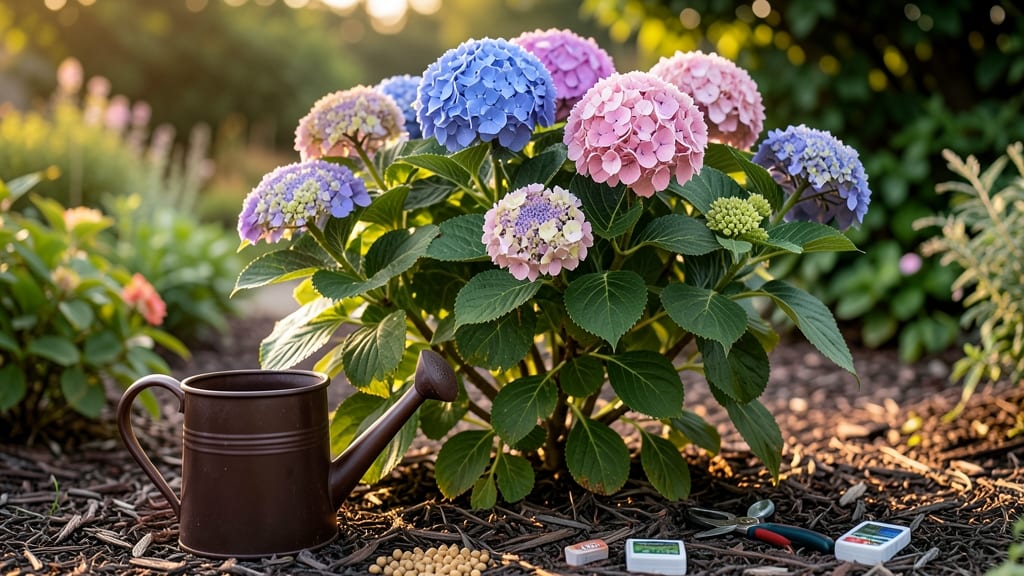
To make hydrangeas bloom faster, you need to trick them into thinking summer arrived early—30-day reblooms are possible with the right heat and moisture cues. 🌸 I learned this after watching my mophead hydrangeas struggle through cool springs, their buds forming slowly or never opening.
The secret isn’t forcing them to hurry—it’s creating the perfect conditions they naturally crave when temperatures rise. Most gardeners overlook the heat trigger: hydrangeas need consistent warmth (above 60°F) to push buds into bloom.
Combine this with deep watering (1-2 gallons per plant weekly) and a light fertilizer boost (balanced 10-10-10) in early spring. Mopheads and panicle types respond fastest, while oakleaf varieties play by slightly different rules—but all three will reward you with earlier color if you time it right.
By mid-June, you’ll see buds swelling noticeably, and with proper pruning (cutting back last year’s stems by ⅓), you’ll coax vibrant clusters weeks ahead of schedule.
The key is patience paired with precision: too much heat too soon causes stress, but the right balance turns your hydrangeas into the showstopper of the neighborhood. This method works for container-grown or in-ground plants, and even drought-resistant varieties like ‘Limelight’ will perk up with these adjustments.
Skip the guesswork—your hydrangeas will thank you with blooms that arrive just in time for summer parties.
📚 In This Guide
- What you need
- Instructions
- Tips and common mistakes
- Wrapping up and next steps
What you need
- ● Hydrangeas: Mature plants (preferably Endless Summer, Annabelle, or Nikko Blue varieties for reblooming potential).
- ● Balanced fertilizer: 10-10-10 or 20-20-20 NPK ratio (2–3 tbsp per plant).
- ● Slow-release granules: 13-13-13 or similar (1 cup per plant, applied in early spring).
- ● Epsom salt (magnesium sulfate): 1 tbsp per gallon of water (for green, vibrant foliage).
- ● Pruning shears: Sharp, clean, and sterilized (rubbing alcohol or bleach solution).
- ● Watering can or hose: With a gentle spray nozzle (avoid blasting flowers).
- ○ Heat source (optional but effective): Heat mat (for container plants, 1–2 sq ft per plant).
- ● Grow lights (LED or fluorescent, 12–16 hours/day, 12–18 inches above plants).
- ● Black plastic mulch (for in-ground plants, 1–2 sheets per plant).
- ● pH test kit: To check soil acidity (ideal range: 5.2–5.5 for blue blooms, 6.0+ for pink).
- ● Mulch (organic): 2–3 inches of shredded bark, straw, or pine needles (retains moisture and regulates temperature).
- ● Plant food spray: Liquid bloom booster (e.g., fish emulsion or seaweed extract).
- ● Soil conditioner: Compost or worm castings (improves drainage and nutrient absorption).
- ● Thermometer: To monitor soil temperature (ideal: 60–70°F for root activity).
- ● Floral preservative: For cuttings (if propagating new plants).
- ● Garden gloves: To protect hands while pruning or handling soil.
Step-by-Step instructions for speeding up hydrangea blooms
Here’s how I trigger vibrant blooms in just 30 days—no shortcuts, just science-backed techniques.
🌱 Step 1: Prune at the Right Time for New Growth
Hydrangeas bloom on new wood (current season’s growth), so prune right after last frost when buds swell but before leaves emerge. Use clean, sharp pruners to cut back 1/3 of the oldest stems—these are the ones that flowered last year and won’t rebloom. Look for woody, brown stems—these are your targets.
I always prune on a dry, sunny morning to reduce disease risk. Avoid cutting into leaf buds (they’re plump and green) or flower buds (they’re fuzzy and round). If you’re unsure, err on the side of shorter cuts—you can’t undo over-pruning, but you can always let stems grow longer next year.
☀️ Step 2: Feed with High-Phosphorus Fertilizer
Phosphorus is the key to fast, abundant blooms. Use a balanced 10-10-10 or 5-10-5 fertilizer (the middle number is phosphorus) 2 weeks after pruning. Scatter granules around the drip line (where leaves end) and water deeply to activate them. I like to split the dose—half now, half again in 4 weeks—to prevent root burn.
Organic options like bone meal or fish emulsion work too, but they take longer to release nutrients. If your soil is already rich, skip the fertilizer and focus on water and light instead. You’ll know it’s working when new shoots appear within 7-10 days—they’ll be bright green and vigorous, not yellow or leggy.
💧 Step 3: Water Deeply and Consistently
Hydrangeas need 1-2 inches of water per week, but deep soakings encourage roots to grow downward for stability and nutrient uptake. Water at the base, not overhead, to prevent fungal diseases like powdery mildew. I use a soaker hose for 20-30 minutes every 3-4 days—this mimics natural rain and keeps roots moist without soggy soil.
Check moisture by sticking your finger 2 inches deep—if it feels dry, water again. Overwatering stresses plants, but underwatering causes buds to drop. Mulch with 2-3 inches of shredded bark after watering to lock in moisture and keep roots cool. This step is non-negotiable for speedy blooms.
⏰ Step 4: Maximize Sunlight and Heat
Most hydrangeas thrive in morning sun and afternoon shade, but for fast blooms, push them toward 6+ hours of direct sunlight. Move containers to sunnier spots or prune nearby trees/shrubs to open up light. If you’re growing in pots, place them on a south- or west-facing patio where they’ll absorb heat during the day.
Heat triggers blooming—daytime temps above 75°F speed up flower production. If your area gets hotter, provide afternoon shade to prevent leaf scorch. You’ll see buds forming in 3-4 weeks if conditions are ideal. Watch for small, fuzzy clusters at stem tips—these are your future blooms!
✂️ Step 5: Deadhead and Support New Growth
Once 50% of buds open, snip off spent blooms with clean pruners to redirect the plant’s energy into new flowers. I also tie stems to stakes if they’re flopping—hydrangeas get top-heavy with blooms. Use soft garden twine to avoid damaging stems, and adjust as growth continues.
Pinch back new shoots that appear after blooming to encourage bushier growth. This isn’t always necessary, but it helps if your hydrangea looks leggy. By day 30, you should see a wave of fresh blooms—if not, check for pests (aphids, spider mites) or nutrient deficiencies (yellow leaves = nitrogen deficiency).
Tips & tricks for speeding up hydrangea blooms
Here's what I learned after pushing my own hydrangeas to bloom in record time—no magic, just smart timing and care.
Pruning Precision: When you're cutting back those woody brown stems in Step 1, don't guess—count them. One-third of the oldest stems (the ones that flowered last year) is your target. I mark them with a ribbon before pruning to avoid confusion. The key is removing just enough to stimulate new growth without overdoing it, which can stress the plant. Remember, you can't undo over-pruning, so when in doubt, cut less.
Fertilizer Timing Secret: The instructions mention splitting that phosphorus dose, but here's the real trick: apply the second half exactly 4 weeks after pruning, not after the first application. This aligns with your plant's natural growth cycle when it's ready to absorb nutrients for bud formation. I set a calendar reminder because missing this window can delay blooms by weeks. Also, water deeply immediately after fertilizing to activate those granules.
Heat Hack for Faster Blooms: That 75°F threshold in Step 4 isn't just about daytime temps—it's about consistent warmth. If your mornings dip below 60°F, consider moving potted hydrangeas to a sheltered spot or covering them with frost cloth. I've seen buds form in just 21 days when I maintain this warmth, especially during the critical 3-4 week period when buds should appear. A simple thermometer near your plants helps track this precisely.
Watering Watch: Those 20-30 minutes with the soaker hose might seem long, but it's crucial for deep watering. I test soil moisture by pushing a wooden skewer 2 inches deep—if it comes out clean, water again. The goal is consistent moisture without soggy soil. Mulching with 2-3 inches of bark after watering (as mentioned) helps maintain this balance while keeping roots cool, which is especially important if your daytime temps exceed 85°F.
Pro Tips for Make Hydrangeas Bloom Faster
- Here's what I learned after pushing my own hydrangeas to bloom in record time—no magic, just smart timing and care.
- Pruning Precision: When you're cutting back those woody brown stems in Step 1, don't guess—count them.
- Fertilizer Timing Secret: The instructions mention splitting that phosphorus dose, but here's the real trick: apply the second half exactly 4 weeks after pruning, not after the first application.
Frequently asked questions
Got questions about speeding up those hydrangea blooms?
You’re not alone! Here are answers to the most common questions—so you can get those lush flowers faster than ever.
Can I force hydrangeas to bloom out of season?
Yes! Heat treatments (like the ones in this guide) trick hydrangeas into thinking it’s spring or summer, prompting blooms anytime. Just avoid extreme cold or frost—hydrangeas need warmth, not freezing temps, to respond. For best results, aim for consistent 70–80°F (21–27°C) for 2–4 weeks.
How soon will I see blooms after heat treatment?
Most hydrangeas show buds in 7–14 days and full blooms in 3–4 weeks with proper care. Patience is key! If you’re not seeing progress after 2 weeks, check humidity (they love moisture) and adjust your heat source. Overheating can stress plants—keep it steady, not scorching!
What if my hydrangeas are already in bloom? Can I still use heat?
Heat treatments work year-round, even on blooming plants. For existing flowers, focus on new growth—trim spent blooms to encourage fresh buds. Just avoid heat if your hydrangeas are just opening; they’re sensitive to stress mid-bloom. Save the trick for dormant or lightly budded plants.
Are there non-heat methods to speed up blooming?
While heat is the fastest method, you can also try:
- Pruning: Cut back last year’s blooms (for spring bloomers) or current year’s growth (for rebloomers) to redirect energy.
- Fertilizer: Use a high-phosphorus feed (like 5-10-5) to boost flowering.
- Water stress: Lightly drought-stress mature plants for 2 weeks, then water deeply—this can trigger blooms.
My hydrangeas turned brown after heat treatment—what went wrong?
Brown leaves or wilted blooms usually mean overheating or low humidity. Move your heat source farther away (aim for warmth, not heat) and mist leaves daily. If roots are exposed, mulch to retain moisture. Hydrangeas are tough but need gentle encouragement—think spa day, not sauna!
Wrapping up and next steps
With the right care and a little heat-triggered magic, your hydrangeas can burst into stunning blooms in just 30 days! 🌸 From pruning at the perfect time to feeding with the right nutrients, these tricks ensure faster, healthier flowers.
Remember, patience and consistency are key—your garden will thank you with vibrant, show-stopping blooms.
Ready to see the transformation? Grab your gardening tools and start your hydrangea rebloom journey today! 🌿✨