
Blooming
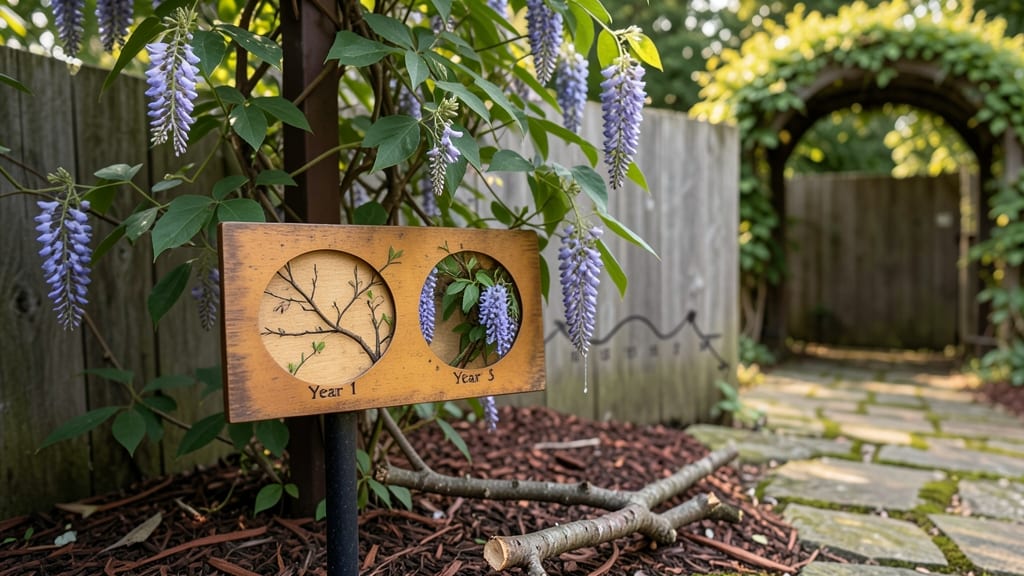
Wisteria doesn't bloom every year until it develops a strong root system, usually taking 3-5 years to establish. Some varieties like Wisteria sinensis may show occasional flowers earlier, but consistent annual blooms depend on cold winters and careful pruning techniques.
Wisteria's blooming habits are actually tied to its growth stage rather than age alone. 🌸 The plant needs to build a deep, extensive root network before it can support the energy demands of flowering.
Younger plants focus their energy on root development, which is why you might see sporadic blooms in the first few years—especially in fast-growing varieties. What's fascinating is how climate plays a role: wisterias in colder zones often bloom more reliably because the winter chilling period triggers their flowering cycle.
This is why gardeners in warmer climates sometimes struggle with inconsistent blooms, even with mature plants.
Proper winter care makes all the difference for annual flowering. I've found that applying a thick layer of mulch—about 4-6 inches—helps protect the roots from temperature fluctuations that can stress the plant.
The key is to prune at the right time: late winter when the plant is still dormant but before new growth appears. This timing encourages stronger blooms the following season by removing weak growth and redirecting energy to flower production.
Varieties like Wisteria floribunda often respond particularly well to this approach, producing dramatic clusters of blooms when given the right conditions.
💡 In This Article
- Why Wisteria Blooms Vary by Species and Age
- Winter Care Techniques to Ensure Wisteria Reblooms
Why wisteria blooms vary by species and age
The root system of wisteria acts like a biological battery—it stores energy that fuels flowering. Young plants prioritize root expansion, which can take 3-5 years to reach the maturity needed for consistent blooms.
During this time, you might spot occasional flowers, especially in fast-growing varieties like Wisteria sinensis, but these are often weak and short-lived.
The plant's energy is focused on building a network that can reach 10-15 feet deep in ideal conditions, supporting the heavy clusters of blooms that can weigh up to 2-3 pounds each.
Species play a crucial role in blooming consistency. Wisteria sinensis, native to China, often blooms earlier—sometimes as early as 2 years—but with smaller, lighter purple flowers that appear in spring.
In contrast, Wisteria floribunda, from Japan, takes longer to mature but produces larger, more abundant blooms in late spring to early summer. The difference lies in their genetic programming: sinensis prioritizes early reproduction, while floribunda invests in bigger, showier displays.
Climate zones further complicate this—wisterias in USDA zones 5-7 typically bloom more reliably due to proper winter chilling (500-1,000 hours below 45°F), while those in warmer zones may bloom sporadically or not at all.
Here's what's actually happening botanically: Wisteria flowers develop on new wood (current year's growth), not old wood. This means last year's growth must be healthy and vigorous to support this season's blooms. The plant's dormancy period—typically 6-8 weeks in winter—is critical for resetting its biological clock.
Without adequate cold exposure, the plant may skip flowering entirely or produce only a fraction of its potential blooms. This is why gardeners in mild climates often struggle with inconsistent performance, even with mature plants.
Age matters, but it's not just about years—it's about growth stages. A 5-year-old wisteria might still be in its "root-building" phase if grown in poor soil, while a 3-year-old plant in rich, well-drained soil could surprise you with early blooms.
The key is monitoring the plant's canopy size and root spread—when both reach maturity (usually 10-15 feet in length), you'll see the first reliable annual blooms. 🌿
Consider these species-specific blooming patterns:
- Wisteria sinensis: Blooms spring, lighter purple, 2-3 years to maturity, needs less chilling (300-500 hours below 45°F)
- Wisteria floribunda: Blooms late spring, deeper purple/white, 4-6 years to maturity, requires full chilling (800-1,000 hours below 45°F)
- Wisteria frutescens: Blooms spring, fragrant white, 3-5 years, native to US Southeast, adapts to milder winters
The takeaway? Patience and proper growing conditions are everything. Even the most enthusiastic gardener won't see annual blooms until the plant's root system and growth habit align with its species' natural flowering cycle. 💫