
Blooming
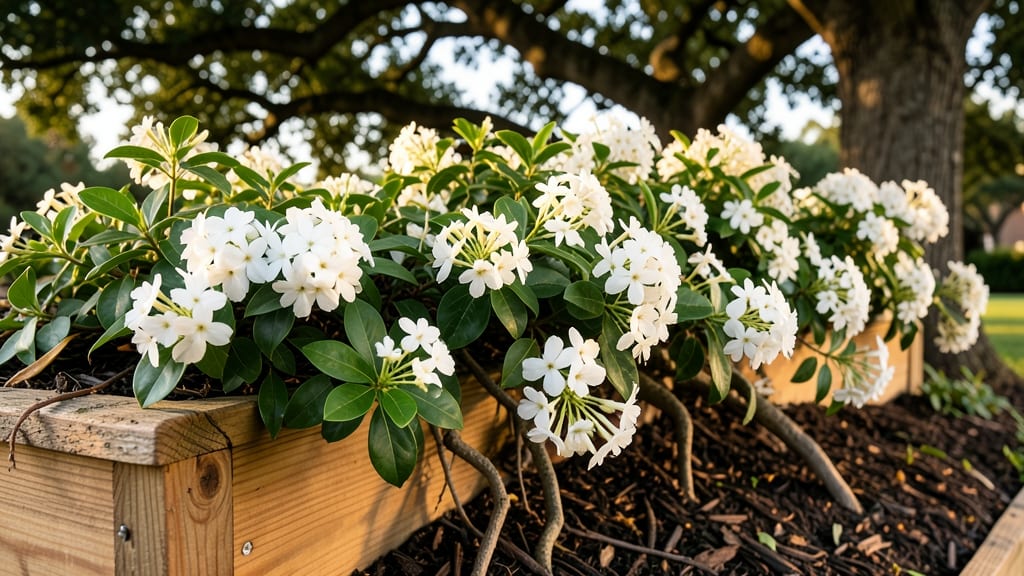
Star jasmine does bloom all summer in warm climates, with fragrant white flowers appearing from early June through late August. With proper pruning and consistent watering, you can push its bloom season into early fall, though it prefers heat and may slow down during cooler temperatures or drought.
This climbing vine thrives in USDA zones 7-11, where summer heat acts as its natural trigger for continuous flowering. 🌿 The key to extending its bloom period lies in mimicking its native tropical conditions—regular watering keeps the soil evenly moist, while pruning after each flush of flowers encourages new growth.
I’ve seen star jasmine in my own garden produce sporadic blooms well into October when I combine late-summer pruning with a light application of phosphorus-rich fertilizer, which supports bud formation.
What’s fascinating is how star jasmine responds to environmental cues: longer daylight hours in summer stimulate ethylene production, the hormone that kickstarts flower development.
However, once temperatures dip below 60°F or humidity drops, the plant conserves energy by slowing down blooming—this is why coastal regions often see more extended seasons than inland areas. The trade-off? Overwatering or poor drainage can lead to root stress, which actually reduces flowering rather than extending it.
💡 In This Article
- Star Jasmine’s Heat-Triggered Bloom Cycle Explained
- Extending Star Jasmine Blooms: Pruning and Care Tips
Star jasmine’s heat-triggered bloom cycle explained
Star jasmine’s blooming rhythm is tightly linked to summer’s heat and humidity. This tropical vine relies on temperatures consistently above 75°F to trigger ethylene production—the plant hormone that signals flower buds to open.
Unlike many flowering plants that bloom in spring or fall, star jasmine responds to prolonged warmth, which is why it thrives in USDA zones 7-11. The longer daylight hours of summer (14+ hours) further amplify this effect by increasing photosynthesis, which fuels the energy-intensive process of flower production.
Here’s how the science breaks down: When daytime temperatures hover around 85-95°F with high humidity (60%+), star jasmine’s growth hormones shift from vegetative (leafy) to reproductive (flowering) mode. The plant’s native habitat in Southeast Asia’s monsoon regions explains why it prefers this combination—wet heat mimics its natural environment.
What’s less obvious is how drought stress or sudden temperature drops below 60°F can halt flowering entirely, as the plant conserves resources for survival rather than blooms. 🌡️
Climate plays a starring role in bloom duration. In coastal areas, like Southern California or Florida, star jasmine often blooms from May through October due to stable, warm ocean breezes. Inland regions with hotter days but cooler nights may see blooms concentrated between June and August.
The vine’s ability to adapt is remarkable—it can produce multiple flower flushes in a single season if given consistent care, but each flush requires about 4-6 weeks of ideal conditions to develop fully.
What most gardeners overlook is how humidity affects flower longevity. High humidity (70%+) not only triggers blooming but also extends each flower’s life by 3-5 days, preventing them from wilting prematurely.
In dry climates, you’ll notice flowers lasting only 2-3 days unless you mist the foliage lightly in the evenings. This is why star jasmine often performs better in containers, where you can control soil moisture and humidity around the roots.
The plant’s response to light is equally fascinating. Star jasmine uses a process called photoperiodism—it detects increasing daylight hours in late spring to begin preparing flower buds. Once buds form, they require 6-8 hours of direct sunlight daily to mature.
Partial shade can reduce flowering by up to 40% because the plant diverts energy to leaf growth instead. This explains why star jasmine often struggles in dense shade gardens, even in warm climates.
For those in transitional zones (like zone 6), the key to summer blooms lies in protecting the plant from early frosts. A light frost (28°F) can kill the current flowers but rarely harms the vine itself.
However, repeated cold snaps below 32°F can damage the plant’s growth points, shortening future bloom seasons. In these areas, growing star jasmine in containers allows you to move it indoors or under a porch during winter, preserving its ability to rebloom the following summer. 🌿