
Blooming
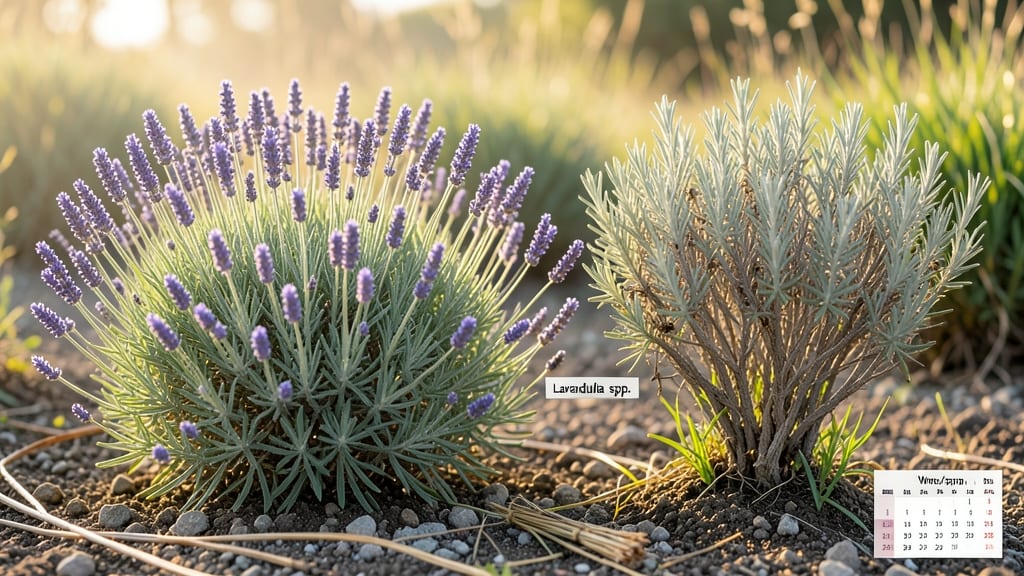
Lavender doesn't bloom all year—its flowering cycle is seasonal, typically peaking in late spring through early summer, with some varieties producing a lighter second bloom in fall. Regional climate and sunlight exposure play crucial roles in determining how long and frequently it flowers.
Lavender's blooming habits are tied to its natural growth rhythm, which responds to daylight length and temperature shifts. 🌸 In Mediterranean climates where it originated, lavender naturally follows a spring-to-summer cycle, while cooler regions may experience delayed or shorter blooming periods.
Even with ideal care, most varieties can't produce continuous flowers—they need periods of rest between blooms to recharge.
What's fascinating is how different lavender types adapt to their environments. English lavender, for example, often produces a stronger second bloom in fall compared to French varieties, which may focus their energy on a single summer display.
This seasonal pattern isn't just about aesthetics—it's a survival mechanism that ensures the plant conserves energy for future growth cycles.
💡 In This Article
- Lavender Bloom Seasons by Variety and Climate
- Extending Lavender Blooms: Pruning and Care Tips
Lavender bloom seasons by variety and climate
Lavender's flowering cycle is governed by photoperiodism—the plant's response to daylight length.
Most varieties need 14-16 hours of daylight to trigger bud formation, which explains why blooming peaks in late spring to early summer when days are longest. 🌞 In Mediterranean climates, where lavender originated, this aligns perfectly with the region's warm, dry summers.
French lavender (Lavandula angustifolia), for instance, typically blooms from June to August, while English lavender (Lavandula x intermedia) often extends its display into early fall.
The temperature threshold for flowering is another critical factor. Buds form best when daytime temperatures reach 70-75°F (21-24°C), but nights must stay cool (50-60°F / 10-15°C) to prevent bud drop.
This explains why lavender in hot, humid climates (like the southeastern U.S.) may struggle to bloom reliably—excessive heat can cause buds to abort.
Conversely, in cooler regions (like the Pacific Northwest), blooming often starts later, around May or June, and lasts for 4-6 weeks instead of the Mediterranean's 8-10 weeks.
Variety plays a surprising role in bloom timing. Spanish lavender (Lavandula stoechas), for example, often blooms earlier in spring and may produce a second, lighter flush in fall, while Grosso lavender (Lavandula x intermedia 'Grosso') focuses its energy on a single, dramatic summer display.
This genetic variation is why some gardeners report "year-round" blooms—what they're actually seeing is staggered flowering from different varieties planted together. The key is understanding each type's native rhythm rather than expecting continuous blooms from a single plant.
Climate also affects bloom intensity. In arid Mediterranean conditions, lavender's natural drought tolerance aligns with its flowering cycle—water stress during summer actually enhances oil production in the buds.
But in regions with consistent summer rainfall, like parts of Canada or the Pacific Northwest, lavender may produce fewer flowers due to overwatering, which dilutes the plant's energy reserves. This is why lavender thrives in well-draining soil with minimal summer irrigation, mimicking its native habitat.
For gardeners in non-native climates, the biggest challenge is replicating these conditions. In temperate zones, lavender often needs winter chilling (30-40°F / -1 to 4°C for 4-6 weeks) to break dormancy and trigger spring blooming.
Without this, plants may produce sparse or delayed flowers. The solution? Planting in full sun with south-facing exposure and choosing varieties bred for your region—like 'Munstead' for cooler climates or 'Provence' for heat tolerance.
What most people overlook is how lavender's root system influences blooming. Deeper roots (up to 3 feet / 1 meter) access moisture during dry periods, while shallow roots in containers may struggle to support heavy flowering.
This is why potted lavender often blooms less vigorously than in-ground plants—root restriction limits the plant's ability to store and distribute nutrients during the critical budding phase.