
Blooming
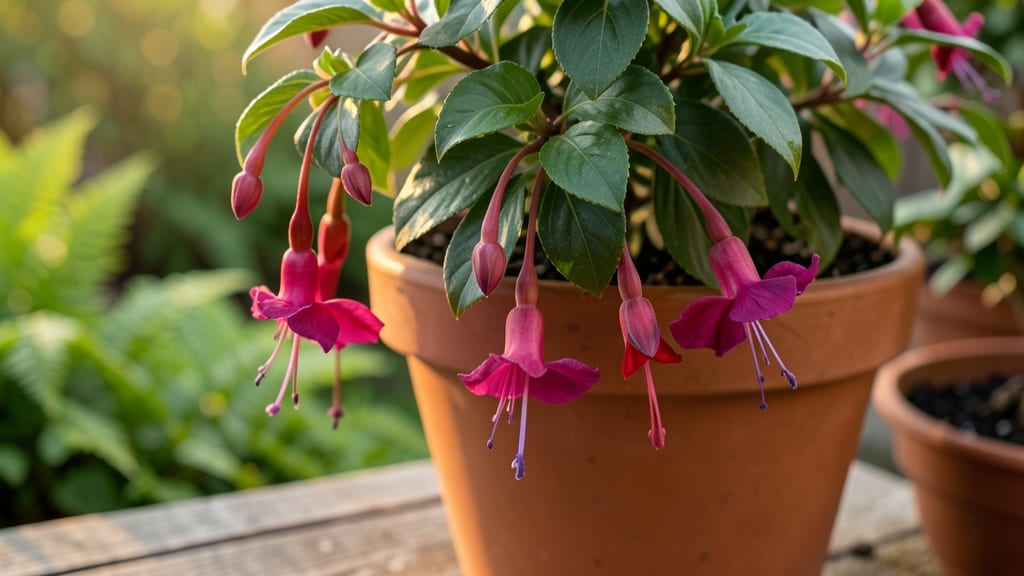
Fuchsia plants bloom all summer when given the right conditions, with vibrant flowers appearing from early summer through fall. Regular deadheading of spent blooms keeps them flowering continuously, while consistent moisture and bright, indirect light help sustain their colorful displays.
Fuchsias thrive as long-blooming annuals or perennials in many climates, thanks to their adaptability.
The key to their summer-long performance lies in their ability to produce new buds continuously when encouraged—this is where deadheading comes in. 🌸 Unlike some plants that rely on seasonal cues, fuchsias respond to human intervention, making them ideal for gardeners who want nonstop color.
I've found that varieties like 'Giant Marble' and 'Lady Boothby' often outperform others in heat tolerance, while proper spacing between plants improves air circulation, reducing disease risks that could cut blooms short.
What many gardeners don't realize is that fuchsias actually set new flower buds on current season's growth, not just on old wood. This means you can prune lightly throughout the season to shape the plant while still maintaining blooms.
The trade-off? Over-pruning too late in the season might reduce fall flowering, so timing matters—aim for mid-summer pruning to balance shape and productivity.
💡 In This Article
- Factors That Influence Fuchsia’s Summer Blooming Cycle
- Step-by-Step Deadheading Guide for Longer Fuchsia Blooms
Factors that influence fuchsia’s summer blooming cycle
Fuchsias thrive in bright, indirect light, which triggers their photoperiodic response—the biological clock that signals when to produce flowers. These plants need about 6-8 hours of sunlight daily, but direct afternoon sun can scorch their delicate leaves, especially in hot climates.
The ideal light spectrum includes blue and red wavelengths, which stimulate chlorophyll production and flowering hormones. Varieties like 'Little Doll' and 'Tom Thumb' often bloom more prolifically in partial shade, while larger types such as 'Giant Marble' tolerate more sun but require afternoon protection.
Temperature plays a crucial role too. Fuchsias prefer 60-75°F during the day and 55-60°F at night—anything above 85°F can cause buds to drop, while temperatures below 50°F may stunt growth.
The plant’s native habitat in South America’s temperate zones explains this sensitivity. 🌡️ What’s fascinating is how fuchsias adapt: in cooler climates, they often bloom longer in spring and fall when temperatures are milder, while in hot regions, they may need afternoon shade to prevent stress.
Moisture consistency is another game-changer. Fuchsias hate soggy roots but also can’t tolerate drought—they’re thirsty plants that need 1-1.5 inches of water weekly, more during peak bloom. The key is keeping the soil evenly moist but well-draining; let the top inch dry out between waterings to prevent root rot.
Mulching with 2-3 inches of organic matter (like shredded bark) helps retain moisture while insulating roots from temperature swings. Overwatering stresses the plant, reducing its energy for flowering, while underwatering causes buds to abort.
Variety selection matters more than many realize. Some fuchsias, like trailing types ('Trailing Fuchsia'), focus energy on vine growth rather than blooms unless pruned aggressively, while upright varieties ('Dicksoniae') often produce flowers more consistently.
The bud set timing also varies: hardy perennials (like 'Gartenmeister Bonstedt') may bloom earlier in spring, while tender varieties need warmer soil to kickstart flowering. This explains why some gardeners see sporadic blooms—it’s not just about care, but also about matching the right variety to your climate.
Myth-busting time: fuchsias don’t go dormant in summer like some perennials. They’re continuous bloomers when conditions are right, unlike roses that have seasonal flushes. The misconception that they "stop blooming in heat" stems from poor cultural practices—like insufficient water or nutrient deficiencies.
In reality, a well-cared-for fuchsia can produce hundreds of flowers per season if given consistent care. The secret? Balancing light, water, and nutrients while removing spent blooms to redirect energy to new growth.
One often-overlooked factor is nutrient availability. Fuchsias need balanced fertilizer (10-10-10 ratio) every 4-6 weeks during bloom season, with extra phosphorus to encourage flowering. Too much nitrogen leads to lush foliage but fewer blooms—a common mistake that frustrates gardeners.
The plant’s natural growth cycle shows this: it prioritizes reproductive growth (flowers) over vegetative growth (leaves) when conditions are optimal. 💡 This is why deadheading isn’t just about looks—it’s about maintaining this delicate balance.