
Blooming
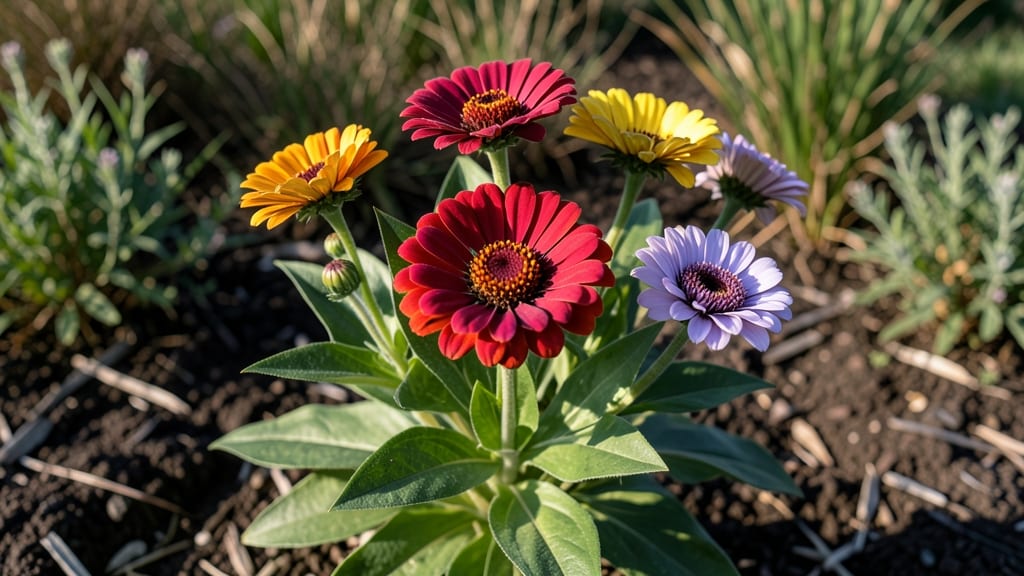
Zinnias bloom all summer in warm climates, producing vibrant flowers from early summer through early fall until frost kills the plants, with peak blooming triggered by consistent heat and sunlight.
Zinnias thrive in heat and love long daylight hours, which is why they keep blooming from June through September in most U.S. growing zones. 🌞 The key to their summer-long performance lies in their native drought tolerance and heat-loving nature—once established, they rarely need extra watering.
I've seen zinnias in my garden continue flowering right up until the first hard frost, especially when planted in full sun with well-draining soil. Their ability to handle heat makes them perfect for hot summer gardens where other flowers might struggle.
What many gardeners don't realize is that zinnias actually produce more blooms when they're slightly stressed from heat. This is why they perform so well in summer—moderate watering and proper spacing encourage stronger stems and more flowers.
The trade-off? They'll stop blooming as soon as temperatures drop below 50°F at night, which is why frost becomes their natural end-of-season signal.
💡 In This Article
- Zinnia Blooming Cycles: Heat and Daylight Dependencies
- Extending Zinnia Blooms: Pruning and Deadheading Tips
Zinnia blooming cycles: heat and daylight dependencies
Zinnias are short-day plants, meaning their flowering is triggered by decreasing daylight hours—but they've adapted to thrive in summer's long days because of their heat tolerance. The magic happens when daytime temperatures consistently stay above 70°F, which signals the plant to shift energy from leaf growth to flower production.
This is why they bloom prolifically in summer but may struggle in cooler springs or autumns when nights dip below 55°F. Their native habitat in Mexico's highlands prepared them for this heat dependence, where they evolved to take advantage of summer's peak growing conditions.
The photoperiod sensitivity works differently than you might expect. While many plants need shorter days to flower, zinnias actually produce more blooms when they experience 12-14 hours of daylight combined with warm nights. This creates a perfect storm for summer gardens in zones 3-10, where they get abundant sunlight.
What's fascinating is how they handle heat stress—studies show zinnias can maintain photosynthesis efficiently even at 95°F air temperatures, thanks to their waxy leaf coatings that reduce water loss. This adaptation explains why they keep blooming while other annuals wilt.
Seasonal shifts become critical in late summer. As daylight hours begin shrinking in August, zinnias respond by producing flowers more rapidly to take advantage of remaining warm weather. However, the real showstopper is frost sensitivity: once nighttime temperatures drop below 32°F, the plant's cellular membranes rupture, causing irreversible damage.
This is why you'll see zinnias in full bloom right up until the first hard frost—nature's way of ensuring they complete their reproductive cycle before winter sets in. The timing varies by region, but most zinnias will stop blooming entirely when nights consistently stay below 50°F.
There's a scientific reason why zinnias bloom so abundantly in summer: their flowering mechanism is tied to thermoperiodism—the response to temperature cycles.
When nights are warm (65°F+) but days are hot (85°F+), zinnias enter what botanists call "thermo-florigenesis," where heat acts as a secondary flowering signal alongside daylight. This dual trigger explains why they perform so well in summer heatwaves while other plants might struggle.
The trade-off is their sensitivity to cold snaps, which can cause buds to abort or flowers to drop prematurely.
For gardeners in cooler climates, this means timing is everything. Plant zinnias after your last frost date when soil temperatures reach 55°F, giving them a full summer to establish roots and begin flowering.
The key to extending their bloom time lies in protecting them from early frosts—using row covers or bringing potted zinnias indoors can sometimes buy you an extra month of color.
What's remarkable is how quickly they rebound after heat stress; even if they look wilted during a heatwave, they'll often bounce back with fresh blooms when temperatures moderate.
The color spectrum of zinnias also plays a role in their summer dominance. Darker varieties like 'Benary's Giant' deep red absorb more heat, which can actually accelerate flowering in hot climates. Lighter varieties may need more frequent watering to prevent heat stress.
This color-temperature interaction is why you'll often see zinnias in vibrant reds and oranges dominating summer gardens—they're not just beautiful, they're biologically optimized for summer's heat. 🌺