
Blooming
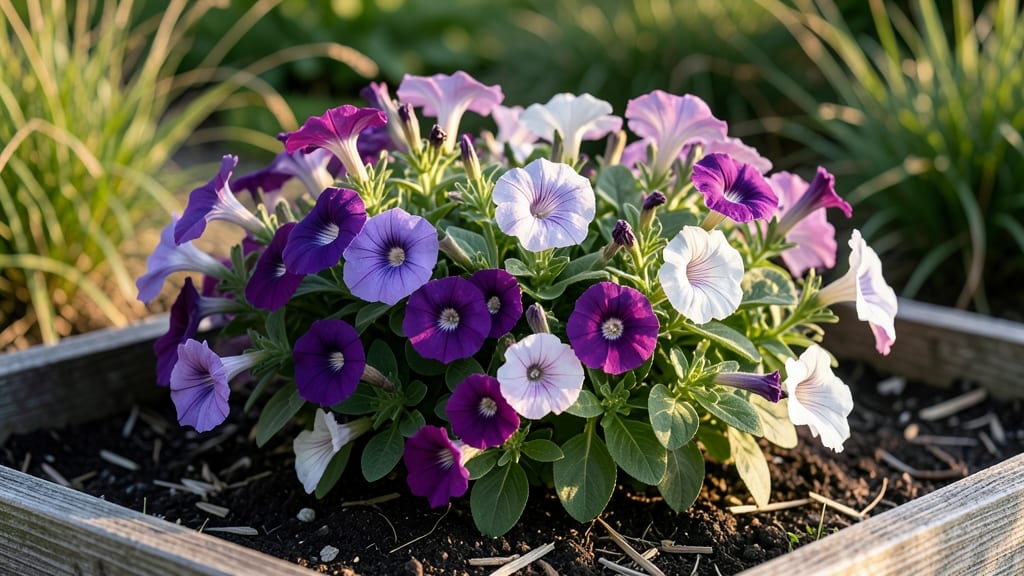
Petunias bloom all summer when given consistent watering and heat tolerance, though blooms may slow during extreme drought or late-season stress. Heat-resistant varieties like 'Wave' or 'Supertunia' maintain color longer than standard types.
Petunias are summer's workhorses because they naturally thrive in warm weather, but their blooming power depends on two key factors: water consistency and nutrient balance. 🌸 The secret lies in their shallow root systems—when soil dries out completely or stays soggy, plants divert energy to survival instead of producing flowers.
I've found that morning watering (before 10 AM) prevents fungal stress while keeping roots hydrated, and a balanced 10-10-10 fertilizer every 3-4 weeks gives them the phosphorus boost they need for continuous blooms.
What most gardeners miss is that petunias actually have a built-in summer shutdown mechanism. As temperatures climb above 90°F for prolonged periods, their metabolic processes slow to conserve moisture.
This is where heat-tolerant varieties shine—breeders like 'Supertunia Vista Bubblegum' have been engineered to handle 10°F hotter conditions than traditional types while still producing vibrant blooms. The tradeoff? They often require 10-20% more frequent deadheading to encourage new growth.
💡 In This Article
- Why Petunias Stop Blooming Mid-Summer
- Best Petunia Varieties for Nonstop Summer Color
Why petunias stop blooming mid-summer
Petunias have a natural photoperiod sensitivity that triggers their summer blooming cycle, but extreme heat disrupts this process. When daytime temperatures exceed 85°F for more than 5-7 consecutive days, the plant's ethylene production spikes, causing buds to drop before opening.
This is your petunia's survival mechanism—it prioritizes conserving water over producing flowers when roots can't absorb enough moisture from dry soil. 🌡️ The deeper issue? Their fibrous root systems only extend 6-12 inches deep, making them vulnerable to both drought and waterlogging.
The nutrient depletion factor is often overlooked. Continuous blooming depletes phosphorus and potassium faster than most gardeners realize. Standard petunias (like 'Mitchell') may show yellowing leaves by mid-July because they've exhausted their soil reserves.
Heat-tolerant varieties like 'Supertunia' have been bred to uptake nutrients more efficiently in warm conditions, but even they need bi-weekly feeding with a low-nitrogen (5-10-10) fertilizer to maintain bloom production.
The key is matching fertilizer strength to temperature—too much nitrogen in 90°F+ heat promotes leafy growth at the expense of flowers.
Root stress from inconsistent watering creates another major roadblock. Petunias hate "wet feet"—when soil stays damp for more than 24 hours, their roots suffocate and can't absorb oxygen. This triggers a hormonal shutdown where the plant stops producing florigen (the flowering hormone).
I've seen gardeners accidentally kill their petunias by watering every day during heatwaves, creating the perfect conditions for fungal rot while thinking they were helping. The solution? Water deeply every 2-3 days at the base (not overhead) and use mulch to maintain 2-3 inch soil moisture.
Variety makes a surprising difference in heat tolerance. Standard petunias typically bloom 8-12 weeks before heat stress sets in, while 'Wave' series varieties maintain color 2-4 weeks longer thanks to their thicker cuticle layer that reduces water loss. The tradeoff?
These heat-resistant types often have 15-20% smaller blooms than their cooler-season counterparts. If you're growing in Zone 9 or hotter, consider 'Cascadia' series—they've been bred to handle 100°F+ temperatures while still producing abundant flowers, though they may need 50% more frequent deadheading to compensate.
Late-season stress from temperature fluctuations is another common culprit. When nights drop below 55°F while days stay hot, petunias experience physiological shock that halts flowering. This is why you'll often see a sudden bloom slowdown in late August—the plant is preparing for dormancy.
The fix? Apply a light layer of compost around plants in early September to provide a slow-release nutrient boost and protect roots from temperature swings. Some gardeners swear by seaweed extract sprays (1 tbsp per gallon) to help plants endure these transitions.
What most people don't realize is that petunias actually reduce their leaf surface area in response to heat stress—a survival tactic that cuts water loss but also limits photosynthesis. This creates a vicious cycle where the plant can't produce enough energy to support both leaves AND flowers.
The solution? Prune back 20-30% of foliage in 90°F+ heat to redirect energy to flower production. It's counterintuitive, but this aggressive approach often jumpstarts blooming in stressed plants. 🌿