
Blooming
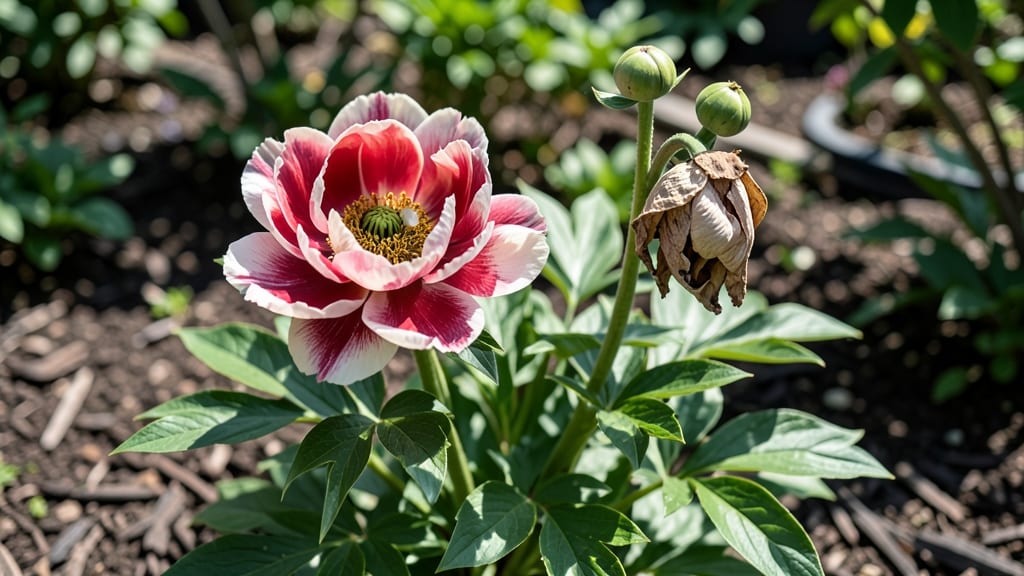
Peonies do only bloom once a year because their growth cycle depends on winter chilling, but some varieties can produce occasional second blooms with perfect growing conditions. Annual care keeps them thriving for decades.
Peonies follow this pattern because their buds form during the previous growing season and need 600-900 hours of cold temperatures to trigger spring blooms. 🌸 Without proper winter dormancy, they simply won't flower reliably.
The good news? With consistent sunlight, well-draining soil, and proper pruning, you can coax nearly every variety to deliver stunning annual displays for 50+ years.
Some gardeners report sporadic second blooms in late summer or fall, especially with tree peonies or certain herbaceous varieties. This happens when the plant receives extra nutrients and consistent moisture after the first bloom. However, these secondary flowers are typically smaller and less vibrant than the spring display.
For reliable annual blooms, plant peonies at the right depth (2 inches below soil level), provide full sun, and avoid over-fertilizing with nitrogen. Prune back spent blooms carefully—never cut into the woody stems—and mulch in winter to protect roots.
These simple steps turn peonies from once-a-year wonders into garden showstoppers year after year.
💡 In This Article
- The Science Behind Peonies' Annual Blooming Cycle
- How to Encourage Peonies to Bloom Reliably Every Year
The science behind peonies' annual blooming cycle
Peonies follow a strict annual blooming pattern because their growth cycle is tightly linked to seasonal temperature changes. The key trigger is winter chilling—these perennials require 600-900 hours below 45°F to break dormancy and initiate flower buds.
This chilling period signals the plant that winter has passed, allowing it to shift energy from root storage to above-ground growth. Without adequate cold exposure, peony buds remain dormant, and flowering simply won't occur. 🌱
The biological mechanism involves a process called vernalization, where cold temperatures modify plant hormones. During winter, peonies accumulate cold units (measured in chilling hours) that activate flowering genes. In spring, when temperatures rise and daylight increases, these activated genes trigger bud development.
This explains why peonies planted in warm climates often struggle to bloom reliably—they may not receive sufficient chilling hours. For example, peonies grown in USDA Zone 8 or warmer may need artificial chilling or be planted in elevated, cooler microclimates.
Daylight also plays a crucial role. Peonies are long-day plants, meaning they require 14-16 hours of daylight to stimulate flowering. In northern latitudes, this natural light cycle aligns perfectly with spring, but in southern regions, supplemental lighting may help.
The combination of cold exposure and extended daylight creates the perfect conditions for that spectacular spring display. Interestingly, this strict seasonal pattern is why peonies are often called "the queen of perennials"—their reliability contrasts with many other flowers that bloom sporadically.
There's an important exception to this annual rule: some tree peony varieties (like Paeonia suffruticosa) may produce secondary blooms in late summer or fall. This happens when the plant receives extra nutrients after the first bloom, but these flowers are typically smaller and less robust.
The primary blooms in spring remain the star show, as they've had the full winter to develop strong buds. 🌸
Another fascinating aspect is how peonies "remember" their blooming cycle. The flower buds actually form during the previous growing season, while the plant is still storing energy in its roots.
This means the blooms you'll see in spring are essentially a preview of last year's growth—proper summer and fall care directly impacts next year's flowers. This biological memory is why peony gardeners focus so much on consistent care throughout the entire year.
Understanding this cycle explains why peonies can live for 50+ years while still delivering reliable annual blooms. Unlike many perennials that decline after a few years, peonies continue to thrive because their root systems grow stronger each season, building up more energy for future blooms.
The trade-off is their single annual display, but for gardeners who appreciate reliability and longevity, this makes peonies an unbeatable choice.