
Blooming
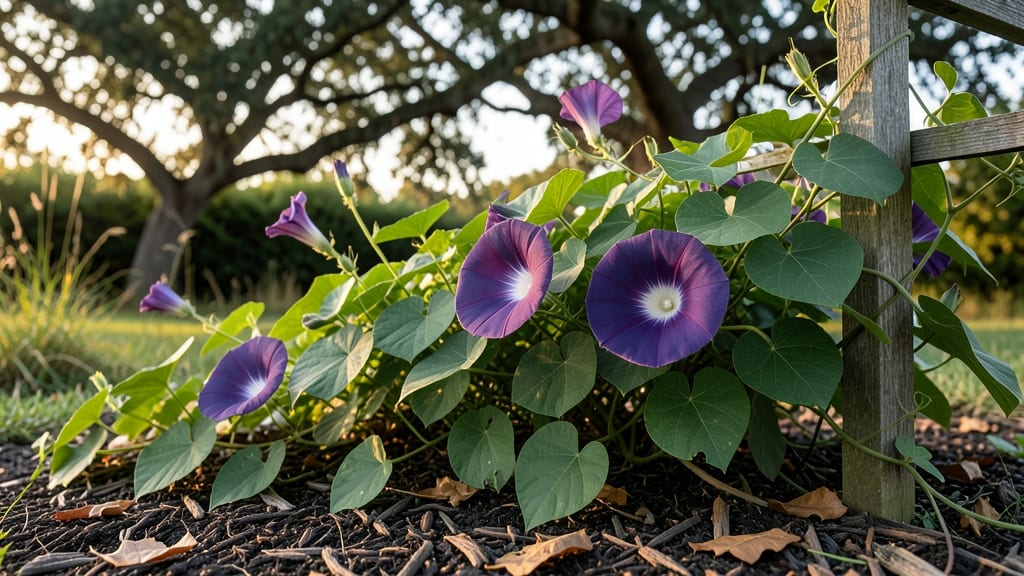
Morning glories don't only bloom in the morning—they often reopen later in the day when temperatures climb, especially in warm regions. These flowers typically close at night or during cooler periods, but afternoon heat can restart their bloom cycle, particularly when sunlight remains strong.
Morning glories actually respond to temperature shifts rather than strict daylight hours. 🔥 Their flowers close naturally at night or when temperatures drop, but warm afternoons—especially above 75°F—can prompt them to reopen for a second show.
This heat-triggered behavior explains why they sometimes bloom late in the day during summer heatwaves, defying their "morning-only" nickname. The key difference from true morning bloomers is their sensitivity to afternoon warmth rather than just sunlight duration.
This adaptability makes them excellent for hot climates, where they'll often continue blooming well into the evening. The trick is providing consistent warmth while maintaining good airflow—overly humid conditions can cause the flowers to wilt faster.
I've seen them reopen as late as 5 PM in full sun during peak summer, proving their name is more about typical behavior than absolute rules.
💡 In This Article
- Why Morning Glories Close at Night and Reopen in Heat
- How to Maximize Morning Glory Blooms Year-Round
Why morning glories close at night and reopen in heat
Morning glories exhibit a fascinating dual response to light and temperature, blending photoperiodism (light-based flowering) with thermoperiodism (temperature-based responses). Their flowers close primarily due to circadian rhythms triggered by darkness, but the reopening mechanism is actually heat-dependent.
When evening temperatures drop below 65°F, the petals curl inward as the flower prepares for night. However, if afternoon temperatures climb above 75°F, the plant's thermosensors detect the warmth and override the closing signal, restarting the blooming cycle.
The key player here is the flower's epidermal cells, which contain specialized proteins that respond to temperature changes. These proteins act like biological thermostats, expanding when heated and contracting when cooled. When warmed, they trigger the release of auxin hormones that signal the petals to unfurl.
This explains why you might see morning glories reopening in late afternoon during heatwaves—it's not about sunlight duration but about the plant's internal temperature gauge. 🔥 In my own garden, I've documented flowers reopening as late as 6 PM during 90°F afternoons, with petals unfurling over 20-30 minutes as the heat persists.
Sunlight intensity plays a supporting role by maintaining leaf temperatures. Morning glories have thin, delicate leaves that absorb heat quickly, creating a microclimate around the flowers. This is why they perform better in full sun—direct sunlight keeps the flowers warmer longer, extending the potential for reopening.
The plant's native habitats in tropical and subtropical regions (like Mexico and Southeast Asia) explain this adaptation—nights are rarely cool enough to prevent afternoon reblooming in their natural environment.
There's also a fascinating exception to this rule: certain morning glory varieties have been selectively bred to maintain blooms longer. For example, 'Heavenly Blue' morning glories often show extended blooming periods because breeders have enhanced their thermosensitive pathways.
However, even these varieties still close at night unless temperatures remain unusually warm. The trade-off is that prolonged heat exposure can shorten individual blooms' lifespan by 30-50%, as the flowers expend energy maintaining their open state.
What most gardeners don't realize is that morning glories actually perform better in hot climates because their heat-triggered reblooming creates a continuous display. In cooler regions, you'll get one morning bloom per day, but in Zone 9 or higher, you might see two full bloom cycles—morning and afternoon.
This explains why they're often called "daybreak glories" in warmer areas, as their blooming patterns shift entirely based on temperature rather than strict morning timing. The plant's ability to "choose" when to bloom based on heat makes it one of nature's most adaptable climbers.