
Blooming
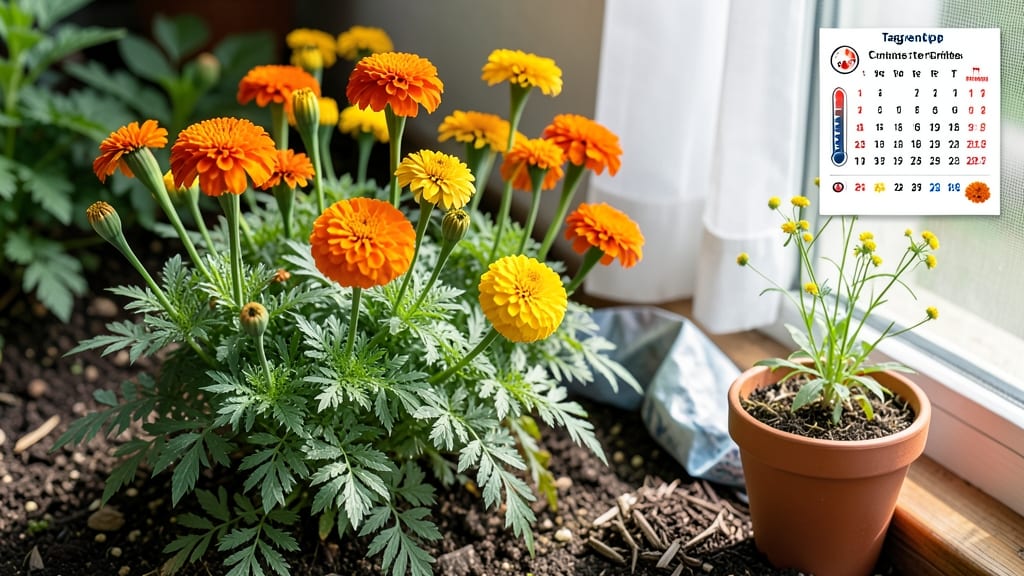
Marigolds do not bloom all year in most climates, but cold-hardy varieties like Tagetes lucida or French marigolds can extend flowering into fall with proper care. Most types thrive in warm seasons and require winter protection or replanting in colder regions.
Marigolds are seasonal plants that rely on warm weather to trigger their blooming cycles. 🌸 In regions with freezing winters, even cold-hardy varieties will go dormant, though some may produce sporadic flowers until frost.
The key to longer blooms is choosing varieties bred for extended seasons—like Mexican marigolds (Tagetes erecta)—which can keep flowering until late fall if temperatures stay above 40°F.
For true year-round color, consider overwintering potted marigolds in a sunny indoor spot or using a greenhouse to maintain consistent warmth.
Most gardeners focus on summer blooms because marigolds need 6-8 hours of sunlight daily and struggle in cooler conditions. That said, strategic planning—like planting early varieties in spring and late-blooming types in summer—can create a staggered display.
Mulching heavily before winter also helps protect roots, sometimes allowing a few hardy plants to rebound in spring with minimal replanting.
💡 In This Article
- Climate and Seasonal Factors Affecting Marigold Blooms
- Extending Marigold Blooms: Year-Round Gardening Tips
Climate and seasonal factors affecting marigold blooms
Marigolds are native to warm climates and rely on specific environmental triggers to bloom. Their flowering cycle is primarily controlled by temperature and daylight length. Most varieties need daytime temperatures above 60°F to initiate bud formation, with optimal blooming occurring between 70-85°F.
When nights drop below 50°F, growth slows dramatically, and flowers may abort or fail to open properly. This explains why marigolds typically bloom from late spring through summer in temperate zones.
The photoperiod (daylight hours) also plays a crucial role. Many marigold varieties are "short-day" plants, meaning they respond to decreasing daylight in late summer by producing more flowers—a phenomenon called autumnal flowering.
Cold-hardy varieties like Tagetes lucida (Mexican tarragon marigold) can extend this response into early fall, sometimes producing blooms until the first hard frost (28°F). Tropical varieties, however, lack this adaptation and shut down completely when temperatures dip below 55°F.
Dormancy is another key factor. When exposed to prolonged cold (40°F for 4+ weeks), marigolds enter a survival mode where they conserve energy by halting flower production. Their roots may remain alive under protective mulch, but above-ground growth stops.
This is why even cold-hardy varieties rarely bloom in winter—even if temperatures stay above freezing, the lack of sunlight (less than 10 hours/day) prevents flowering. 🌿
Cold-hardy marigolds differ from tropical types in their genetic resilience. For example, French marigolds (Tagetes patula) can tolerate brief chills down to 25°F but still need warm soil to regrow in spring. Their secret lies in thicker stems and deeper root systems that store carbohydrates during dormancy.
In contrast, tropical marigolds (Tagetes erecta) have delicate structures that freeze at 32°F, making them seasonal even in mild winters.
Regional variations matter too. In Zone 7-9, marigolds may bloom sporadically through winter if protected, while in Zone 5 or colder, they require complete replanting each spring.
The USDA Hardiness Zone map shows that even cold-hardy varieties have limits—most only survive winter if insulated with 6+ inches of mulch or grown in containers that can be moved indoors.
What most gardeners don't realize is that marigolds' seasonal nature isn't just about temperature—it's also tied to their life cycle. Annual varieties complete their entire growth cycle in one season, while perennial types (like Tagetes lucida) can return for multiple years if their roots survive winter.
This explains why you'll see "perennial" marigolds in catalogs—they're not truly perennial in cold climates but can persist for years with proper care. 🌱