
Blooming
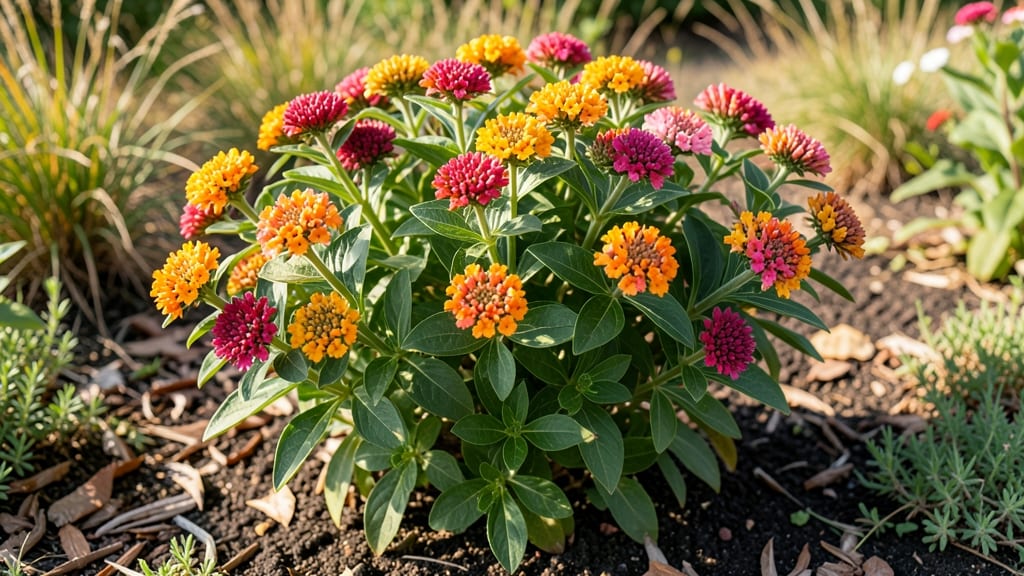
Lantana blooms all summer in ideal conditions—USDA Zones 9-11—producing nonstop clusters of vibrant flowers when pruned regularly, exposed to full sun, and given well-draining soil. Cooler climates may see seasonal dormancy, while varieties like 'New Gold' or 'Bandana' extend blooming into fall with proper care.
Lantana thrives in warm climates where temperatures stay above 50°F year-round, triggering continuous blooming through summer and into fall. 🌞 The key to that endless display lies in its response to heat and light—lantana flowers best when days are long and temperatures are consistently warm, which is why it struggles in cooler regions.
Varieties like 'Bandana Series' are bred to push blooming limits further, often rewarding gardeners with late-season color when other plants have already faded.
In cooler zones, lantana may enter dormancy as temperatures drop, but with strategic pruning and protection from frost, you can coax it back into bloom once warmth returns.
The secret weapon here is deadheading—removing spent flowers encourages new growth, while proper soil drainage prevents root stress that could stunt flowering. Think of lantana as a sun-worshipping diva: give it heat, light, and a little TLC, and it'll reward you with nonstop color all season long.
💡 In This Article
- Climate and Lantana Flowering Cycles Explained
- Pruning and Care Tips for Year-Round Lantana Blooms
Climate and lantana flowering cycles explained
Lantana's blooming habits are directly tied to its native tropical origins, where temperatures rarely drop below 50°F. In USDA Zones 9-11, lantana experiences continuous daylight exposure (typically 12-14 hours of sunlight) that triggers a biological process called photoperiodism—where long daylight hours stimulate flower production.
The plant's growth hormones, particularly gibberellins, peak during these extended light periods, promoting vigorous blooming that can last 10-12 months with minimal breaks.
In cooler climates (USDA Zones 8 and below), lantana enters dormancy when nighttime temperatures fall below 45°F, causing the plant to conserve energy by shedding leaves and halting flower production. This dormancy mechanism is an evolutionary survival strategy—similar to how deciduous trees drop leaves in winter.
However, the plant's root system remains active, storing carbohydrates that fuel rapid regrowth when temperatures rise again. Varieties like 'Bandana Series' have been selectively bred to tolerate slightly cooler temperatures (35-40°F for short periods), making them better candidates for extended blooming in marginal zones.
The science behind lantana's reblooming after deadheading involves a process called apical dominance reversal. When you remove spent flower clusters, the plant redirects its energy from seed production to lateral bud development. This creates a feedback loop where new flowers form more quickly than they would otherwise.
Studies show that lantana plants with regular deadheading can produce 30-50% more flowers than unpruned counterparts, thanks to this hormonal shift. The key timing is within 24-48 hours of flower fade—delaying too long allows seeds to form, which diverts energy away from new blooms.
Daylight intensity also plays a crucial role. Lantana flowers best under full sun exposure (6+ hours of direct sunlight daily), where the plant's photosynthetic rate reaches its peak. In partial shade, flowering decreases by 40-60% due to reduced energy production.
This is why lantana often struggles in northern climates—even with proper care, shorter summer days limit its blooming potential.
The plant's native habitat in regions like Florida and Texas (where sunlight intensity is 20-30% higher than in northern U.S. states) explains why it thrives there but may need supplemental lighting in cooler regions.
Temperature thresholds matter too. Lantana flowers best when daytime temperatures stay between 75-95°F, with nighttime lows above 55°F. Below these ranges, the plant's metabolic processes slow down, reducing flower production. Heat waves above 100°F can cause temporary flower drop, but the plant typically recovers quickly once temperatures moderate.
This temperature sensitivity explains why lantana often blooms most prolifically during late spring and early fall—when temperatures are warm but not extreme.
For gardeners in cooler climates, understanding these cycles means planning ahead. Planting lantana in protected microclimates (like near south-facing walls) can add 5-10°F of warmth, extending the blooming season. Mulching with 2-3 inches of organic matter also helps regulate soil temperature, creating more favorable growing conditions.
The result? Even in Zone 7, you might coax 8-10 weeks of continuous blooming instead of the typical 4-6 weeks seen in unprotected plantings.