
Blooming
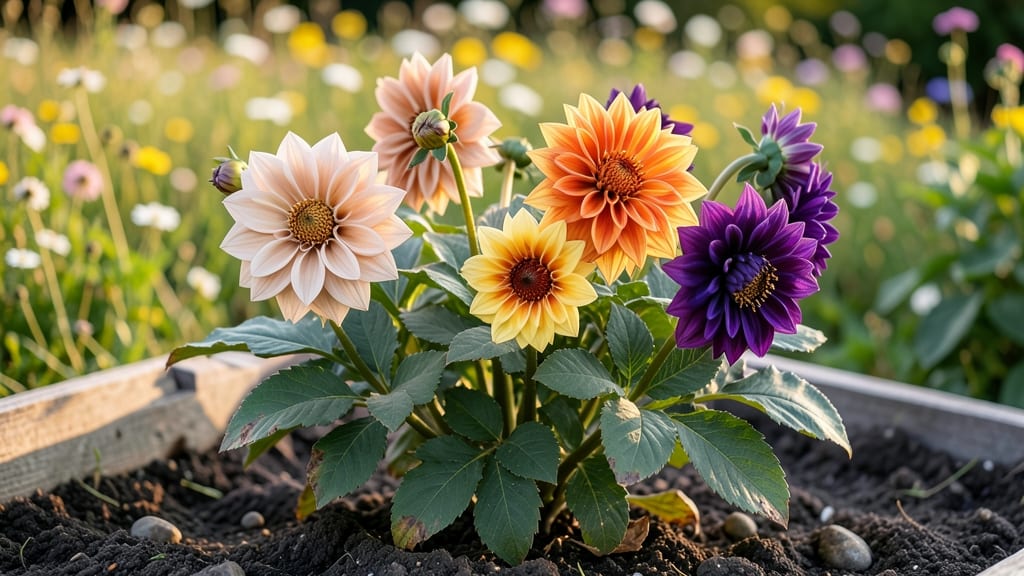
Dahlias bloom all summer long only if they're reblooming varieties, designed to produce multiple flower cycles from early summer through fall. Non-reblooming types typically flower just once in mid-to-late summer, then decline unless you aggressively deadhead them. Choosing the right variety and maintaining proper care are essential for nonstop summer color.
Dahlias don't automatically bloom all summer—it depends entirely on their genetics. Reblooming varieties like 'Café au Lait' or 'Karma Choc' are bred to produce flowers continuously by redirecting energy after each bloom. 🌸 Non-rebloomers, such as 'Bishop' or 'Thomas Edison,' focus all their energy on that single mid-season show.
The key difference is how they allocate resources: rebloomers spread it out, while one-time bloomers go all-in on one spectacular display. This is why selecting the right variety matters so much for gardeners who want summer-long color.
Even with rebloomers, you'll need to support their performance with consistent care. Regular deadheading (removing spent blooms) is critical—it tells the plant to redirect energy to new flowers instead of seed production.
Pair that with balanced fertilization (high in phosphorus) and proper watering (deep but not soggy), and you'll maximize those continuous blooms. I've found that mulching helps too, as it keeps roots cool and conserves moisture during hot summer months.
💡 In This Article
- Reblooming vs One-Time Blooming Dahlias: Key Differences
- How to Maximize Dahlias’ Summer Blooms: Care Tips
Reblooming vs one-time blooming dahlias: key differences
The difference between reblooming and one-time blooming dahlias comes down to their genetic programming and energy allocation strategies. Reblooming varieties, like the popular 'Galaxy' series, are bred to produce multiple flower cycles by continuously forming new buds after each bloom.
This happens because they redirect energy from seed production back into flower development, a process triggered by proper daylight exposure and temperature cues. One-time bloomers, such as 'Black Narcissus,' focus all their energy on that single mid-summer spectacle, typically between July and August, then shift resources to seed production.
Light exposure plays a crucial role in reblooming behavior. Dahlias need at least 6-8 hours of sunlight daily to trigger this continuous flowering cycle. When days start shortening in late summer, rebloomers naturally slow down their production, while one-time bloomers simply stop.
The flower size also differs: rebloomers often produce slightly smaller blooms (4-6 inches) but in greater quantities, while one-time bloomers may showcase larger, dramatic flowers (6-12 inches) during their single peak. 🌿 This trade-off explains why gardeners choose rebloomers for long-season color and one-time bloomers for show-stopping displays.
The botanical mechanism involves auxin hormones, which regulate growth and flowering. In rebloomers, auxin production remains balanced, allowing new buds to form continuously. In one-time bloomers, auxin shifts entirely to seed development after their initial bloom.
This hormonal difference is why you'll see rebloomers producing flowers from June through October with proper care, while one-time bloomers may only last 2-4 weeks at their peak. The key takeaway is that rebloomers are the summer marathoners, while one-time bloomers are the sprint champions.
Seasonal performance also varies dramatically. Reblooming dahlias like 'Café au Lait' maintain consistent blooming through heat waves and occasional droughts, thanks to their deep root systems that store water. One-time bloomers, however, often wilt or produce fewer flowers during heat stress because their energy is already committed to seed production.
This is why rebloomers are the preferred choice for cut flower gardens, where continuous harvests are desired. The trade-off in flower size becomes less important when you consider the extended seasonal display.
Color retention is another factor where rebloomers excel. Their continuous production means you'll see a gradual transition of colors as different buds open, creating a dynamic garden display. One-time bloomers, meanwhile, showcase their best colors all at once, then fade to seed heads.
For gardeners who love vibrant, ever-changing displays, rebloomers provide that moving canvas effect throughout the growing season. This visual progression is one of the most rewarding aspects of growing dahlias for extended summer enjoyment.
One exception to this rule is the 'pompom' dahlia varieties, which often exhibit reblooming tendencies even among one-time bloomers. These compact, ball-shaped flowers seem to have a genetic quirk that allows them to produce multiple flushes, though not as prolifically as true rebloomers.
This makes them a popular choice for gardeners who want some extended blooming without committing to full reblooming varieties. The 3-4 inch size of pompom blooms also makes them ideal for mixed containers and cottage garden styles.
Understanding these differences helps you make informed choices based on your garden goals. If you're dreaming of a continuous summer floral show, reblooming varieties are your best bet. For that one spectacular mid-summer statement, one-time bloomers deliver unmatched drama.
The secret lies in matching your expectations with the plant's natural tendencies—nature's way of ensuring you get exactly what you're looking for in your garden. 🌸