
Blooming
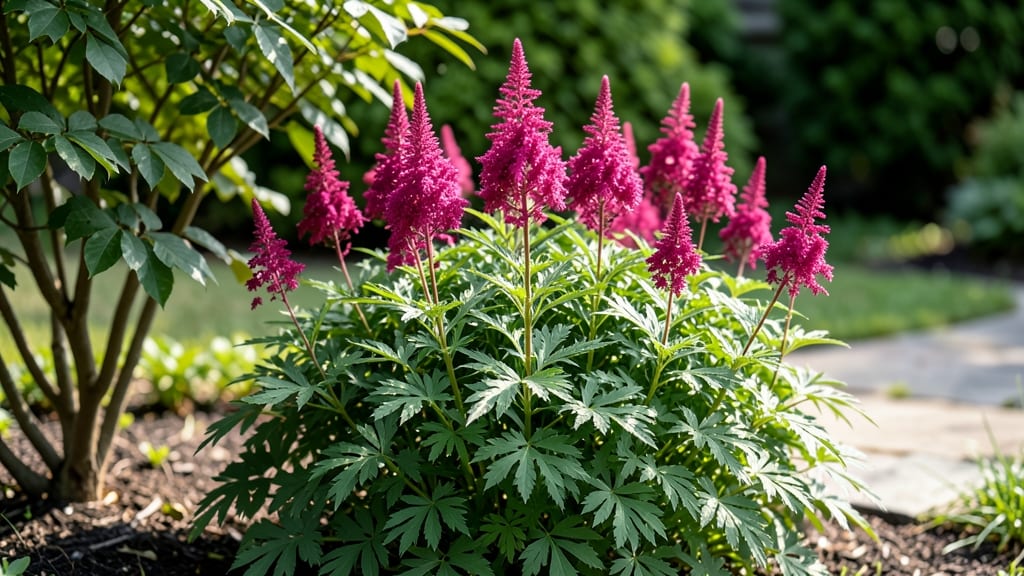
Astilbe don't bloom all summer—most varieties produce vibrant flowers for just 4-6 weeks in late spring to early summer, though deadheading can sometimes coax a second, smaller flush of blooms later. Their peak display depends heavily on cool temperatures, which is why summer heat often cuts their flowering short.
Astilbe are famous for their lush plumes, but their blooming season is surprisingly short. 🌸 The key to extending their display lies in understanding their natural rhythm—most varieties bloom once in spring when temperatures are mild, with some reblooming only under ideal conditions.
For example, 'Deutschland' typically blooms in May-June, while 'Fanal' might produce a second, smaller flush in late summer if you deadhead promptly. The secret is acting fast: snip spent blooms before they form seed heads, which signals the plant to stop flowering.
What many gardeners don't realize is that astilbe's blooming window shrinks dramatically in hot climates. When temperatures exceed 80°F, their delicate flowers often wilt within days. That's why I always plant mine in partial shade—it keeps the foliage lush and the blooms lasting longer.
The good news? Their feathery foliage remains attractive all season, making them a reliable garden performer even when the flowers fade.
💡 In This Article
- Astilbe Blooming Seasons: When and Why They Peak
- Deadheading Astilbe for Longer Color: Techniques and Timing
Astilbe blooming seasons: when and why they peak
Astilbe blooms thrive in cool weather, typically emerging when daytime temperatures hover between 60-70°F—a range that triggers their natural flowering cycle. This preference explains why most varieties peak in late spring to early summer, as warmer temperatures signal the end of their primary bloom.
For example, the popular 'Deutschland' cultivar usually bursts into color in May, while 'Fanal' often follows in June, both aligning with the transition from spring's mild conditions to summer's heat.
The plant's internal clock responds to these temperature shifts through a process called vernalization, where cool periods stimulate flower bud formation.
Moisture levels play an equally critical role in their blooming duration. Astilbe roots require consistently damp soil, as drought stress causes buds to abort or flowers to wilt prematurely.
In my garden, I've noticed that varieties like 'Bridal Veil' maintain vibrant plumes for 5-6 weeks when kept in well-drained but moisture-retentive soil, while 'Amethyst Falls' often blooms 2-3 weeks longer—thanks to its slightly more drought-tolerant foliage.
The key is mimicking their native woodland habitats where humidity remains high and roots stay shaded from intense sun.
Climate zones dramatically affect blooming duration. In cooler regions (USDA Zones 4-6), astilbe often enjoy 6-8 weeks of continuous color, while in hotter zones (7-9), their display may shrink to just 3-4 weeks before wilting.
For instance, in Zone 8's summer heat, I've seen 'Peach Blossom' go from lush pink plumes to crispy brown in under three weeks—unless I provide afternoon shade. This heat sensitivity is why astilbe make ideal understory plants near trees or shrubs that filter sunlight while maintaining soil moisture.
What most gardeners overlook is how light intensity impacts blooming quality. While astilbe tolerate partial shade, too little light (under 4 hours of dappled sun daily) results in leggy stems and sparse flowers.
The sweet spot is morning sun with afternoon shade, which balances energy production for blooms while preventing heat stress.
I once experimented with 'Glut Fire' in full shade and got only 20% of its usual flower production—a stark reminder that even shade-loving plants need some light to perform.
The science behind their seasonal rhythm involves photoperiodism, where day length influences flowering. As days lengthen past 14 hours (typical in late spring), astilbe shift from vegetative growth to reproductive mode.
This explains why their peak coincides with the longest days of the year—nature's way of ensuring pollinators are most active. However, once temperatures climb above 85°F, the plants enter a state of dormancy-like quiescence, halting bloom production until cooler autumn temperatures return.
Consider these key factors when planning your astilbe display:
- Temperature: Aim for planting in zones where summer highs stay under 80°F for extended blooms
- Moisture: Maintain 1-2 inches of soil moisture weekly, using mulch to retain humidity
- Light: Provide 3-6 hours of filtered sun daily for optimal flower production
- Variety selection: Choose heat-tolerant cultivars like 'Deutschland' for longer displays in warmer climates
Remember that while astilbe won't bloom all summer, their feathery foliage provides year-round interest—especially when paired with complementary perennials like hostas or ferns. The trade-off is worth it for their dramatic spring shows! 🌿