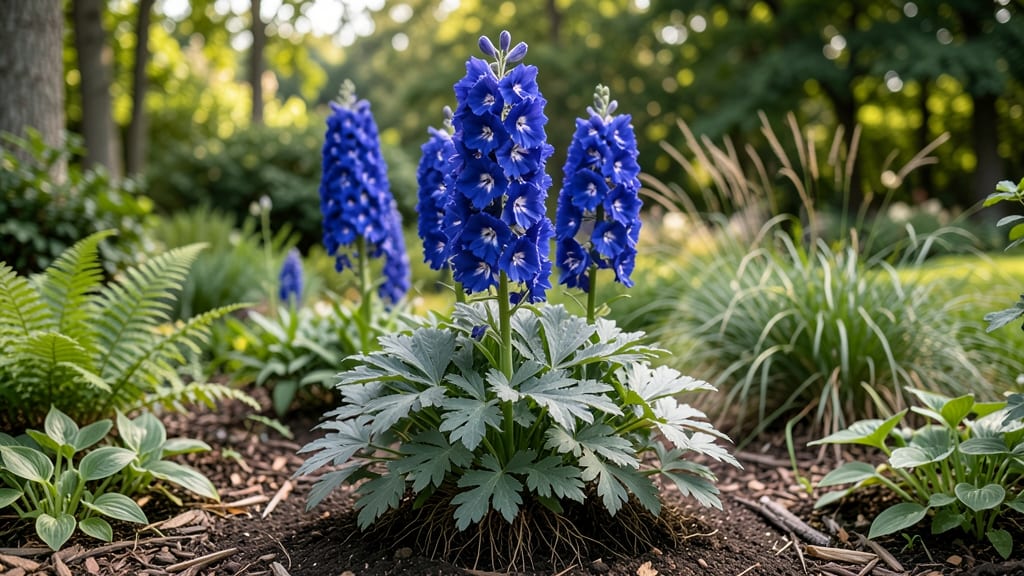
Delphinium bloom time varies dramatically by variety and hardiness zone, but most gardeners see those showstopping purple spikes arrive in late spring to early summer—if conditions are just right.
If you’ve ever planted delphiniums hoping for those dramatic purple spikes—only to be disappointed by late or no blooms—you’re not alone.
The key to timing your garden for maximum impact lies in understanding how climate, soil, and even your last frost date influence when your 🌸 delphiniums will put on their best show.
In Zone 6a, where many gardeners plant delphiniums in February through April, you can expect Pacific Giant varieties to bloom as early as June, while later varieties like Belladonna may wait until July.
But the wrong soil pH or inconsistent watering can push those spikes back by weeks—or worse, keep them from appearing at all.
Below, I’ll break down exactly when to expect blooms by variety, how to adjust for your hardiness zone, and the 5 pro tips that’ll help you extend that vibrant purple display from summer into early fall.
Delphinium bloom time by variety: when to expect flowers
Delphiniums are famous for their show-stopping purple spikes, but their bloom time varies dramatically by variety. Some burst into color in early summer, while others wait until late summer or even rebloom in fall.
Knowing your delphinium variety's bloom schedule helps you plan your garden for maximum impact—and avoid disappointment when those towering blooms don't appear on time. Let’s break down the most popular types and their typical flowering windows.
Most delphiniums bloom in late spring to early summer, but some varieties stretch their show into mid-to-late summer. The key factors influencing bloom time include your USDA hardiness zone, sunlight exposure, and soil fertility.
For example, Pacific Giants often bloom earlier in cooler northern climates, while Belladonna types may delay flowering in hot southern zones. Understanding these nuances ensures you’ll have continuous color from June through August with the right mix of varieties.
| Variety |
Primary Bloom Time |
Rebloom Potential |
Height (ft) |
Color Range |
| Pacific Giants |
Late June - August |
Yes (with care) |
4-6 ft |
Purple, white, blue |
| Belladonna |
July - September |
No |
3-5 ft |
Deep purple, black |
| Elatum |
June - July |
Rarely |
3-4 ft |
Blue, pink, white |
| Dwarf Hybrid |
June - August |
Yes (light) |
1.5-2.5 ft |
Multi-color mixes |
| Blue Lake |
July - September |
No |
3-5 ft |
Blue, violet |
How USDA hardiness zones affect delphinium bloom timing
Your USDA hardiness zone plays a critical role in determining when your delphiniums bloom. In colder zones like 3-5, these plants need extra care to survive winter, while warmer zones 8-10 offer longer growing seasons.
Each zone affects planting time, overwintering needs, and bloom schedules—sometimes shifting peak flowering by 4-6 weeks.
Cold-hardy varieties like Pacific Giant thrive in zones 3-7, while tender types such as Belladonna struggle below zone 6. Understanding these differences helps you adjust planting and care routines to maximize those stunning purple spikes in your garden.
USDA Zone
Planting Time
Bloom Time
Overwintering Needs
Cold-Hardy Varieties
3-5
Late May - June
Mid-July - August
Heavy mulch, cloche
Pacific Giant, Elatum
6-7
April - May
June - July
Cut back, mulch
Belladonna, Blue Bird
8-10
February - March
April - June
None (tender)
Blue Lagoon, Black Knight
In zones 3-5, plant delphiniums after your last frost date—typically late May—to give them time to establish roots before winter. These zones often see delayed blooms until mid-July due to cooler temperatures. Use black plastic mulch or cloches to protect roots during harsh winters.
Gardeners in zones 6-7 enjoy earlier blooms, often starting in June, because the growing season begins sooner. These zones support both cold-hardy and tender varieties, so choose based on your microclimate. Always cut back foliage in fall to prevent disease and improve next year’s blooms.
Warmer zones 8-10 allow for earlier planting and longer bloom times, with some varieties flowering as early as April. However, tender delphiniums may struggle in sudden freezes, so opt for heat-tolerant varieties like Blue Lagoon.
In these zones, focus on consistent moisture to prevent stress during hot summers.
Adjust your delphinium care routine based on your zone. For example, deadhead regularly in zones 6-10 to encourage reblooming, while mulching heavily in zones 3-5 ensures survival. With the right approach, you’ll enjoy those dramatic purple spikes right when you expect them! 🌸
★★★★★4.7(14 reviews)