
Blooming
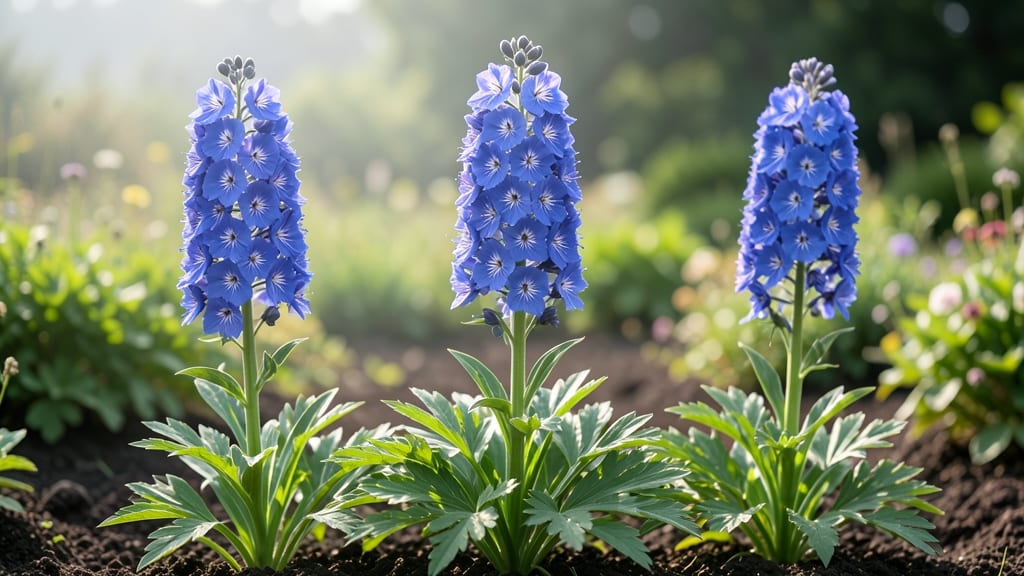
Delphiniums don't bloom all summer continuously; most varieties flower primarily in spring and early summer, with some reblooming in fall if you deadhead them regularly and maintain proper care. Hot weather and drought can drastically reduce their blooming window.
Delphiniums are classic spring and early summer stars, not year-round performers.
Their blooming cycles are tied to temperature and daylight—most varieties focus energy on producing vibrant flowers during cooler months before shifting to seed production as summer heats up. 🌸 I've noticed that varieties like 'Blue Bird' and 'Pacific Giant' often deliver the longest displays, sometimes lasting into early fall if you consistently remove spent blooms.
The key to extending their season lies in consistent watering and well-draining soil, which helps them withstand summer's intensity.
What many gardeners don't realize is that delphiniums actually stop blooming when days get too long and temperatures climb above 85°F. This built-in mechanism protects them from stress, but it also means their summer performance depends heavily on your growing conditions.
I always recommend planting them in partial shade during peak summer months to help preserve their energy for potential fall reblooms.
💡 In This Article
- Why Delphiniums Have Seasonal Blooming Patterns
- Extending Delphinium Blooms with Proper Care
Why delphiniums have seasonal blooming patterns
Delphiniums follow a biological clock tied to daylight and temperature, a phenomenon called photoperiodism. These plants detect changes in daylight hours—typically blooming when days lengthen in spring and early summer (14-16 hours of daylight) but conserving energy as summer progresses.
When temperatures climb above 80°F, their metabolic processes shift from flower production to seed development, which is why you'll often see them bolt (send up tall seed stalks) during heatwaves. 🌡️
The science gets even more interesting when you consider their native habitats. Most delphinium species originate from mountainous regions of Europe and Asia where summers are cool and moist.
In hotter climates like the American South, their natural blooming window compresses dramatically—sometimes as short as 6-8 weeks—because the plants prioritize survival over extended flowering. This explains why varieties like 'Blue Bird' (which blooms in cool-season climates) may thrive in northern gardens but struggle in southern heat.
Energy allocation plays a crucial role too. Delphiniums invest heavily in their striking flower spikes, but this comes at a cost. Each bloom requires significant resources, so when summer heat arrives, the plant's survival instincts kick in.
You'll notice the leaves may turn yellow or the stems become woody as the plant redirects nutrients toward seed production rather than maintaining flowers. This built-in mechanism is why even well-cared-for delphiniums rarely bloom continuously beyond early summer.
There's also a fascinating variation between early and late-season varieties. Early bloomers like 'Black Night' typically flower in late spring to early June and may produce a second, smaller flush in fall if conditions are right.
Late-season types like 'Pacific Giant' often bloom slightly later (June to July) but tend to have shorter individual bloom cycles. The trade-off is that late bloomers may handle slightly warmer temperatures better, but their overall season remains limited by the same biological constraints.
One common misconception is that delphiniums "go dormant" in summer. While they do reduce flowering, they're not truly dormant—they're actively growing and preparing for the next season. The key difference is that their energy goes toward root and stem development rather than flower production.
This is why proper summer care (like consistent watering and shade) can help preserve their strength for potential fall reblooms, rather than forcing them to expend energy on flowers they can't sustain.