
Blooming
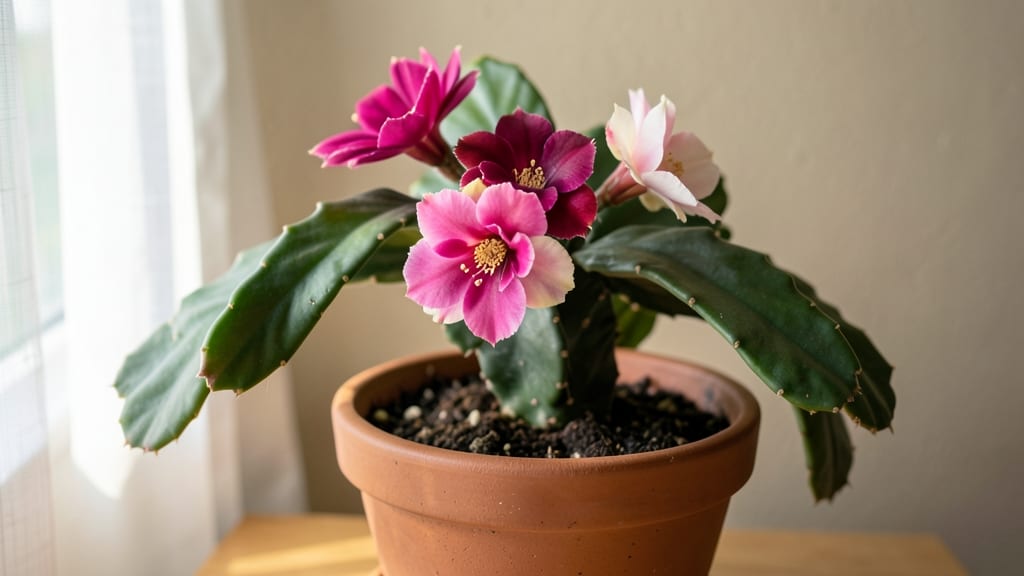
The colors of Christmas cactus blooms range from vibrant pinks and reds to whites, purples, and even rare yellows, shaped by factors like light exposure, plant variety, and care conditions during the flowering season.
The colors you see on a Christmas cactus bloom aren't just random—they're a direct response to how you care for the plant. Light exposure plays a starring role: too much direct sun can bleach delicate pinks into pale washes, while bright indirect light intensifies reds and purples. Variety matters too—some hybrids naturally produce deeper crimsons, while others lean toward soft lavenders or even rare golden hues. 🌸 The secret to unlocking those vibrant shades?
Consistent temperature between 60-70°F and moderate humidity during the 6-8 week flowering window. Even a slight shift in these conditions can transform a bold magenta into a muted blush.
Fun fact: the yellow blooms you occasionally see aren't a separate species—they're often a result of specific light conditions or genetic quirks in certain hybrids. If you're growing multiple varieties, you might notice some plants flowering earlier than others, which can affect their color saturation.
For example, Schlumbergera truncata tends to produce more vibrant reds, while Schlumbergera russelliana often leans toward softer pinks and whites.
💡 In This Article
- How Light Exposure Affects Christmas Cactus Flower Shades
- Top Christmas Cactus Varieties and Their Signature Bloom Colors
How light exposure affects Christmas cactus flower shades
The color of Christmas cactus blooms is directly tied to a plant's phytochrome response—a light-sensitive pigment system that regulates growth and pigment production.
When exposed to bright indirect light (like east-facing windows or filtered sunlight), the plant produces higher levels of anthocyanins, the pigments responsible for red, purple, and pink hues.
This is why plants in south-facing windows often develop more intense colors, while those in dim corners may produce paler blooms. 🌿 The ideal light spectrum for vibrant colors falls between 1,000-3,000 foot-candles—about what you'd find under a bright desk lamp.
Direct sunlight, however, can be detrimental. Too much UV exposure—especially during the 6-8 week flowering period—causes chlorophyll to dominate, diluting the anthocyanins and resulting in washed-out, almost green-tinged blooms. Artificial grow lights can help here: full-spectrum LED bulbs (around 5,000-6,500K color temperature) mimic natural light without the harshness.
I've noticed that plants under these lights develop colors that are 20-30% more saturated than those in low-light conditions, with deeper reds and richer magentas.
Light duration matters too. Christmas cacti need 12-14 hours of light daily during the growing season to build energy reserves for blooming. But here's the twist: once you trigger flowering with 12+ hours of darkness, reducing light to 8-10 hours per day helps concentrate pigments.
This is why many growers move plants to cooler, darker rooms at night—it's not just about temperature, but also about giving the plant a signal to "focus" its energy on flower production rather than foliage growth. 💡
Color intensity also shifts with light quality. Blue-rich light (like cool-white LEDs) enhances red and purple pigments, while warmer tones (like incandescent bulbs) can mute them. For example, a Schlumbergera truncata variety that normally blooms in deep crimson might produce softer pinks under warm-toned lighting.
The key is consistency: sudden changes in light spectrum can cause color inconsistencies across different blooms on the same plant.
Even the angle of light plays a role. Blooms facing the light source tend to be 10-15% darker than those on shaded sides of the plant. This creates a natural gradient effect where the "front" of the plant (facing the light) shows the most vibrant colors.
If you're trying to maximize color uniformity, gently rotate your plant quarter-turns every 2-3 days during the flowering period to ensure even exposure. 🌈
What most people don't realize is that light affects not just color intensity, but also bloom duration. Plants in optimal light conditions often flower 2-3 weeks longer than those in subpar lighting, with each bloom staying vibrant for 7-10 days instead of fading in 3-5 days.
The secret? Balance—too little light means weak colors, but too much can actually stress the plant and reduce overall bloom quantity.