
Vegetables
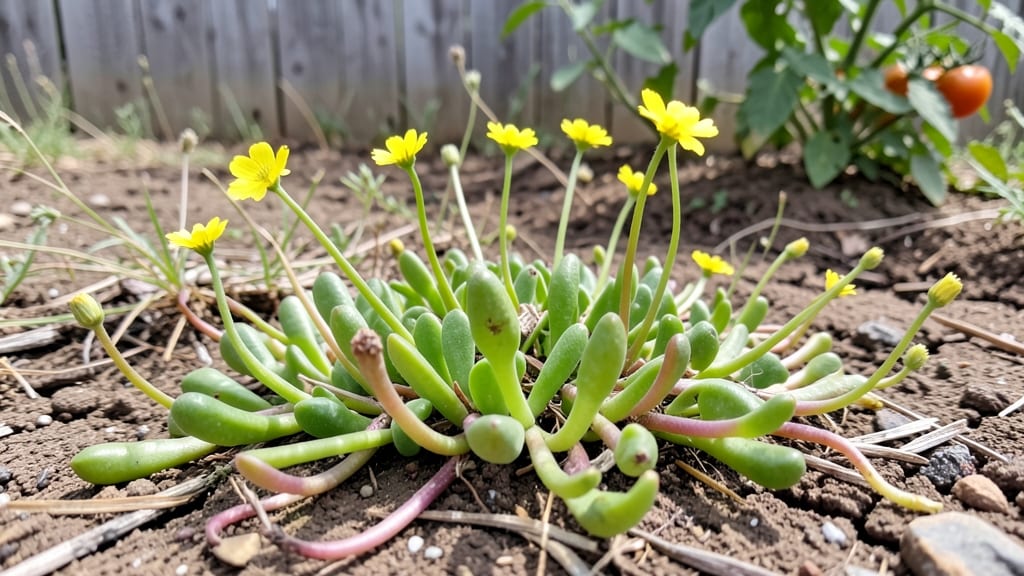
Purslane is not a perennial—it’s an annual succulent that thrives in warm climates, completing its life cycle in one season before dying back in freezing temperatures. However, in mild winters, it may self-seed prolifically, creating the illusion of perennial growth.
Purslane’s rapid growth cycle—from seed to harvest in just 60-90 days—makes it a powerhouse for warm-season gardens, but its inability to withstand frost is the real game-changer. 🌱 Unlike true perennials, which regrow from roots year after year, purslane’s entire structure freezes and dies when temperatures dip below 30°F, even though its thick leaves might fool you into thinking it’s tougher.
That’s why gardeners in cooler climates often treat it like an annual, even though its seeds can lie dormant until conditions improve.
💡 In This Article
- Purslane’s Annual Growth Pattern Explained
- How to Extend Purslane’s Harvest Like a Perennial
Purslane’s annual growth pattern explained
Purslane’s life cycle unfolds with remarkable speed—seedlings emerge in just 5-7 days under ideal conditions (warm soil at 70-80°F) and reach harvestable size in 60-90 days.
This rapid growth is possible because purslane stores water in its thick, jelly-like leaves (up to 90% moisture content), allowing it to photosynthesize efficiently even in dry conditions.
Unlike perennials that develop woody stems or underground storage organs, purslane allocates all its energy to leaf production during its single growing season. 🌱
The plant’s drought tolerance comes from its succulent structure—its cells contain large vacuoles that swell when water is available and contract without permanent damage.
This adaptation lets purslane survive 3-4 weeks without rain in hot climates, but it’s also why frost becomes fatal: ice crystals form within these water-filled cells, rupturing their membranes.
True perennials like portulaca (its close relative) develop deeper root systems that insulate against cold, while purslane’s shallow roots freeze solid at 28°F, killing the entire plant.
Here’s where the confusion arises: purslane’s seeds can remain viable in soil for 2-3 years, germinating whenever temperatures rise above 50°F.
In frost-free zones (USDA zones 9-11), this creates the illusion of perennial behavior—new plants appear each spring from self-sown seeds, while the parent plants from the previous season are long gone.
This is why gardeners in warm climates might think purslane "comes back every year" when it’s actually just an aggressive annual with excellent seed dispersal. ✨
Comparing purslane to true perennials reveals key differences in structure. Portulaca (the perennial lookalike) develops a fibrous root system that can regenerate from basal stems, while purslane’s roots are delicate and die completely in winter.
Even its leaves behave differently: purslane’s leaves contain omega-3 fatty acids (rare in greens) but lack the protective waxy coating that helps perennials survive seasonal stress. The plant’s entire above-ground biomass freezes solid—no regrowth possible until new seeds sprout.
What most gardeners overlook is how purslane’s growth pattern mirrors desert annuals: it’s evolved to capitalize on brief wet seasons. In its native Middle East and Mediterranean regions, purslane germinates after rare rains, grows explosively, sets seed, and dies before summer droughts return.
This strategy explains why it thrives in 100°F+ heat but wilts at 40°F—it’s not built for temperature extremes, just rapid exploitation of favorable conditions. 🔥
For practical purposes, this means purslane behaves like an annual in all but the warmest microclimates. Even in mild winters (like coastal California), the parent plants die, and only new seedlings from dropped seeds continue the cycle.
The "perennial illusion" only works if you’re willing to accept 50% yield loss annually from unpredictable germination rates—hardly efficient compared to true perennials that return reliably each year.