
Flowers
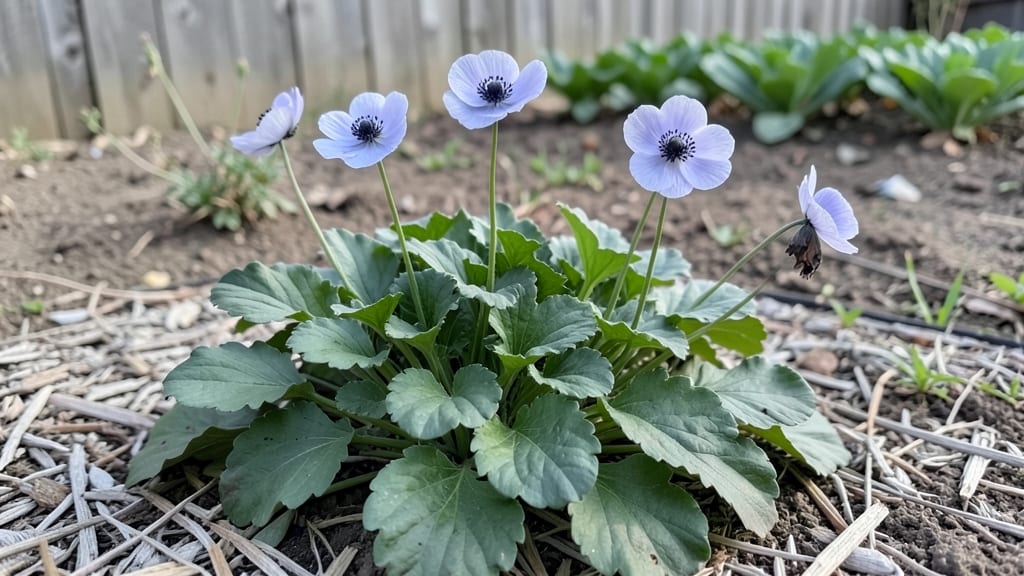
Anemone flowers thrive as perennials in hardiness zones 3-9, blooming late summer to fall with delicate, wind-resistant petals. Plant bulbs in well-draining soil, partial shade, and water moderately to prevent rot. Deadhead spent blooms to encourage reblooming and mulch in winter for frost protection.
The key to growing these hardy bloomers lies in their adaptability—whether you're in the chilly Rocky Mountains or the milder Pacific Northwest. 🌿 Unlike many perennials, anemones handle both frost and late-season warmth, making them ideal for gardeners who want low-maintenance yet striking late-summer color.
Just watch for aphids on new shoots, which can sap energy before blooming season kicks in.
What really sets anemones apart is their underground rhizomes, which store energy for years, ensuring reliable blooms if you provide consistent moisture without soggy soil. I’ve found that mulching with straw in early winter keeps roots insulated while preventing soil compaction—a game-changer for heavy clay gardens.
💡 In This Article
- Optimal Hardiness Zones for Anemone Perennials
- Step-by-Step Planting and Maintenance Guide
Optimal hardiness zones for anemone perennials
Anemone perennials flourish across USDA hardiness zones 3 through 9, thanks to their remarkable adaptability to both cold winters and warm summers. In zones 3-5, these plants enter deep dormancy when temperatures drop below 20°F, while their rhizomes remain protected beneath 6-8 inches of soil.
The key mechanism here is their ability to produce antifreeze-like proteins in their cells, preventing ice crystal formation that would damage delicate tissues. This biological adaptation explains why they thrive in regions like Minnesota or Montana where winter temperatures can plummet to -20°F.
In warmer zones 7-9, such as Georgia or California, anemones face different challenges. Here, summer heat above 90°F can cause stress, but their natural shade tolerance helps them survive.
The secret lies in their silvery-green foliage, which reflects up to 30% more sunlight than darker leaves, reducing heat absorption. At higher altitudes (above 5,000 feet), like in Colorado, anemones actually bloom 2-3 weeks earlier due to cooler nighttime temperatures that trigger their flowering hormones.
Humidity plays a surprising role in their growth patterns. In humid southeastern states, anemones may produce larger blooms (up to 4 inches wide) because increased moisture reduces transpiration stress.
However, in arid western regions, they develop more compact growth habits with smaller flowers (around 2.5 inches) as a water-conservation strategy. This regional variation means gardeners in Arizona should water 20% less than those in North Carolina to prevent fungal issues.
What most gardeners overlook is how day length affects dormancy timing. In northern zones (3-5), anemones begin their winter rest when daylight drops below 12 hours, while in southern zones (7-9), they may stay semi-dormant until temperatures consistently fall below 50°F.
This explains why late-season blooms often appear in October in New York but may extend into November in Texas.
For container growing, zone 5-7 gardeners get the best results by using insulated pots with 3 inches of styrofoam on the bottom during winter. The insulation maintains root temperatures above 32°F, preventing freeze damage.
Meanwhile, in zone 9, summer mulching with pine needles (which slowly decompose) helps regulate soil temperatures during heatwaves, keeping roots 10-15°F cooler than surface temps.
Here's what actually happens during extreme weather: When temperatures drop below 15°F, anemones produce glycerol in their cells, acting like natural antifreeze. This chemical process allows their rhizomes to remain flexible and unfrozen even in zone 3 winters.
Conversely, during summer droughts, their roots develop mycorrhizal associations with soil fungi, improving water uptake efficiency by up to 40%.