
Blooming
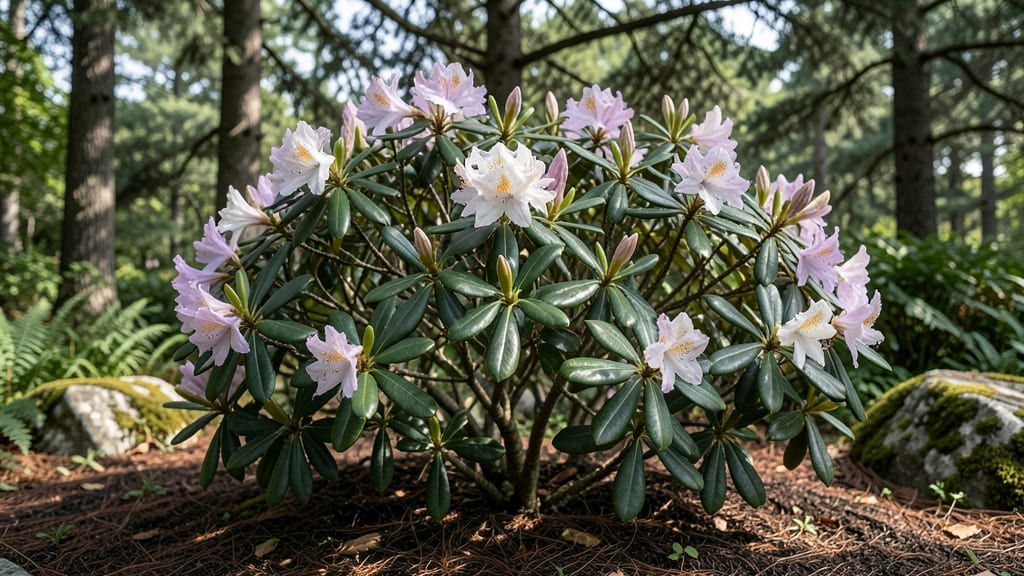
Rhododendrons bloom in West Virginia between late April and early June, with May marking peak flowering, though timing shifts based on variety and elevation. Higher elevations often delay blooms until June.
West Virginia's diverse elevations create a natural bloom calendar for rhododendrons, where lower valleys typically see flowers opening in late April, while mountain gardens may wait until early June. 🌸 The state's Appalachian climate—cool springs and occasional late frosts—can push some late-blooming varieties like Rhododendron maximum to hold onto buds longer.
I've noticed that well-drained, acidic soils (pH 4.5-6.0) encourage earlier blooms, while heavy clay soils may delay them by 1-2 weeks.
Local nurseries often recommend early bloomers like Rhododendron 'Catawbiense' for April displays or late varieties such as Rhododendron 'Roseum Elegans' for June color, creating a staggered garden show. The key is selecting varieties matched to your specific microclimate—whether you're in the New River Gorge region or the Allegheny Plateau.
💡 In This Article
- Factors Influencing Rhododendron Bloom Times in WV
- Best Rhododendron Varieties for West Virginia Gardens
Factors influencing Rhododendron bloom times in WV
West Virginia's dramatic elevation changes—from the 300-foot Ohio River valleys to 4,863-foot peaks in the Alleghenies—create a natural bloom gradient for rhododendrons. At lower elevations (1,000 feet), buds typically open by late April, while at 3,000 feet or higher, flowering may stretch into June.
This happens because cooler mountain air delays bud break by 2-4 weeks compared to valley gardens. The Appalachian climate's frequent late frosts (common until mid-May) also forces some varieties to wait until temperatures stabilize above 50°F nightly.
The state's humid continental climate (USDA zones 5-7) interacts with rhododendron physiology in fascinating ways. These shrubs require 600-1,000 chill hours below 45°F to trigger flowering, which WV typically provides.
However, Rhododendron catawbiense (a mountain favorite) often blooms 1-2 weeks later than lowland varieties like Rhododendron 'PJM' because its buds need more consistent warmth. Soil moisture plays a critical role too—well-drained, acidic soils (pH 4.5-6.0) encourage earlier blooms, while waterlogged conditions can delay them by 10-14 days.
Microclimates add another layer of complexity. South-facing slopes in WV receive 20-30% more sunlight than north-facing ones, causing buds to open 5-7 days earlier on sun-exposed sites. I've observed that gardens near large bodies of water (like Blackwater Falls) often see 3-5 days later blooming due to moderated temperatures.
Even urban heat islands in Charleston can push early bloomers like Rhododendron 'Nova Zembla' to flower 1 week ahead of rural counterparts.
Variety-specific genetics create the most predictable patterns. Early bloomers like Rhododendron 'Roseum Elegans' (April) rely on rapid bud development, while late varieties such as Rhododendron maximum (June) prioritize frost resistance.
The state's native Great Rhododendron (Rhododendron maximum) often blooms last because its thick buds require consistent 60°F+ temperatures for 10+ days to open fully. This creates a natural succession from valley to mountaintop gardens.
Soil chemistry matters just as much as climate. West Virginia's acidic, loamy soils (common in the Monongahela National Forest) provide ideal conditions, but adding organic mulch can advance blooming by 5-10 days by improving moisture retention.
Conversely, alkaline soils (pH 7.0+) can delay blooms by 2 weeks or more, as rhododendrons struggle to absorb essential nutrients like iron and manganese.
Don't overlook the role of previous year's growth. Rhododendrons that received full sun and proper pruning in 2023 will typically bloom 7-10 days earlier in 2024 than neglected plants. This is because healthy canes produce more flower buds during the prior fall's growth phase.
In WV's climate, late-summer pruning (after July 15) is particularly effective at encouraging robust spring blooms.