
Blooming
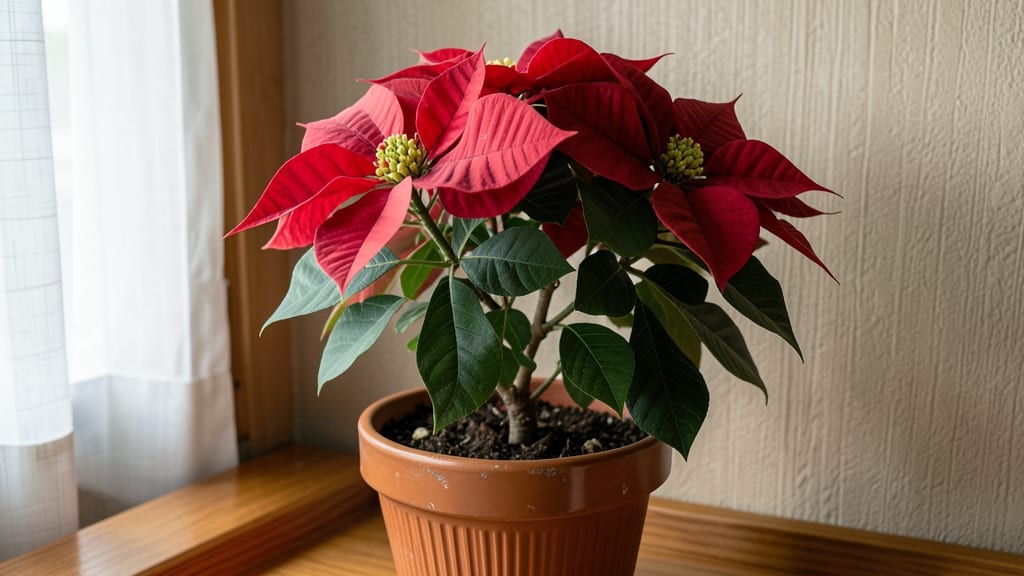
Poinsettias bloom naturally in late fall to early winter 🎄, when shorter daylight hours trigger their stunning red, pink, or white bracts.
If you’ve ever wondered why your poinsettia blooms only around Christmas, the answer lies in its natural light cycle—and mastering it could make your plant flower at any time of year.
These tropical plants, native to Mexico’s warm climates, rely on 12+ hours of darkness daily to set buds. In their native habitat, the shorter days of fall signal the perfect time to bloom, but indoor growers can manipulate this cycle with simple light tricks.
Below, I’ll show you how to align your poinsettia’s blooming schedule with the seasons, whether you want a Christmas display or a summer surprise.
Understanding poinsettia’s natural blooming cycle and light requirements
If you’ve ever wondered why your poinsettia blooms only around Christmas, the answer lies in its natural light cycle. These stunning plants are short-day plants, meaning they bloom in response to long nights and short daylight periods.
This unique trait explains why their vibrant bracts (the colorful parts we call "flowers") appear reliably in late fall to winter.
The magic happens when poinsettias receive 12+ hours of darkness each day for about 6-8 weeks. This triggers their photoperiodism—a natural response to decreasing daylight hours as summer fades.
In their native Mexico, poinsettias bloom naturally in wild forests during the dry season, aligning with this light-dependent rhythm.
| Stage | Light Requirement | Bloom Trigger | Natural Timing |
|---|---|---|---|
| Growth Phase | 12+ hours light | None | Spring-Summer |
| Pre-Bloom | 10-12 hours light | 12+ hours darkness | Late August-October |
| Bloom Phase | 8-10 hours light | Continuous darkness | November-January |
| Post-Bloom | Increase light gradually | None | February-March |
During late summer, as daylight hours shorten, poinsettias begin sensing the change. This is when their bracts start developing color—first as pale green, then deepening into their signature reds, pinks, or whites.
The key is maintaining consistent darkness during this period. Even a few minutes of light can disrupt the process and delay blooming.
In their natural habitat, poinsettias thrive in tropical forests where they receive dappled sunlight. Replicating this indoors means placing your plant near an east or west-facing window for bright indirect light. Avoid south-facing windows, which can expose the plant to harsh afternoon sun, causing leaf scorch.
One common misconception is that poinsettias bloom because of cold weather. While cooler temperatures (60-70°F) support blooming, the real trigger is darkness.
In fact, you can force a poinsettia to bloom at any time of year by controlling its light exposure—more on that in our next section!
If you’re growing poinsettias outdoors in USDA Zones 10-12, they’ll bloom naturally in wild conditions during the dry season. However, most gardeners cultivate them as indoor plants, where their light needs become even more critical.
A simple blackout cloth or moving the plant to a closet for 14 hours daily can mimic natural conditions.
Pay attention to your poinsettia’s leaf color as a blooming indicator. Healthy green leaves mean the plant is thriving, while colored bracts signal it’s ready to bloom. If your plant isn’t responding, check for light interruptions—even streetlights or TV glow can prevent proper blooming.
To maximize blooms, start the 12-hour darkness cycle in early October. This gives the plant enough time to develop buds and bracts before the holiday season. For year-round blooming, you’ll need to adjust the light cycle accordingly, but that’s a topic for our next guide!
Remember, poinsettias are not toxic to pets, but their milky sap can cause mild irritation. Always wear gloves when handling them, especially if you’re pruning to encourage bushier growth and more blooms.
How to force poinsettias to bloom out of season using artificial light
Poinsettias naturally bloom in late fall to early winter because they're short-day plants, meaning they need 12+ hours of darkness daily to trigger flower production.
But with artificial light, you can force blooms year-round—even in spring or summer! The key is controlling light exposure to mimic their natural cycle.
When poinsettias bloom naturally, they respond to shorter daylight hours (like November/December). To force blooming in warmer months, you'll need to extend darkness periods while keeping daytime light consistent. This method works best if you start 6-8 weeks before your desired bloom date.
When Do Poinsettias Bloom Naturally?
- Late August-September: New growth begins as days shorten
- October-November: Leaves start color change (red/pink/white)
- December-January: Peak bloom with fully developed bracts
- February-March: Natural decline unless forced to rebloom
To force blooming, begin by placing your poinsettia in complete darkness from 5 PM to 8 AM daily (15 hours). Use a blackout cloth or move it to a dark closet—even streetlight exposure can ruin the process.
During daylight hours, give it bright indirect light (6-8 hours) near an east or west window.
For summer forcing, start this cycle in mid-June if aiming for August blooms. In warmer climates, you may need air conditioning to keep temps between 65-75°F during darkness. Avoid overwatering—let the top inch of soil dry slightly between waterings to prevent stress.
After 6-8 weeks of this routine, you'll see buds forming at the center of leaves. Reduce the darkness period to 14 hours to maintain blooms longer. Remember, consistency is key—skipping a night of darkness can reset the process and delay blooming by weeks.
Once flowers fade, don't discard your poinsettia! With proper care, it can rebloom next year. Prune it back in spring, fertilize lightly, and repeat the light manipulation. With practice, you'll have Christmas-red blooms in July or springtime poinsettias—all thanks to mastering this light trick!