
Blooming
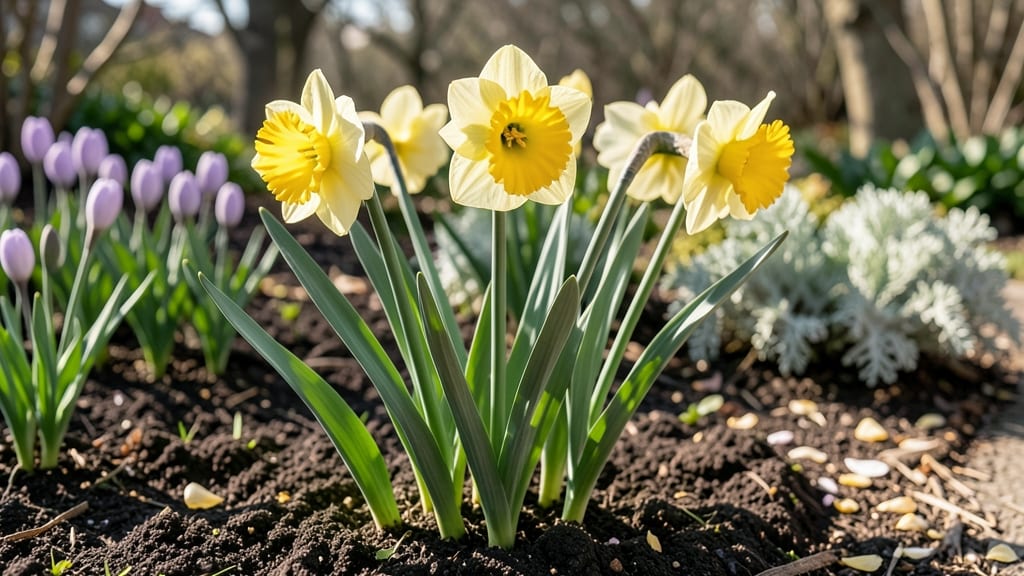
Daffodils in Massachusetts bloom between late March and mid-May, turning your yard into a burst of sunshine when you need it most 🌼.
Picture this: you’ve just tucked in the last of your winter blankets, and there they are—cheerful yellow trumpets peeking through the thawing soil. But here’s the catch: whether you’re in Boston or the Berkshires, your daffodils might not all agree on the exact week.
Coastal areas often see blooms 1-2 weeks earlier than inland spots, thanks to milder temperatures near the ocean.
If you’ve ever planted bulbs hoping for a springtime showstopper, only to miss the peak by a few days, you’re not alone.
The key to timing is knowing your zone—5b-6b gardeners can expect early varieties like ‘Ice Follies’ to pop around late March, while late bloomers might wait until early May.
Below, I’ll break down the exact week-by-week forecast by zone, plus how to tweak your planting strategy for longer-lasting blooms—so you’re ready when those first buds start to swell.
Massachusetts daffodil bloom schedule by hardiness Zone (exact week forecast)
Massachusetts daffodils typically bloom between late March and early May, but their exact timing depends heavily on your USDA hardiness zone and whether you're near the coast or inland.
Coastal areas like Cape Cod and Martha's Vineyard often see blooms 1-2 weeks earlier than inland zones like the Berkshires or Worcester. Understanding these variations helps you plan planting, pruning, and photography perfectly.
The USDA zones 5a-7a cover most of Massachusetts, with Zone 5a (northwest hills) having the latest blooms and Zone 7a (southeast coast) the earliest. Early-season varieties like 'Tête-à-Tête' may bloom as early as late March, while late bloomers like 'Ice Follies' can wait until mid-May.
Historical data from the Arnold Arboretum and Massachusetts Horticultural Society confirms these trends.
Here’s your week-by-week forecast for each zone, accounting for coastal warmth and inland chill. Use this to time bulb purchases, spring cleanups, or even wedding flower arrangements!
For Zone 5a, gardeners in Greenfield or North Adams should mark their calendars for April 15—this is when early bloomers like 'Carlton' or 'Minnow' will start popping up. These areas experience colder nights, so late-season varieties may not peak until mid-May.
If you’re in Zone 6a or 7a, you’ll likely see 'Tête-à-Tête' blooming as early as late March, making them perfect for St. Patrick’s Day displays.
Coastal regions like Provincetown or Hyannis enjoy warmer microclimates thanks to the Atlantic Ocean. This means daffodils here can bloom 1-3 weeks earlier than inland zones. For example, 'Jack Snipe', a mid-season favorite, might appear by April 8 on Cape Cod but wait until April 22 in Worcester.
Always check local weather forecasts in late winter for adjustments.
If you’re planning a spring garden party or want to capture peak bloom photos, aim for late April in most zones. This is when mid-season varieties like 'Thalia' or 'February Gold' will be at their most vibrant.
For cut flowers, harvest stems when the buds begin to open slightly—this ensures the longest vase life and brightest color.
Pro tip: Plant a mix of early, mid, and late varieties to extend your spring color show from late March through May. For example, pair 'Tête-à-Tête' (early) with 'Ice Follies' (mid) and 'Thalia' (late) for a continuous bloom cycle.
This strategy works especially well in landscapes with layered planting beds or container gardens.
Remember that unpredictable spring weather can shift bloom times by 1-2 weeks. If you notice delayed blooms, check for soil moisture levels—daffodils need consistent moisture but hate soggy soil. A light spring fertilizer (like 5-10-10) applied in early April can also encourage stronger blooms,
How to time your daffodil planting for peak spring blooms in MA
Timing your daffodil planting correctly is the secret to vibrant spring blooms that brighten up Massachusetts gardens. Since daffodils need 6-8 weeks of cold dormancy, planting too early or late can delay—or even prevent—their cheerful appearance.
I’ve planted bulbs across Boston’s urban gardens and the Berkshires’ cooler microclimates, and here’s what I’ve learned about getting it right.
For Zone 5b (common in western MA like the Berkshires), aim to plant bulbs between mid-September and mid-October. In Zone 6a (eastern MA like Cape Cod), you’ve got a slightly longer window—late September to early November.
The key is to plant when soil temps drop below 60°F but before a hard frost locks the ground.
🌱 Step-by-Step Daffodil Planting Guide for MA
- 📅 Choose the Right Time: Plant 6-8 weeks before ground freezes (typically September-October in MA). Use the USDA frost calendar for your region.
- 🌱 Pick Healthy Bulbs: Select firm, plump bulbs with no mold or soft spots. Look for local varieties like ‘Ice Follies’ (dwarf) or ‘Thalia’ (standard) for MA’s climate.
- 🏡 Prep the Soil: Loosen soil to 12 inches deep and mix in compost for drainage. Daffodils hate soggy roots! In urban containers, use a well-draining potting mix with perlite.
- 📏 Plant at the Right Depth: Dig holes 3x deeper than the bulb’s height (usually 6-8 inches deep). Space bulbs 4-6 inches apart for full blooms.
- 🌿 Add Mulch: Cover planted bulbs with 2-3 inches of mulch (straw or shredded leaves) to insulate roots. In Boston’s windy areas, use extra mulch to protect from winter chill.
- 💧 Water Lightly: Give bulbs a deep watering after planting, then let nature take over. Avoid overwatering—daffodils need dormancy to bloom well.
- 📍 Label Your Beds: Note planting dates and varieties to track bloom times. Early varieties like ‘Tête-à-Tête’ bloom 2-3 weeks sooner than late ones like ‘Carlton’.
If you’re gardening in containers (perfect for urban spaces like Cambridge or Somerville), use pots with drainage holes and plant bulbs side-by-side in groups of 3-5 for a fuller look. I’ve seen container daffodils bloom just as reliably as in-ground ones—just make sure the pot doesn’t freeze solid in winter.
Pro tip: In cooler Berkshire microclimates, plant bulbs 1-2 weeks earlier than the zone average. The extra cold helps bulbs stratify naturally, leading to earlier and more abundant blooms. Meanwhile, in warmer coastal areas, delay planting until late October to avoid premature sprouting.
Remember, daffodils are low-maintenance champions—once planted, they’ll reward you with years of blooms. Just follow these steps, and you’ll be the first on your street to enjoy those golden trumpets in spring! 🌼